On forgotten books and the literature that remains, waiting to be read.
By Nuria Ruiz Fdez
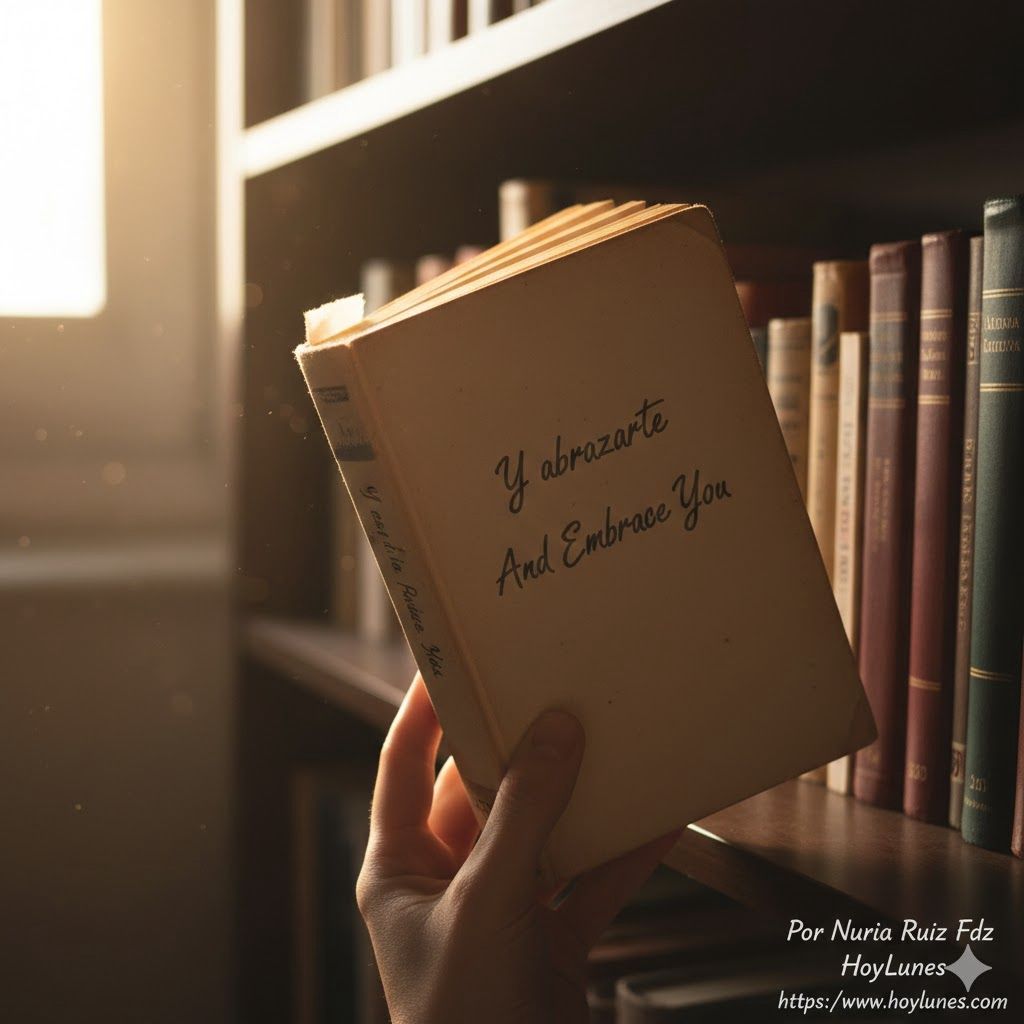
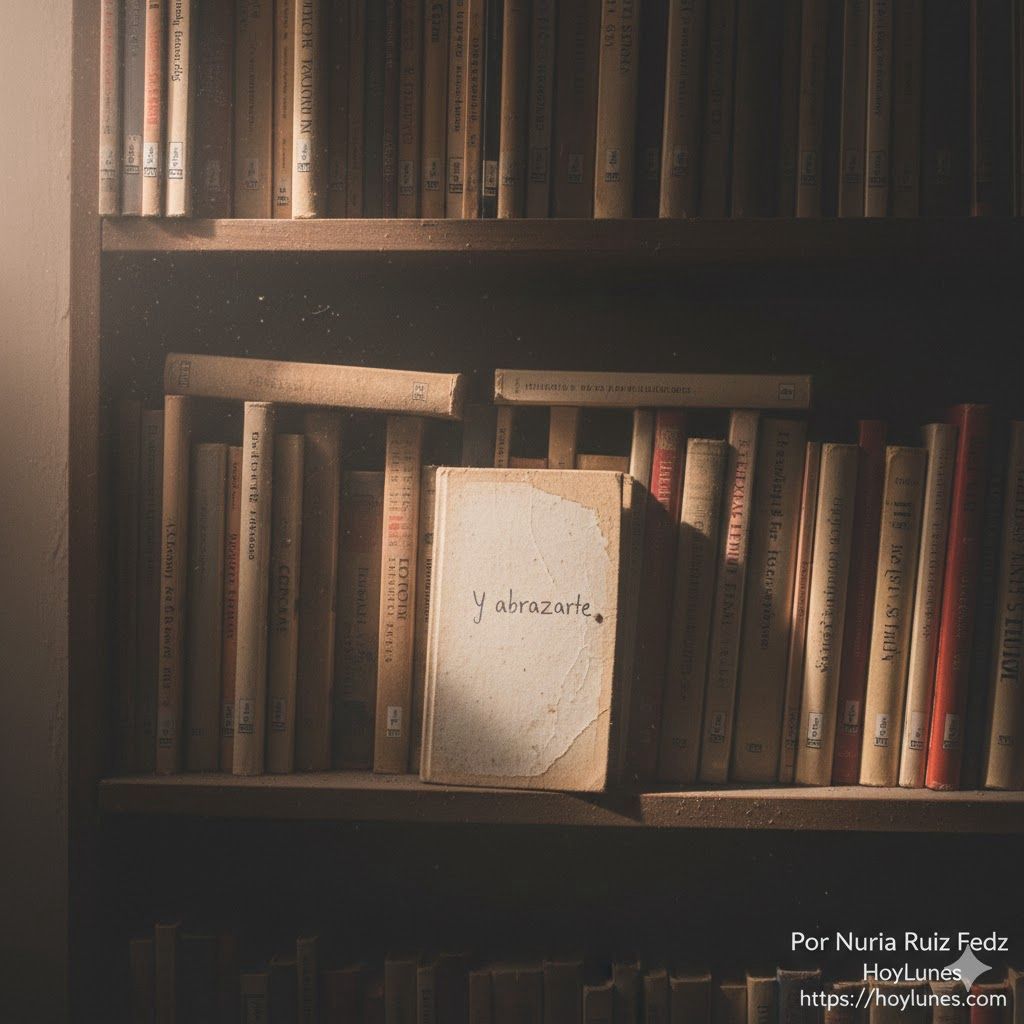
HoyLunes – I was organizing my library the other day when a book appeared that had been silent for years, tucked away among others. It wasn’t hidden, or even lost; it was simply forgotten. ‘Y abrazarte’ (And to Embrace You), by Clara Asunción García. There it was—discreet, not claiming any attention, like that friend I never call but who I know is still waiting for me. Precisely like that.
I had set it aside a long time ago; someone gave it to me as a gift—I don’t remember who or when—but since love has never been a subject that attracts me, I let it rest and forgot about it. Opening it now, without any expectations, and leafing through it, I was surprised. I stopped tidying my shelves and began to read. I discovered an anthology of short stories where that “love thing” keeps pestering, gathering stories where the heart has the first and last word in the lives of its protagonists.
All the stories are interconnected through various situations, such as the loss of a loved one, second chances, the process of falling in love, or the passage of time—functioning as stitches that slowly sew the work together.
It is not that I renounce romantic readings. I don’t. Although, as a reader, I am not particularly interested in love as a central theme. But I read ‘Y abrazarte’ from a different perspective: seven short stories, distinct from one another, that are read almost without noticing, like someone crossing a room on tiptoe. Each with its own pulse, its own breath, its measured intensity. There is no filler. No boasting. You can tell there is *oficio*—craft—and that attracts me. The craft of the woman writer.
And then I thought of all the books we don’t read because we think they aren’t worth it, or we won’t like them, or the writer doesn’t interest us for one reason or another; books that never reach our hands because they didn’t have a good advertising campaign, because they weren’t in the right shop window, because their author didn’t enter the correct circuit, or because, quite simply, they seemed to have gone out of style before they were even born. As if literature had an expiration date.
And I thought, above all, about the women writers. About so many I know. Those who have always written. Those who do it at dawn, between jobs, children, caregiving, and exhaustion. Those who keep their texts in a drawer, not because they don’t believe in them, but because they doubt themselves—because the judgment of others sometimes weighs more than the need to convey emotions. Texts that wait. Texts that do not scream. Texts that trust in a “later on, now is not the time”.
But the craft of writing is the craft of knowing how to expose oneself, knowing how to strip down, knowing that we go unarmed. It is recognizing to the public that “this is who I am, for better or worse”, “this is how I feel, whether you like it or not”. That is why so many books are never born, so many stories stay halfway, so many authors think their work is “not enough” or feel ashamed before the bare skin of their book, open in the hands of others. As if the value of a work were always subject to external validation or a publishing house’s seal.
And then I remembered those other writers: the local authors, those who walk through the bookstores of their town or city with a bag full of copies. Those who expose themselves, who shiver at a critique, who place their books on shared shelves, who organize presentations and sign with sincere enthusiasm. Those who smile even though they know that, beyond their close circle, their work will barely reach a few.
Each one of them is an act of resistance. Because writing and, furthermore, managing to publish without massive recognition is a form of bravery that we do not always know how to value.
‘Y abrazarte’ belongs to that “other” silent league. Because what seduces about the book is not ´what´ it tells, but ´how´ it tells it. Clara Asunción handles short narrative with surgical precision: she knows where to start, where to cut, where to be silent. In her stories, every word seems to have passed through a filter of necessity. Nothing is superfluous. Nothing over-explains. The silences also speak volumes in this work.
The short narrative has something of fine watchmaking about it. It allows no distractions. It admits no traps. It either works or it breaks. And here, it works. Because there are atmospheres, there are recognizable emotions, there are scenes that keep vibrating when you close the book. Not because they are grandiloquent, but because they are exact.
Reading these kinds of books is relearning how to look closely. To not demand fireworks. To enjoy the minimal gesture well executed. To remember that literature does not need a thousand pages to leave a mark. Sometimes a single phrase placed in the right spot is enough. This anthology was a finalist in 2017 for the Guillermo de Baskerville Awards by *Libros Prohibidos*—did anyone know? Does anyone know her?
Recovering these quasi-anonymous voices—reading them, naming them, recommending them—is a way of reclaiming literature from below, from the everyday, from what does not appear on lists or in cultural supplements. Women’s literature does not only live in the big names, in the consecrated authors we all cite (and who, of course, deserve to be there). It also lives in these books waiting on a dusty shelf for a friendly hand to pick them up.
Books that someone left on a shelf thinking, “I’ll read it eventually.” Books that did not enter the conversation because no one put them in circulation. Books that seem small and, yet, contain hallucinating worlds.
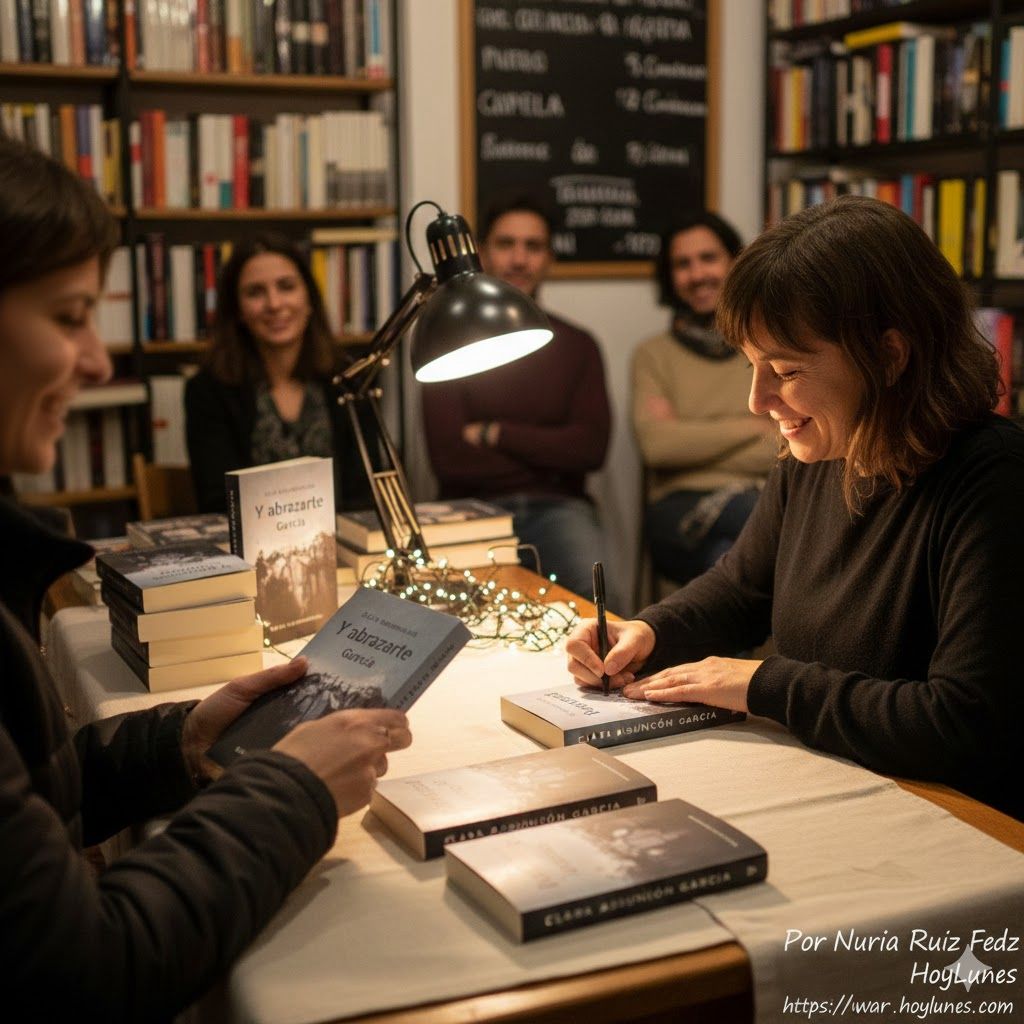
Every reader who approaches them breaks that silence a little. Every reading is a form of rescue. Opening ‘Y abrazarte’ today was exactly that: a minimal gesture against oblivion. A way to remind myself that not everything valuable shines at first sight; that one must know how to stop, open, and read without haste.
Because the richness of women’s literature is not only in the visible, but in the persistent. In those voices that keep writing even if they don’t know who will read them. In those authors who do not ask permission to publish. In those books that, when we finally open them, look at us as if saying: ´it’s about time´.
And then we understand that oblivion is not always an end. Sometimes it is just a pause. A closed book waiting for the right moment. Like this one. Like so many others.