
Why your asthma is not just a pollen allergy, but an identity crisis between your ancestral biology and an environment that no longer recognizes the seasons.
By Ehab Soltan
HoyLunes — Think about it for a second. This morning you woke up and, even before fully opening your eyes, you felt that familiar pressure. It isn’t pain; it’s something more subtle: an invisible resistance when inhaling. That sensation has a clinical name —mild bronchoconstriction— but its trigger is not always so obvious. It is as if the air, which has always been free and light, weighed a few extra pounds today.
Your first reaction is the usual one: “Damn pollen”. You look for the culprit outside. You look out the window at the blossoming park and see it as a battlefield. But what if I told you that pollen is merely the messenger of a letter your body no longer knows how to read? The real problem is that we have forgotten part of the language in which that message was written.
It isn’t you who is failing, and it isn’t nature failing either. What is failing is the conversation between the two.
The biological “jet lag” of living within walls
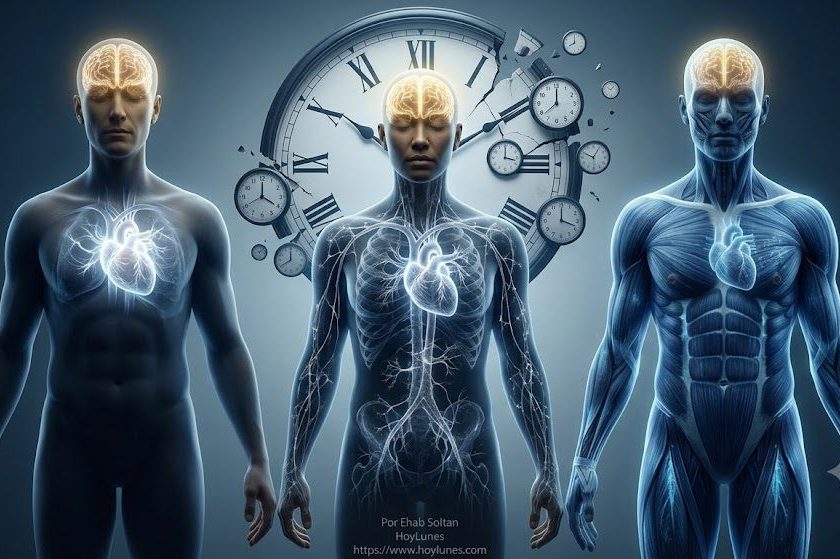
For millennia, our body was an expert meteorologist. It knew when the cold was coming, when the humidity would rise, and when the burst of life that is spring would arrive. There was a synchronized dance: the environment changed, and our internal chemistry transformed along with it.
Today, that dance has turned into a constant stomp.
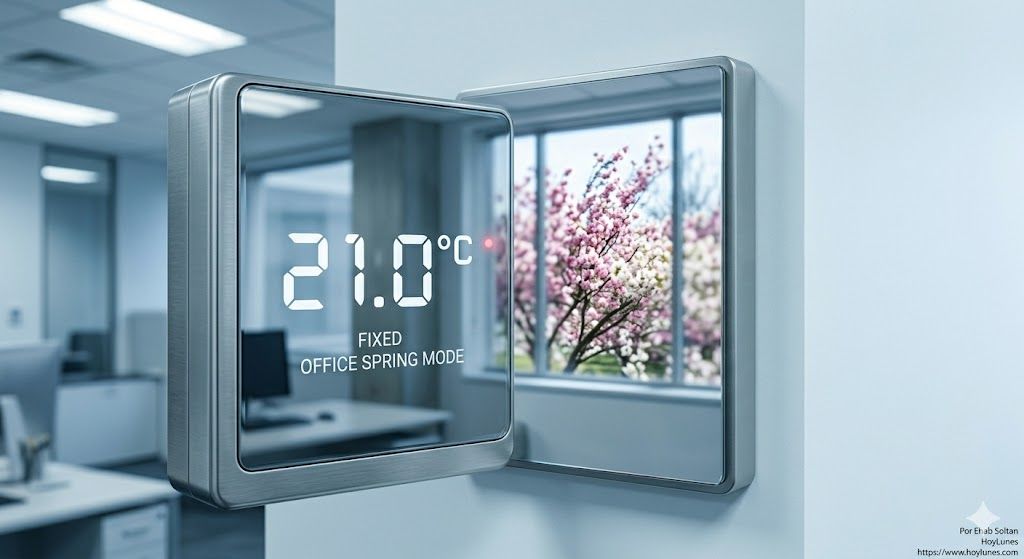
We live in an eternal office spring: a constant 21°C (70°F), artificial light that never turns off, and filtered air that, ironically, reduces our environmental literacy. When you step outside and are hit by a pollen peak that arrives weeks ahead of schedule due to climate change, your immune system panics. It fails to recognize the signal because it lives in an environment doped with artificial stability.
Your asthma is not just weakness; it is a fire alarm ringing loudly in a house that no longer quite recognizes what smoke is.
The paradox of clean air: Are we too protected?
Imagine raising a child in a glass bubble, never letting them touch the ground or get their hands dirty. The day they step into a garden, the simple brush of a leaf will feel like an assault.
That is exactly what we are doing to our lungs. By spending 90% of our time indoors, we have de-trained our capacity for adaptation. The immune system, bored and lacking real challenges, begins to seek out imaginary enemies.
| What you see | What is actually happening | The “Do it now!” |
| Asthma attack | Your body tries to “close the doors” to air it perceives as hostile. | Don’t fight the symptom; open the window for 10 min at sunrise (when pollen levels usually drop). |
| Irritated eyes | Your mucous membranes are dry from air conditioning and cannot defend themselves. | Deep hydration: Don’t just drink water; you need to restore real humidity in your environment. |
| Spring fatigue | Your internal clock (circadian rhythm) is out of sync with sunlight. | Direct natural light: 15 min of sun (without glasses) before 10:00 AM to “reset” yourself. |
Asthma as a “software error” in a 24/7 world
Modern science —backed by studies from the Cleveland Clinic and the EAACI— suggests that asthma is, to a large extent, a disease of desynchronization.
If you sleep with your phone pressed against your face, your cortisol rises when it should be falling. If you always train indoors with recycled air, your lung capacity becomes lazy. When spring arrives, that explosion of biological energy finds a body too busy managing digital stress to process the fresh air. That “distraction” has measurable physiological consequences in the form of inflammation and an altered immune response.
It is not that pollen is more aggressive (though excess CO2 makes it more potent); it is that you are biologically distracted.
The New Frontier: From control to reconnection
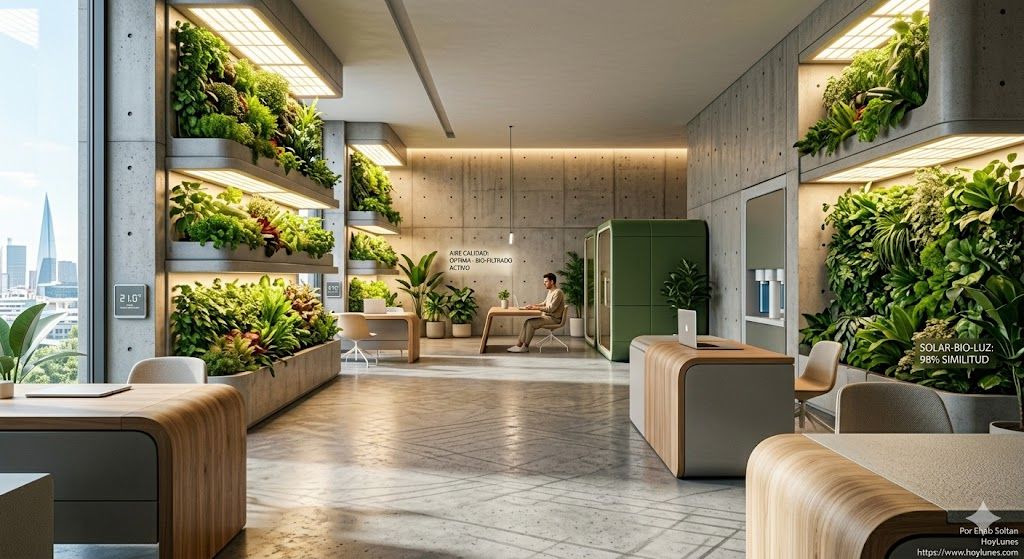
The commercial value of well-being in the next decade will not lie in selling you the most powerful inhaler, but in designing re-training environments. This is not a passing trend; it is a paradigm shift. Organizations that understand the relationship between environment, behavior, and immune response will not compete on product, but on context.
Immune Architecture: Buildings that do not just filter, but “vaccinate” the air by integrating real biological diversity.
Bio-synchronization: Technology that doesn’t count steps, but tells you when your body is ready to manage changes in atmospheric pressure.
Thermal Shock Protocols: Progressive exposure to cold and heat so that the respiratory system regains its lost elasticity.
Your first breath of freedom
Don’t wait for spring to end to breathe again. The solution is not to lock yourself away more, but to expose yourself better.
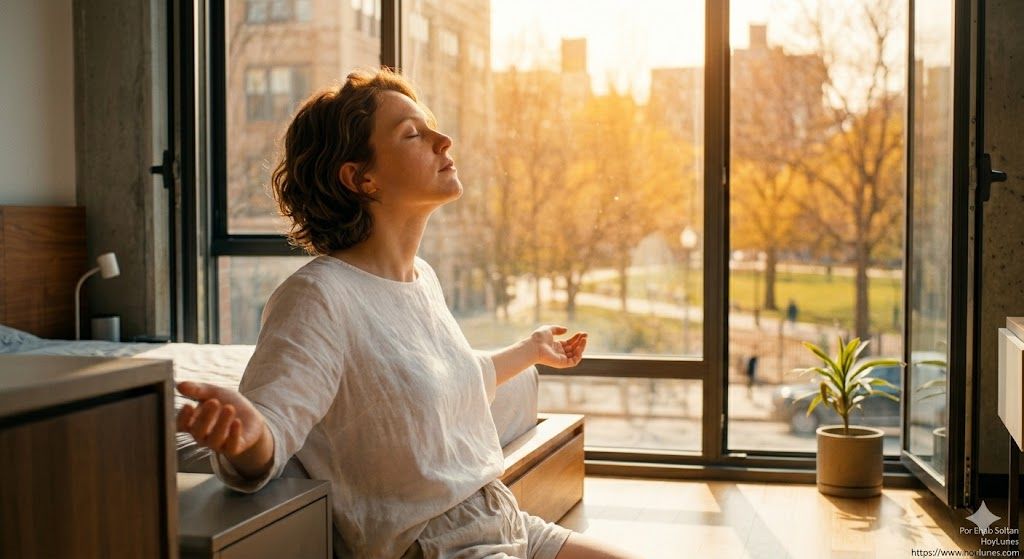
Tomorrow, when the alarm goes off, avoid your phone. Go out onto the balcony or open the window wide. Let that “disordered” air enter your lungs. Feel the coolness, the humidity, and yes, the pollen too. Tell your immune system: “We are outside. This is the real world. Learn again”.
Because health is not the absence of symptoms in a glass bubble; it is the ability to dance under the pollen rain without losing your breath. Do not do it to avoid discomfort; do it to regain confidence in your own body.
Breathing is an active verb. Start conjugating it today.
Sources and Research Lines
European Environment Agency: The impact of CO2 on the allergenic potency of pollen.
Journal of Allergy and Clinical Immunology: The hygiene hypothesis and the loss of urban biodiversity.
Science Advances: Circadian rhythms and the severity of nocturnal asthma attacks.
#Asthma #ConsciousBreathing #HumanBiology #Spring2026 #Longevity #ImmuneHealth #HoyLunes #EhabSoltan #HealthInnovation