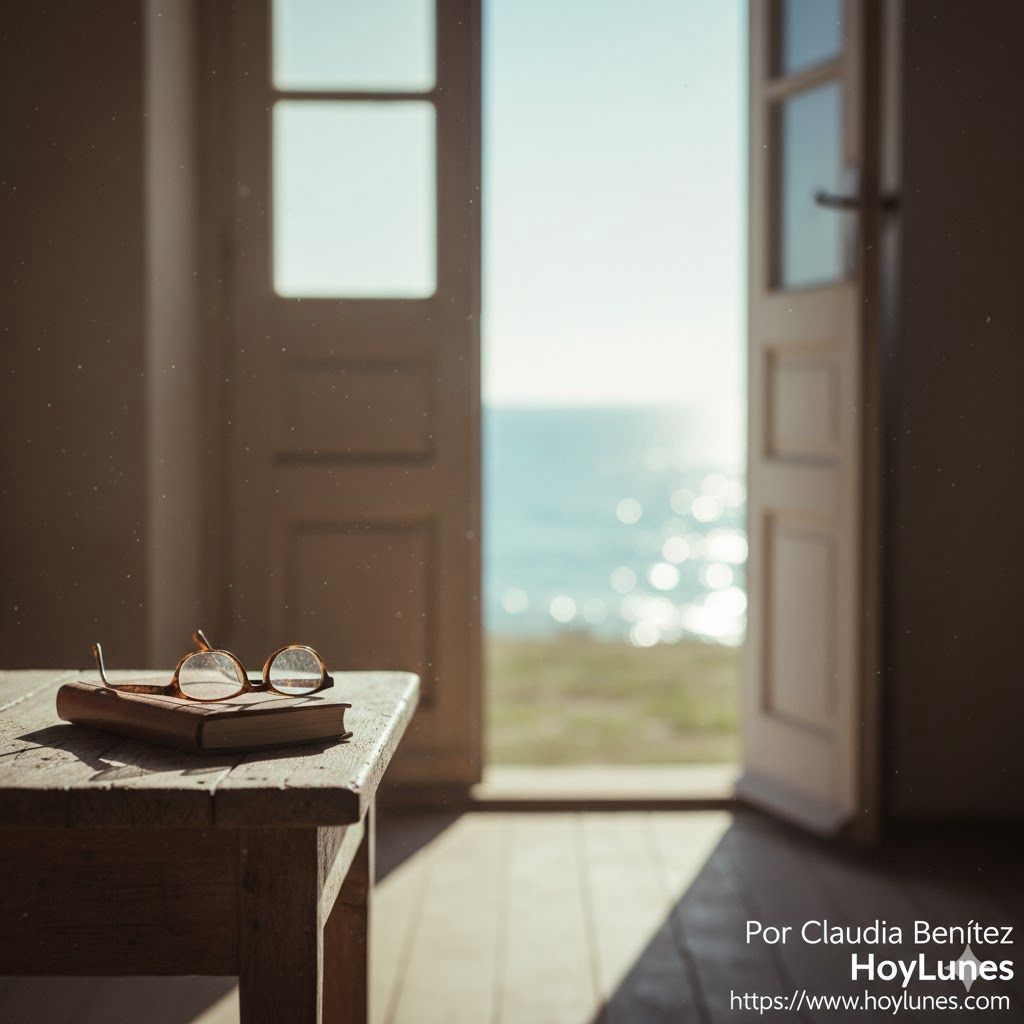
A serene and demanding reading of Ramón Collazo Castro’s novel on time, memory, and the intimate—and courageous—act of facing the places that once defined us.
By Claudia Benítez
HoyLunes – This reading is part of the “I Read for You” series, a space promoted by HoyLunes. These lines are an intimate and contemplative gesture: to remain alongside the text, to let its resonances emerge, and to allow the written word to find its own time to say what it still has to suggest.
“The Door in the House by the Sea”, by “Ramón Collazo Castro”, is a work that proposes an experience of introspection. From its very first pages, the reader understands that the true journey undertaken by the characters is not merely geographical, but existential. The ferry moving across the Aegean Sea carries not only bodies, but also memories, silences, and long-postponed questions.

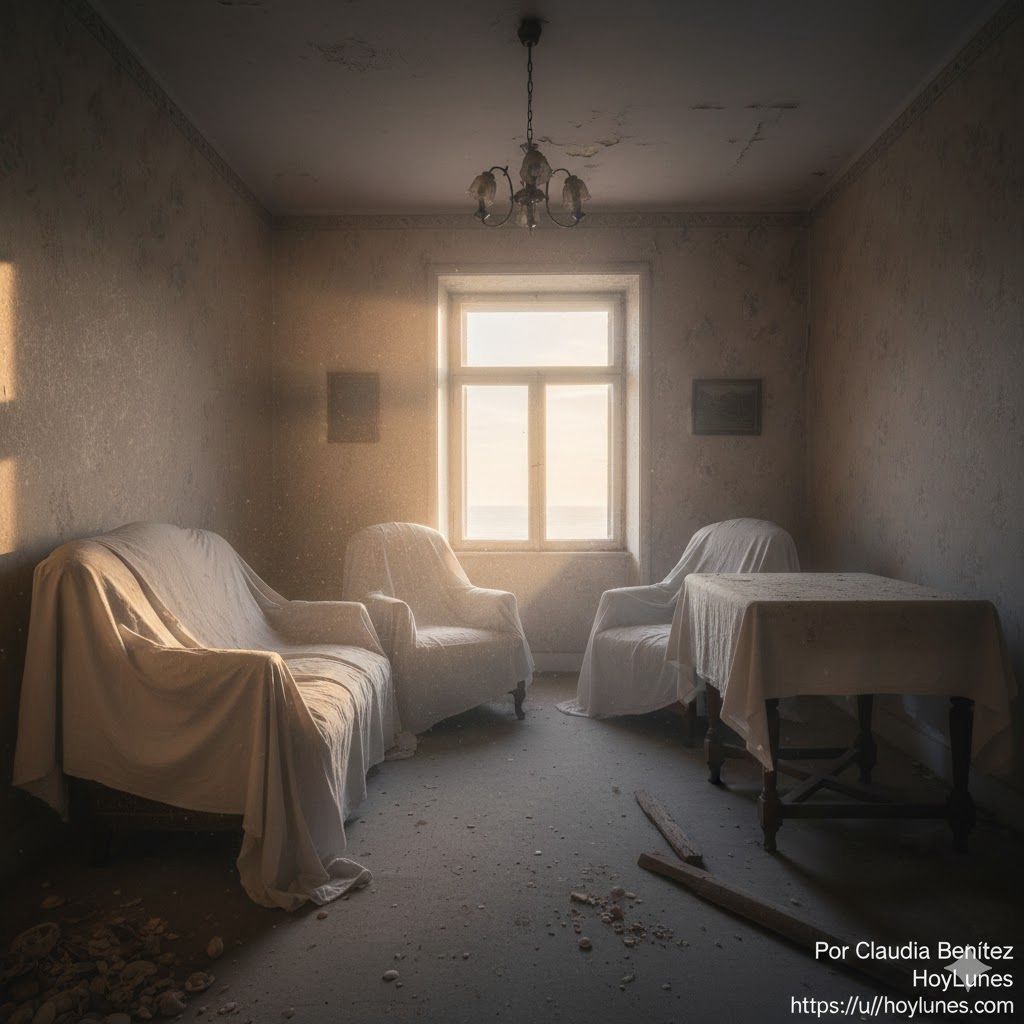
Laia, the protagonist, embodies a profoundly human figure: someone who has lived, who has left places and decisions behind, but who has never managed to fully detach herself from that which shaped her. Her return to the house by the sea after more than forty years is, in essence, a confrontation with time. The text suggests that the past does not disappear; it remains latent, awaiting the moment when we are ready to look at it head-on. In this sense, the novel poses a haunting question: do we ever truly leave the places that marked us, or do we simply learn to live without them?
The sea functions as a central symbol. It is not just a landscape, but a metaphor for the constant flow of life—for that which changes while remaining the same. In contrast, the house represents the fixed, that which remains even as it deteriorates or fills with dust. And the door—that seemingly simple element—acquires a deeply symbolic value: it is the threshold between who we were, who we are, and who we might become; between the security of memory and the risk of revisiting it. Opening that door implies accepting that the past can hurt, but also reveal necessary truths.
Jordi, for his part, provides an interesting counterpoint. His meticulous and rational character seems to offer stability against Laia’s emotional sensitivity. However, this rationality does not exclude him from the process of reflection; on the contrary, it shows that each person confronts the passage of time using different tools. The retirement of both characters does not appear as an end, but as a liminal space—a moment of pause in which life forces one to look back in order to move forward.
Collazo Castro’s narrative style is sober, deliberate, and contemplative. He does not seek to dazzle with plot twists, but rather invites the reader to stop, observe, and think. This stylistic choice reinforces the existential nature of the work: slowness becomes a form of resistance against a culture that demands moving forward without looking back.

Ultimately, *The Door in the House by the Sea* reminds us that living also consists of returning. Returning not to remain anchored in what was, but to understand it. The novel suggests that only those who dare to open the doors of their own memory can reconcile themselves with the present.
Thus, the book transforms into a serene yet profound reflection on time, identity, and the human need to find meaning in the places we once called home.

Claudia Benítez.Bachelor of Philosophy. Writer.