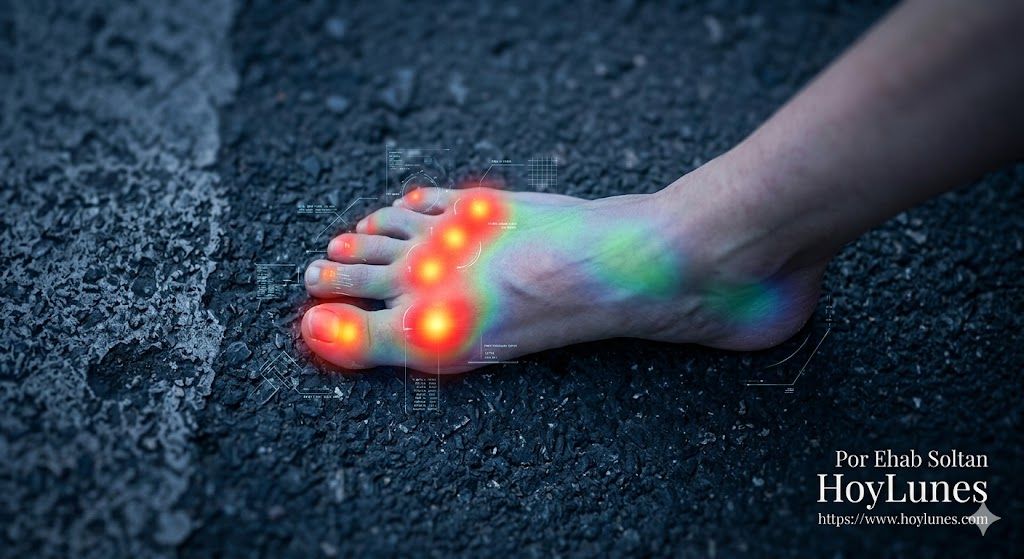
Daily decisions—not clinical diagnoses—are redrawing the map of foot pathologies in women. Meanwhile, prevention remains the great ghost of the healthcare system and a lost opportunity for a market blind to real biomechanics.
By Ehab Soltan
HoyLunes – Historically, women’s health has been narrated through great biological epics: the hormonal revolution, nutrition paradigms, mental health, or the cult of fitness. However, there is a fascinating and essential biological engineering system that literally sustains all that effort, yet remains in the exile of the preventive radar: the human foot.
From a clinical and economic perspective, this omission is not minor. Foot pain and gait alterations are directly associated with loss of mobility, lower adherence to exercise, and a progressive increase in the risk of chronic diseases. Ignoring the foot is not a simple anatomical oversight: it is compromising the entire system of preventive health.
We are not facing a simple medical omission; we are facing a structural vacuum. While global healthcare discourse claims to prioritize prevention, the reality for millions of women operates under a logic of involuntary sabotage. These are repeated micro-decisions, seemingly harmless gestures, and aesthetic habits that, through accumulation, end in functional collapse. The healthcare system does not prevent; it simply waits for the damage to be loud enough to intervene. Diagnosis is not the start of the problem; it is the obituary of a lost function.
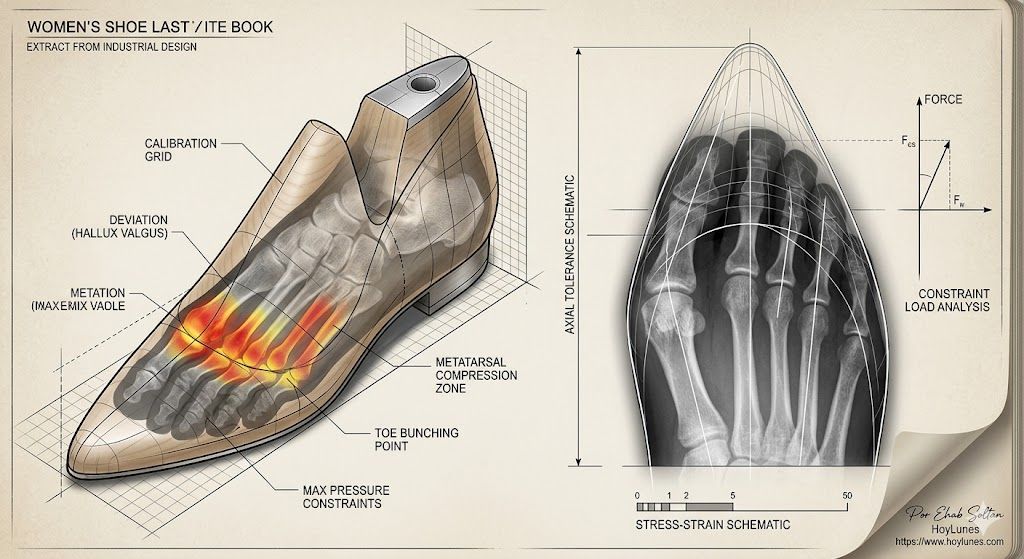
Various clinical studies have shown that a significant proportion of women use footwear that does not fit the actual morphology of the foot, generating pressure points, alterations in load distribution, and progressive biomechanical compensations (see National Institutes of Health and Springer).
The Anatomy of Error: Is it a Clinical Problem or a Behavioral Design Failure?
Traditional podiatry has remained boxed into “correction mode”: treating plantar fasciitis, operating on hallux valgus (bunions), or cushioning metatarsalgia. But this vision is purely reactive. A study published in the Journal of Foot and Ankle Research revealed that up to 63% of people wear footwear that does not fit the actual dimensions of their feet, a figure that skyrockets in women due to the pressure of the aesthetic last over the functional one.
The hypothesis we must dare to launch is uncomfortable: Pathology is not born in the clinic; it is cultivated on the asphalt of daily routine. It is not a biological failure; it is a design conflict between a rigid modern environment and an anatomical structure designed for dynamic adaptation. When a woman chooses footwear, she rarely performs a functional act; she performs an act of identity. The shoe is not merely worn; it is interpreted.
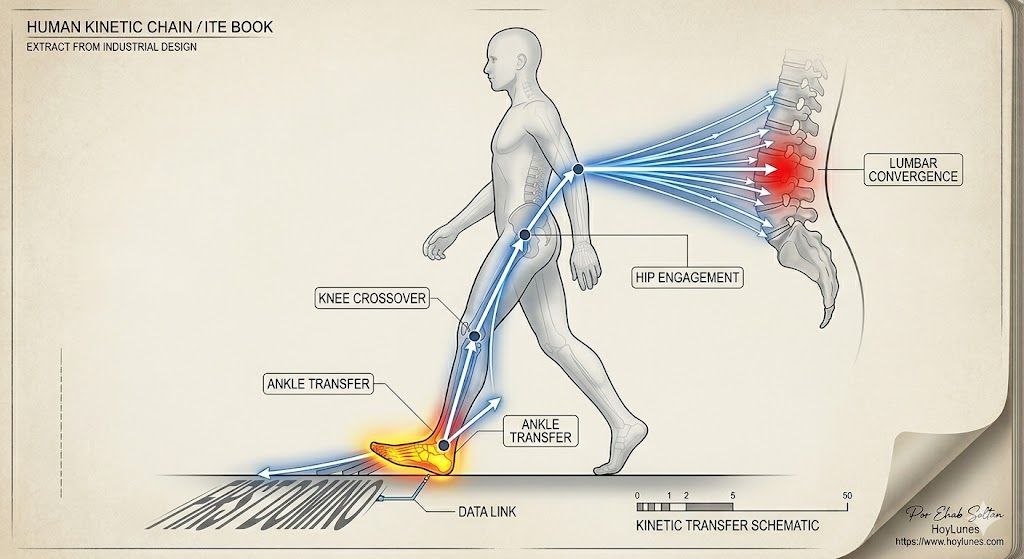
From a biomechanical standpoint, the foot is designed to absorb impact, adapt to the terrain, and redistribute loads in motion. Prolonged use of rigid or ill-fitting footwear limits these functions, forcing other structures—knee, hip, and spine—to compensate inefficiently.
This is where the footwear industry has systematically failed. Aesthetics have been optimized to excellence, leaving the female body to absorb, like a fatigued spring, the entire biomechanical cost. Research has shown that prolonged use of elevated-heel footwear alters the distribution of forces in the knee joint, increasing stress on internal structures and accelerating degenerative processes such as osteoarthritis (reviews in PubMed). The foot is only the first domino to fall.
The Normalization of Pain: The Weight of Invisibility
There is a sociological phenomenon as fascinating as it is alarming: the normalization of foot pain. If a woman felt pain in her chest or arm while walking, she would go to the emergency room. But if her feet hurt at the end of the day, it is accepted as an inevitable consequence of daily life.
This tolerance threshold is the greatest failure of the preventive model. By not generating an alarm, protocols are not activated. However, science is clear: a gait altered by discomfort modifies the entire kinetic chain. Studies in Springer Nature highlight how biomechanical compensation leads to chronic hip and lumbar spine pathologies. What begins as a slight discomfort while walking becomes, years later, a drastic reduction in mobility, triggering cardiovascular and metabolic risks. The foot is the thermometer of functional aging, and we are ignoring it.
Most concerning is its statistical invisibility: by not being recorded as a priority problem, it remains outside of public prevention policies and healthcare innovation models.
The Work Environment: The Imposition of Habit
We cannot talk about individual decisions without questioning the system. In highly feminized sectors—hospitality, nursing, or retail—foot health is not always a choice, but an imposition of the environment. Endless hours of static standing on implacable surfaces, often under dress codes that prioritize corporate image over osteoarticular health.
Is it ethical to talk about individual prevention when working conditions make biomechanical health unfeasible? There is a space of corporate responsibility that no one is claiming. Companies invest in the ergonomics of chairs and screens but ignore the ground their employees walk on.
This vacuum is an opportunity for corporate innovation. Companies that integrate podiatric health into their wellness policies—from uniform design to technical footwear selection—will not only reduce sick leave but also improve performance and talent loyalty.
The Footwear Industry: From Fast-Fashion to Data Engineering
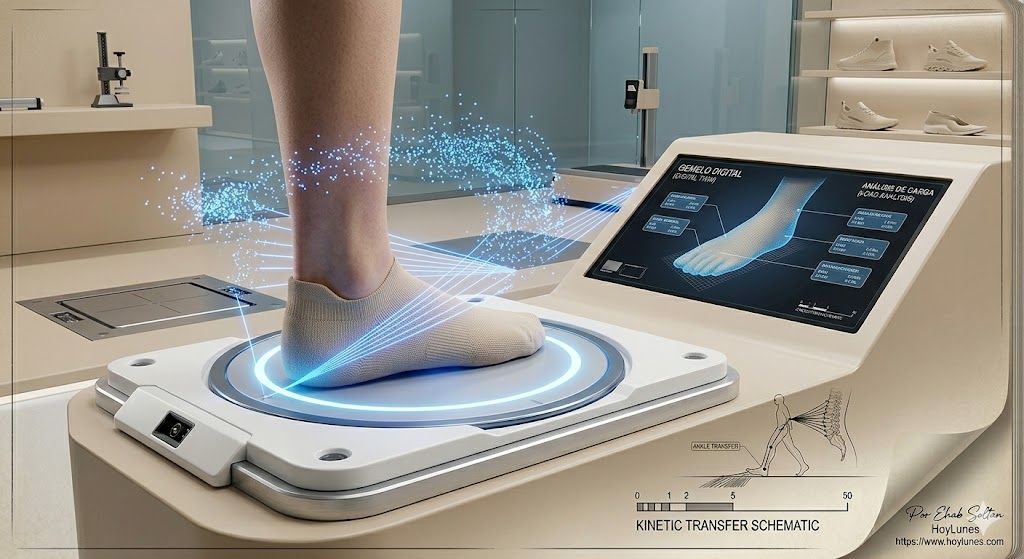
The market currently operates on static sizes that ignore that the foot is a dynamic organ. The foot changes with pregnancy (due to relaxin and weight gain), with age, and with daily load. However, consumer culture induces us to buy the same size for decades.
The opportunity for the industry is massive, but it requires a paradigm shift toward biomechanical transparency:
Data-driven footwear: Integration of 3D scanning and gait analysis into the shopping experience.
Load sensors: Smart footwear that alerts to tissue fatigue before clinical inflammation appears.
Evolutionary lasts: Products that understand the metamorphosis of the female foot during critical stages such as menopause or postpartum.
The issue is no longer technological, but strategic: who will be the first to transform footwear into a preventive health device rather than just a mass consumer product?
The Last Frontier of Well-being
* It is a 21st-century paradox: we have never cared so much for our microbiota or our sleep, yet we have never had our feet so abandoned. The system that bears the weight of our ambitions receives the least attention.
The female podiatric crisis is not a lack of surgical technology; it is a crisis of primary care and industrial design. The future of foot health will not be decided in an operating room, but at the moment a woman puts on her shoes in the morning.
If the industry and the healthcare system do not intervene in that micro-moment, they will remain mere spectators of a collective functional deterioration. It is time to stop seeing the foot as an aesthetic accessory and start seeing it as the critical base of longevity. Because if the system only acts in the face of pain and the industry only in the face of demand, no one is acting at the only moment that matters: before the damage is irreversible.
Sources and Reference Frameworks:
Journal of Foot and Ankle Research: Prevalence of ill-fitting footwear in women.
Harvard Medical School: Impact of footwear on knee osteoarthritis.
The Lancet Public Health: Mobility as a determinant of quality of life.
ISO 19410: Footwear and ergonomics standards.
World Health Organization (WHO) & OECD: Preventive health and active aging frameworks.
#PreventiveHealth #FemaleBiomechanics #FootwearIndustry #HealthcareInnovation #HoyLunes #EhabSoltan