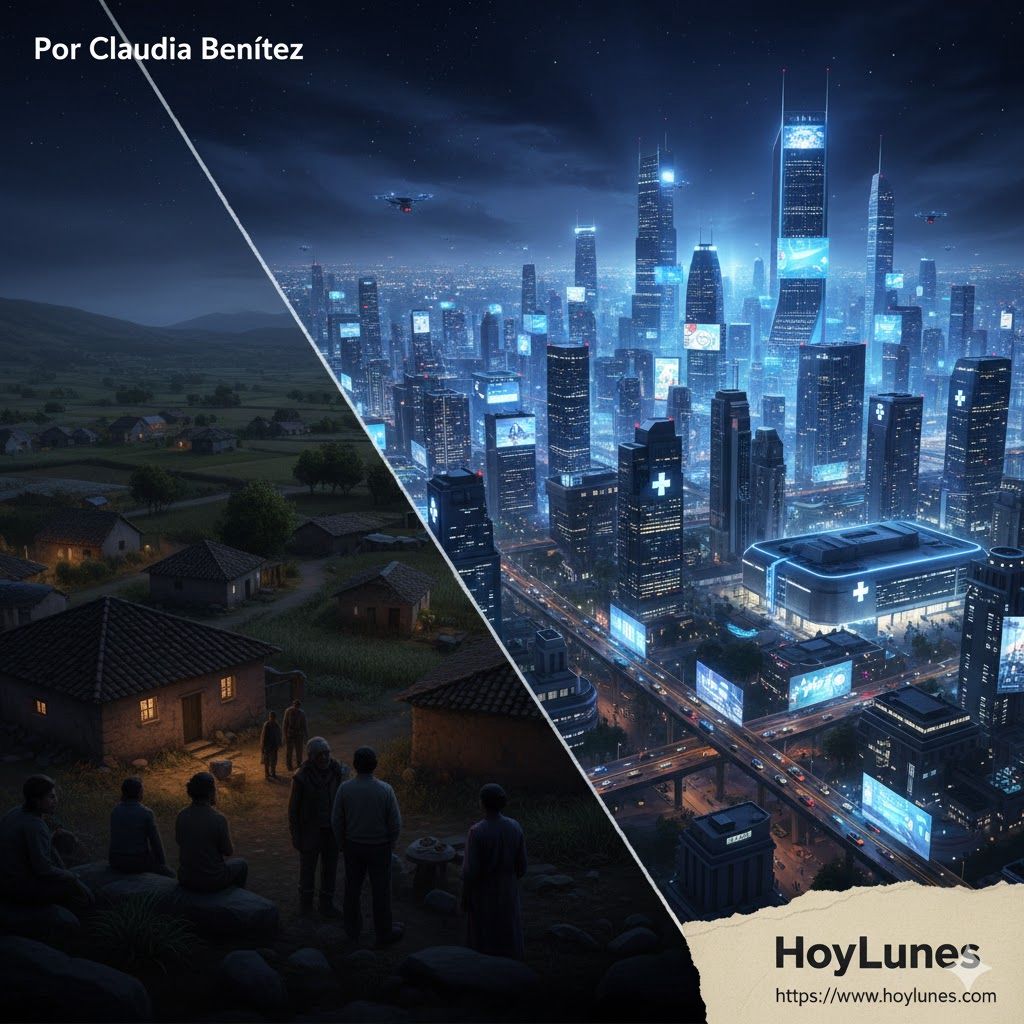
A journey through the brightness and shadows of progress, where innovation advances at high speed while social reality remains divided between those who can reach it and those who can only watch from afar.
By Claudia Benítez
HoyLunes – We live in an era in which humanity has witnessed unprecedented medical and technological advances. Science seems to brush against the impossible. We have learned to read the intimate language of genes, to train machines to detect diseases with a precision we once only imagined, and to weave global networks that connect us in the blink of an eye. Vaccines are developed within months, diagnoses travel at the speed of a click, and technology promises, every day, a healthier, fairer, smarter world, expanding access to knowledge and improving our quality of life.
Yet while those lights shine with increasing intensity, vast regions of the planet remain in shadow. Millions of people remain trapped in extreme poverty, untouched by the advances that transform the lives of others. For those without access to clean water, basic medical care or elementary education, technological miracles are nothing more than distant rumors—echoes of a present that has not yet arrived.
Technology, that double flame, illuminates and burns at the same time. If on one hand it opens doors to knowledge and multiplies opportunities, on the other it can raise invisible walls. What good is an ocean of information if the devices needed to navigate it are missing? What hope does artificial intelligence bring if digital literacy continues to be a privilege? In this paradox, a deep wound is revealed: progress does not always advance at the pace of equity. Each new breakthrough confronts us with its advantages and disadvantages, and we often begin to stigmatize or idolize what we do not understand.

The causes of this gap are as old as they are persistent. Inequity in the distribution of resources, the fragility of public health systems and the economic interests that shape what is researched and for whom it is built create an uneven landscape where innovation does not always find fertile ground.
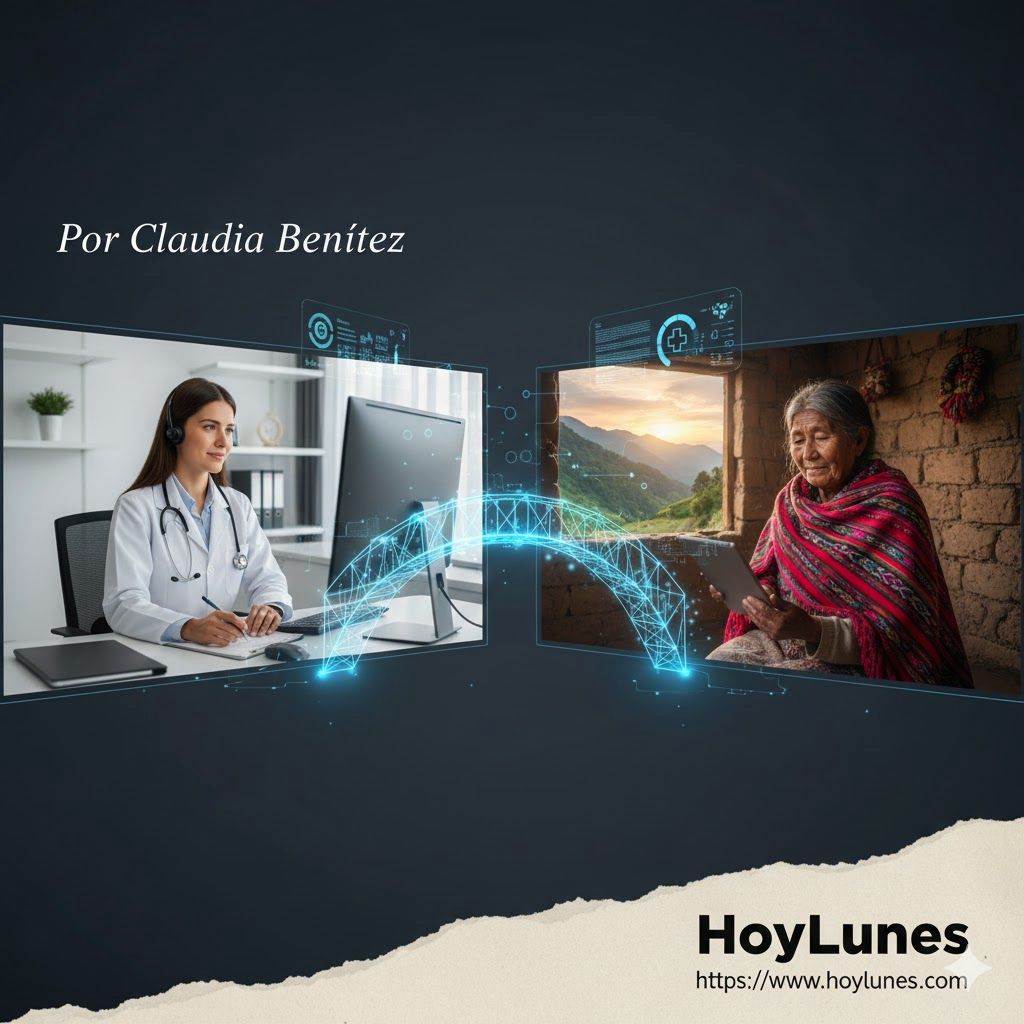
However, not everything is shadow. In recent years, telemedicine projects have delivered specialized care to remote villages; low-cost technologies have enabled diagnoses once deemed impossible, and movements for open access to medication have demonstrated that knowledge can be a shared good.
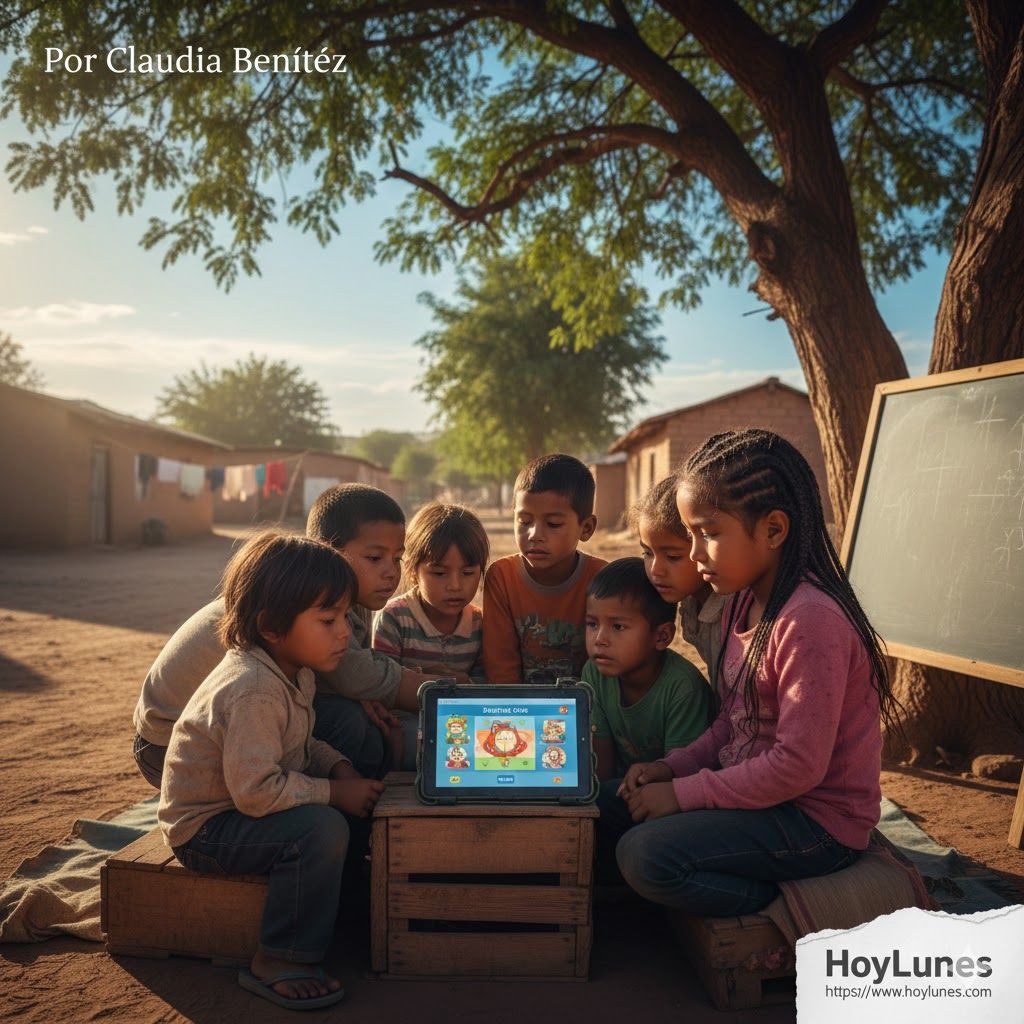
The responsibility for closing this gap rests on society, because each of us forms governments, scientific institutions, technology companies—every institution that may seem abstract is ultimately made up of people, and it is we who determine their actions.
For true progress is not measured by the sophistication of the tools we invent, but by our ability to touch lives, ease suffering and open pathways where none existed before. Only when science and technology embrace the most vulnerable as well can we say that we are moving together toward a more dignified and humane future.
#hoylunes, #claudia_benitez,