Anatomy of a European Paradox: The gap between generating scientific evidence and capturing the industrial property of pharmaceutical innovation.
By Ehab Soltan
HoyLunes – Spain has established itself as one of Europe’s most active environments for clinical research. Its university hospitals, the expertise of its researchers, and the robust structure of its healthcare system have made the country a key player in international clinical trials. However, this scientific prominence coexists with a less visible paradox: as biomedical innovation moves from the hospital toward patenting and industrial production, corporate leadership typically shifts to other countries.
This situation does not reflect a lack of talent; rather, it reveals a structural disparity within the value chain. How is it possible that a country capable of executing the most complex oncology trials or advanced therapies is not the majority owner of the resulting patents? The answer lies in the architecture of the innovation ecosystem.
Spain as a European Powerhouse in Clinical Research
The country has become a nerve center for the development of new drugs, especially in advanced stages of research, thanks to three fundamental pillars:
Recruitment Capacity: Spanish hospitals excel in the speed and efficiency of recruiting patients for complex studies.
Data Quality: The rigor of local researchers is internationally recognized by agencies such as the EMA and the FDA.
Specialization: Critical areas such as oncology and rare diseases have turned Madrid and Barcelona into world-class reference hubs.
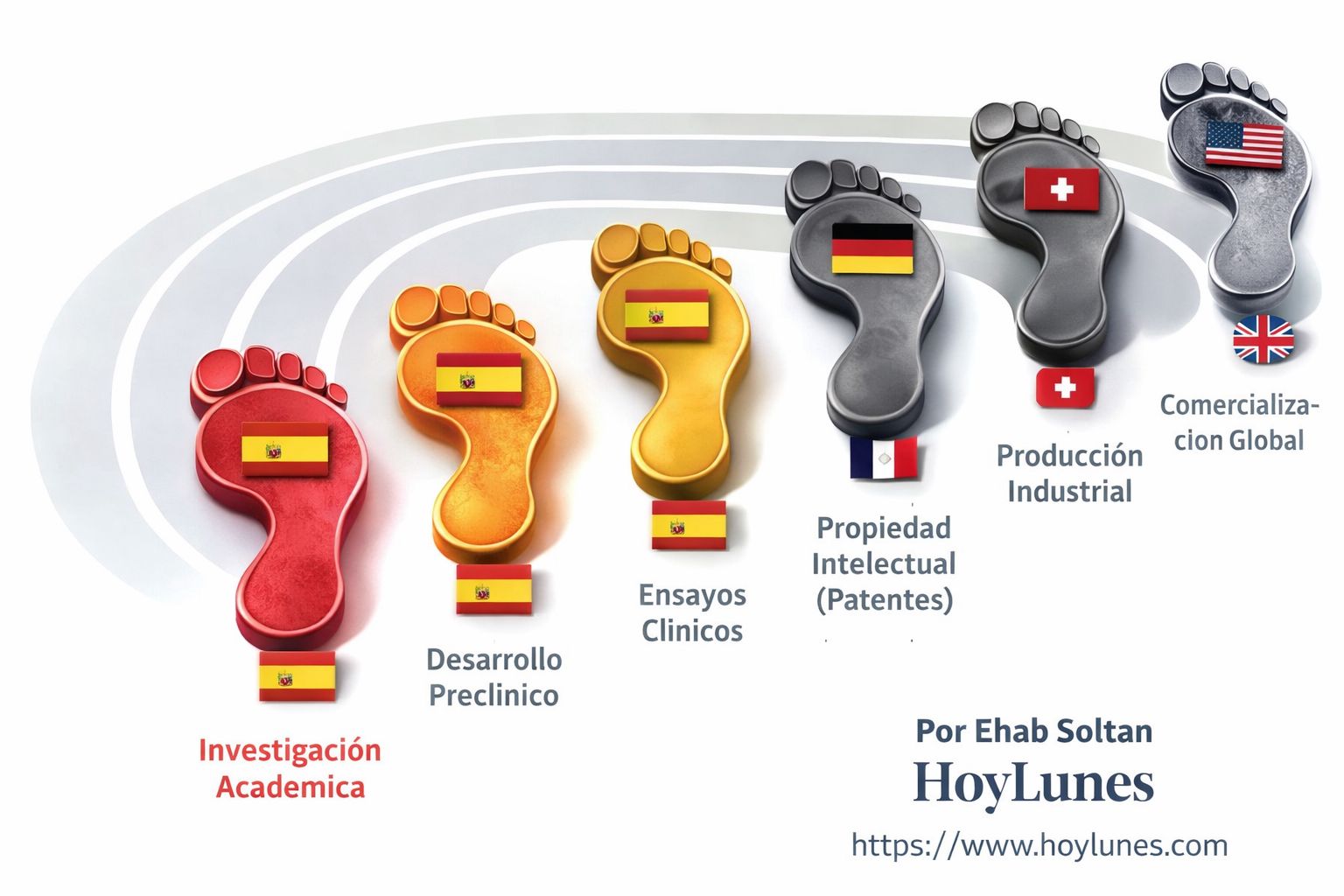
The Value Chain: Where Does the Profit Stay?
To understand the paradox, we must view pharmaceutical innovation as a six-stage relay race:
Basic Research (Academia)
Preclinical Development (Laboratory)
Clinical Trials (Hospitals) — Spain’s Strength
Intellectual Property (Patents) — The Leakage Point
Industrial Production (High-tech Factories)
Global Commercialization (International Market)
Massive economic value does not necessarily reside in the execution of the trial, but in the ownership of the patent. While Spain serves as the ideal “stage” for science, industrial property often migrates to the headquarters of multinationals in Basel, Munich, or Boston. It is in the capturing of intellectual property where the primary gap occurs between Spanish scientific participation and corporate control of innovation.
The Patent Gap: The Mirror of the EPO
Data from the European Patent Office (EPO) annual index is revealing. While countries like Germany, Switzerland, or the Netherlands consistently lead the ranking of biotechnology patent applications, Spain maintains a modest position.
This gap reflects a pending challenge: technology transfer. Spain produces high-quality science, but the transformation of that knowledge into spin-offs capable of reaching industrial phases remains limited. The density of the national biotech business ecosystem is still lower than that of its North European competitors.
The “Operating Node” Model
Giants such as Pfizer, Novartis, Roche, and Sanofi find a strategic ally in Spain and invest millions in its hospital system due to its efficiency. However, this model reinforces the country’s position as an operating node. Knowledge flows, researchers publish in prestigious journals like Nature or The Lancet, and the healthcare system modernizes, but strategic decisions and exploitation rights are often managed from abroad.
Investment and Capital: Comparison with Denmark
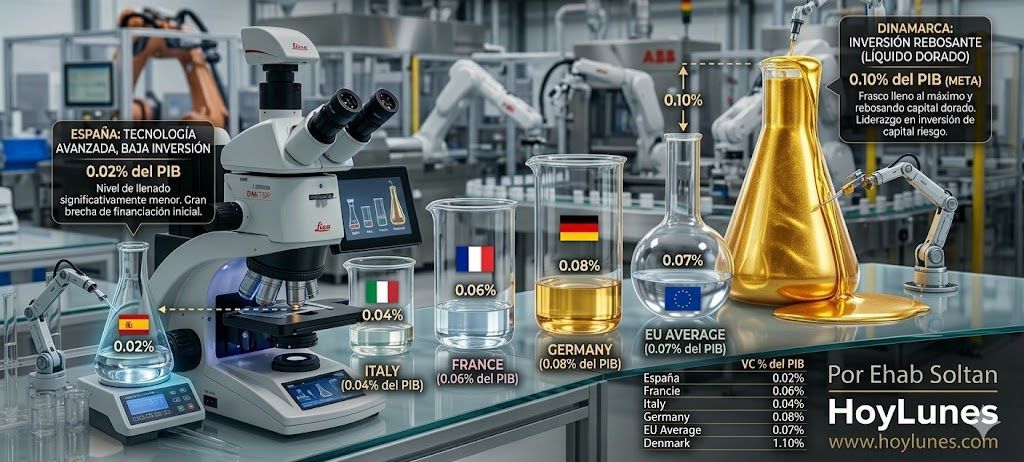
The difference between producing research and creating global companies depends on the financial ecosystem. Countries with smaller populations but massive pharmaceutical industries, such as Denmark (home to Novo Nordisk), show a different path based on specialized venture capital.
| Ecosystem Indicator | Spain | Denmark |
| Capital Specialization | Growing, but generalist. | Highly specialized in Life Sciences. |
| Biotech VC Investment | ~0.02% of GDP. | ~0.08% – 0.10% of GDP (European Leader). |
| Ecosystem Maturity | Focused on clinical services. | Focused on Industrial Property (IP). |
| Source of Investment | Mostly public/mixed. | Strong presence of industrial foundations. |
For more “national champions” like Grifols to emerge in blood-derived products, the OECD points to three key ingredients: Specialized Venture Capital with a long-term vision, high-tech incubators that bridge the gap between scientists and managers, and a State Strategy that ensures legal certainty beyond political cycles.
From Science to Sovereignty
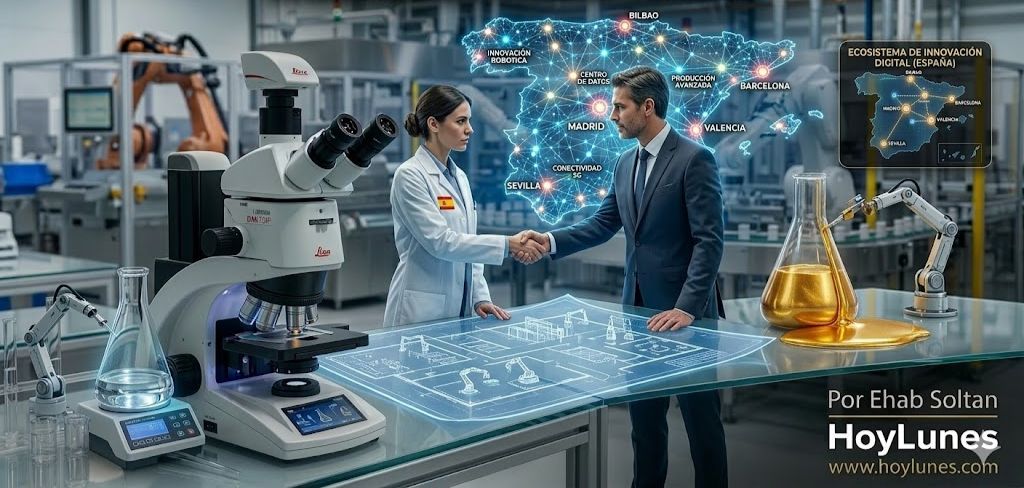
The strategic debate for the next decade is not solely about strengthening research—an area where Spain already shines—but about developing the mechanisms to transform that science into industrial leadership.
In the knowledge economy, producing scientific evidence is only one part of the process. The challenge lies in converting that evidence into patents and companies capable of competing globally. If this step is consolidated, the Spanish scientific system will evolve from being a center of operational excellence to a powerhouse with full sovereignty in the European biomedical economy.
Sources and Scientific Rigor:
European Medicines Agency (EMA)
U.S. Food and Drug Administration (FDA)
OECD – Biotechnology Statistics
European Patent Office (EPO) – Patent Index
#BiomedicalInnovation #PharmaIndustry #ScienceSpain #ClinicalTrials #KnowledgeEconomy #EhabSoltan #HoyLunes
This is for informational purposes only. For medical advice or diagnosis, consult a professional.