A Systemic Perspective on Seasonal Alopecia as a Marker of Accumulated Metabolic Wear and the Strategic Opportunity the Industry Is Not Yet Interpreting.
By Ehab Soltan
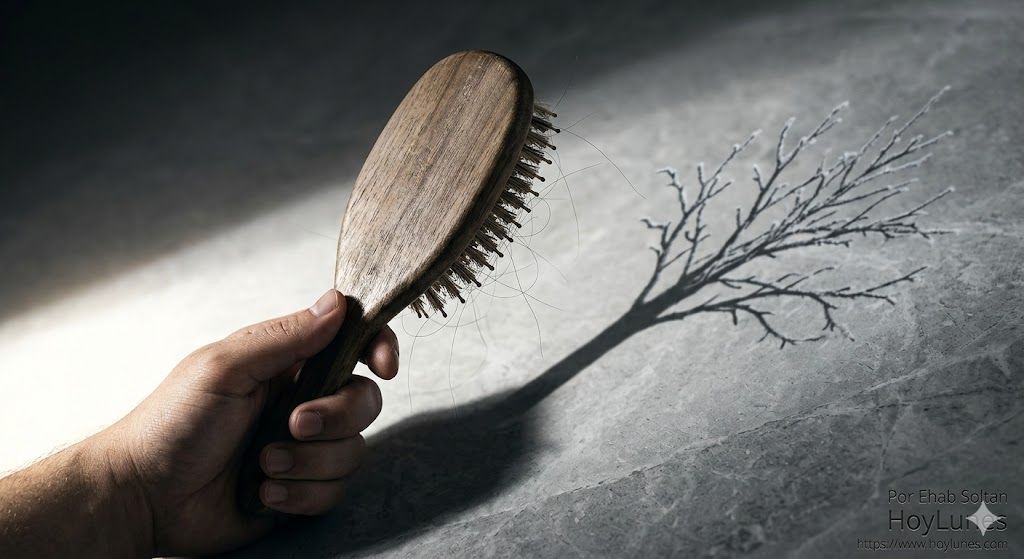
HoyLunes — A biological ritual repeats itself with discouraging precision every spring: the visual confirmation of increased hair loss in brushes, showers, and on pillows. The collective response, often encouraged by a comforting industrial narrative, is simplification. However, springtime hair shedding is not an aesthetic phenomenon; it is a failure of biological interpretation. We are told it is a normal process of renewal and that the hair will grow back. While this explanation contains traces of physiological truth, it is strategically incomplete and, therefore, misleading.
We must change the preposition to understand the phenomenon: hair does not fall out in spring.
Hair manifests during spring a prior biological failure.
What the retina perceives now is not a punctual or superficial event. It is the visible conclusion of a chain of metabolic, hormonal, and behavioral decisions that the organism began making months ago, at the start of winter. Spring is not the cause; it is the stage where accumulated tensions reach their critical threshold of expression.

The Illusion of Real Time: Follicle Latency
The first error in interpretation lies in assuming that the hair cycle operates in real time. Hair biology functions with a significant time lag.
Chronic stressors, subtle yet prolonged nutritional deficiencies, or sustained alterations in sleep patterns do not cause immediate shedding of the fiber. Instead, these aggressions progressively push hair follicles into a premature resting phase (telogen). Weeks, or even months after the stressor has ceased or diminished, the hair visibly detaches. This phenomenon, technically known as Telogen Effluvium, creates a dangerous illusion: the individual tends to seek the cause of the problem at the moment of shedding, when in reality the destructive process has been silently active for some time.
From the perspective of stress physiology, this lag aligns perfectly with the concept of Allostatic Load. This term describes the cumulative wear and tear the body endures when its adaptation systems (metabolic, neuroendocrine) remain activated for too long without adequate recovery periods. In this context, hair loss is not the problem itself; it is the sentinel symptom, the visible indicator that allostatic load has exceeded the follicle’s capacity for resilience.
For the non-clinical reader, this has a direct implication: what you interpret today as a recent problem is, in fact, a delayed consequence of decisions made weeks or months ago.
The Follicular Microenvironment as a Systemic Biomarker
It is imperative to transcend the traditional view that reduces hair to a mere aesthetic matter. From an advanced systemic and dermatological approach, the hair follicle is one of the most metabolically active tissues and, therefore, most sensitive in the body to internal changes. It is a sensor, not just an ornament. Ignoring this sensory function makes the sector reactive by design: it acts when the damage is already visible, not when it is still reversible.
There is a direct correlation between hair health and structural factors such as:
Low-grade chronic inflammation.
Insulin resistance.
Hormonal imbalances (like cortisol or thyroid hormones).
Alterations in the systemic microbiota.
At this point, a critical and still underutilized line of research outside purely scientific circles emerges: the Gut-Skin-Hair Axis (Gut-Skin Axis). Growing evidence suggests that the state of the digestive system and the integrity of the intestinal microbiota have a direct manifestation in the quality, density, and resistance of the hair fiber.
Scientific Support: A pivotal study published in Nature Reviews Molecular Cell Biology (referenced in the sources) details how hair follicle stem cells are regulated not only by local signals but by the overall metabolic state of the organism. The research demonstrates that situations of metabolic stress—such as those that can accumulate during a winter of poor nutrition, lack of sunlight, and high stress—alter the niches of these stem cells, forcing a massive and desynchronized transition into the shedding phase.
The conclusion is uncomfortable for the traditional cosmetic approach: hair is not just a reflection of how we treat it externally, but a precise map of how the organism is functioning internally.
This implies a paradigm shift: the follicle does not merely respond to products, it responds to physiological states. And those states cannot be corrected effectively only from the outside.

The Synchronization Crisis: Biology vs. Modern Lifestyle
Historically, the dermocosmetic and personal care industry has addressed hair loss with a panoply of products, routines, and topical treatments. While some possess clinical utility to strengthen existing fiber, none address the structural root of the problem.
Because the true failure is not cosmetic.
It is a failure of timing and synchronization.
The modern human live in a state of constant biological desynchronization, which tends to worsen during the winter months:
We sleep counter to our natural circadian rhythms.
We nourish the body during irregular windows and with low-quality nutrients.
We accumulate chronic stress without effective mechanisms for physiological recovery.
We expose the body to aggressive cycles of artificial blue light, altering melatonin production and other nocturnal hormonal processes.
This entire set of behavioral aggressions directly impacts the Circadian Rhythm, the master system that regulates essential functions, including the cell proliferation peaks necessary for hair growth. From this perspective, seasonal shedding is not a hair dysfunction; it is a failure of deep coordination between the internal biological systems and the behavioral environment.
The problem is not a lack of care. It is the accumulated incoherence between how we live and how the body is designed to function. And that incoherence has a clear biological signature: it appears in the hair before other systems.
The Strategic Challenge for the Sector: From Strengthening to Interpretation
This reality draws an operational paradox and a major strategic opportunity that the health and beauty sector has not yet fully capitalized on.
The vast majority of current solutions remain focused on the periphery of the problem:
Strengthening existing hair fiber.
Improving cosmetic appearance.
Locally stimulating the scalp.
Few proposals integrate a genuine systemic diagnosis of the individual. This does not constitute a critique of the sector, but a high-value market signal. But it does reveal a structural limitation: the current model monetizes the visible consequence, not the systemic cause.
If we accept that hair loss is an early marker, a sentinel alert system for internal metabolic or physiological imbalances, then hair salons, hair clinics, dermocosmetic brands, and health companies are not facing a simple seasonal aesthetic problem. They are facing a legitimate and non-invasive gateway to preventive medicine and longevity management.

Towards a New Value Model: The Evolution from Intervention to Understanding
Genuine paradigmatic change in the sector will not come from the development of slightly more efficient topical molecules. It will consist of an evolution towards the capability to interpret biological signals.
This shift implies that the current model must evolve towards a new layer of added value that includes:
Integrated Diagnosis: Evaluation of habits, metabolic state, stress load, and nutrition.
Genuine Systemic Personalization: Solutions that go far beyond simple “hair type”.
Longitudinal Tracking: Constant monitoring of hair status as an indicator of general health.
Therapeutic Synchronization: Explicit connection between internal health (supplementation, changes conductuales) and external treatment.
This opens up clear space for new hybrid models: hair salons that integrate basic metabolic diagnosis, brands that connect product with biomarkers, and clinics that use hair as an entry point to systemic prevention. In essence, the goal must be to shift from symptomatic intervention to structural understanding.
A Question for the Sector’s Leadership
For those who lead hair brands, specialized clinics, or professional personal care spaces, the strategic question can no longer be what treatment or lotion to promote this spring.
The question that defines the future of your value proposition is another:
Is your business model designed to respond to hair loss… or to anticipate what causes it?
Because it is in that precise interval—the space separating what the body signals biologically from what the health and beauty system understands operationally—where the next generation of value in the merged realms of health, aesthetics, and longevity will be defined.
Hair is not an isolated element nor a purely aesthetic appendage of the body. It is an integrated and highly sensitive biological alert system. Spring does not weaken it whimsically. It exposes it. And in that sincere exposure of what the body could not sustain during the winter lies a diagnostic preventive interpretation opportunity that we are not yet knowing how to read collectively.
The difference between observing the shedding and understanding it is, increasingly, the difference between selling products… or building clinical relevance.
Sources and Scientific References to Delve Deeper
National Institutes of Health (NIH): “Telogen Effluvium: A Comprehensive Review”. A technical analysis on the mechanisms of latency and shedding due to physiological stress.
[https://www.ncbi.nlm.nih.gov/pmc/articles/PMC5315033/]
Harvard Medical School: “The Gut-Skin Axis: Understanding the Connection”. Research on how digestive health and the microbiota influence epithelial and adnexal tissues, including the follicle.
[https://www.health.harvard.edu/blog/the-gut-skin-axis-2020072220440]
Nature Reviews Molecular Cell Biology: “Metabolic regulation of hair follicle stem cells.” Key study supporting the central thesis of the article: how the overall metabolic state regulates the proliferation and quiescence of follicle stem cells.
[https://www.nature.com/articles/nrm.2017.21]
American Academy of Dermatology (AAD): “Do you have hair loss or hair shedding?” Clinical distinction between seasonal renewal and Telogen Effluvium induced by stress or metabolic deficiencies.
[https://www.aad.org/public/diseases/hair-loss/types/telogen-effluvium]
#HairHealth #SystemicPrevention #Longevity #HealthTech #Dermocosmetics #PreventiveMedicine #HoyLunes #HealthStrategy #Innovation #EhabSoltan