
The author of Satantango and The Melancholy of Resistance represents one of the most unique and demanding voices in contemporary literature.
By Jorge Alonso Curiel
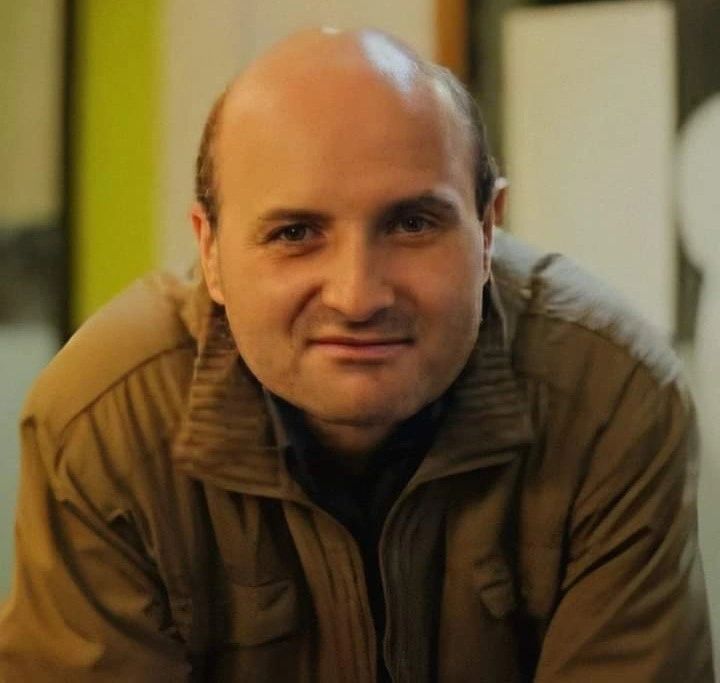
HoyLunes – The Hungarian writer László Krasznahorkai (Gyula, 1954) has been awarded the 2025 Nobel Prize in Literature, as announced this Thursday, October 9, by the Swedish Academy in Oslo, which praised his work “for its compelling and visionary writing that, amid apocalyptic terror, reaffirms the power of art”.
Krasznahorkai is one of the most distinctive voices in contemporary European literature. A modern master of the apocalypse, as Susan Sontag once described him, his demanding, dystopian, and melancholic universe—crafted with long sentences, hypnotic rhythm, and philosophical density—has earned him numerous awards and comparisons with authors such as Kafka, Beckett, and Thomas Bernhard. Throughout his career, he has explored the boundaries between the rational and the absurd, faith and despair, the end of the world and the persistence of art, across genres including the novel, the novella, the short story, and the essay, in a continuous reflection on emptiness.

Among his most notable works are “Satantango” (1985), his debut novel, “The Melancholy of Resistance” (1989), and “Baron Wenckheim’s Homecoming” (2016). Several of these works were adapted to film by Hungarian director Béla Tarr, with whom the author maintains a close artistic collaboration. Films such as “Damnation” (1988), “Satantango”, and “The Turin Horse” translate into visual language the same somber, slow, desolate, and meditative tone that characterizes his prose.
The decision of the Swedish Academy comes as only a partial surprise. In the days leading up to the announcement, the Hungarian author was among the favorites at betting houses, alongside Chinese writer Can Xue, Japanese novelist Haruki Murakami, and Romanian author Mircea Cărtărescu. Ultimately, the choice of Krasznahorkai reaffirms a Central European literary tradition marked by existential thought and the exploration of the limits of language. With this recognition, Hungary obtains its second Nobel Prize in Literature, following that awarded to Imre Kertész in 2002.

The award also sends a clear message about the Academy’s willingness to honor works that are difficult, complex, and daring—far removed from the most commercial circuits. In times of global crises and simplified discourse, rewarding an author who reflects on chaos, decay, and moral collapse represents a commitment to literature that unsettles and provokes.
Krasznahorkai has been translated into multiple languages, although his challenging style turns each version into an act of re-creation. In the Spanish-speaking world, independent publishers have helped disseminate his work in recent years, now making his narrative universe more accessible. His victory could encourage new translations and re-editions of his work.

Beyond its glamour, the Nobel Prize in Literature remains a symbolic space for recognizing the written word as a form of resistance. Krasznahorkai’s work—obsessed with the end of time, the ruins of modernity, and the search for meaning in darkness—embodies that resistance.
The prize will be officially presented on December 10 in Stockholm, during the traditional ceremony honoring Alfred Nobel. With this recognition, László Krasznahorkai secures his place in the contemporary literary canon as one of the most powerful, unsettling, and necessary voices of our time.
#hoylunes, #jorge_alonso_curiel, #lászló_krasznahorkai,