Technical, clinical, and strategic analysis of Artificial Intelligence-assisted embryo selection in the European ecosystem: morphokinetic fundamentals, impact on cumulative pregnancy rates, and regulatory challenges under the ESHRE framework and German legislation.
By Ehab Soltan
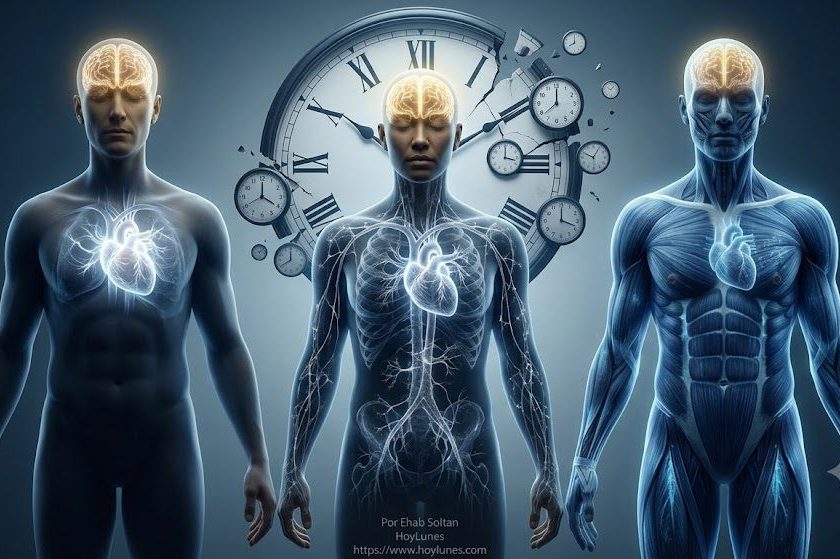
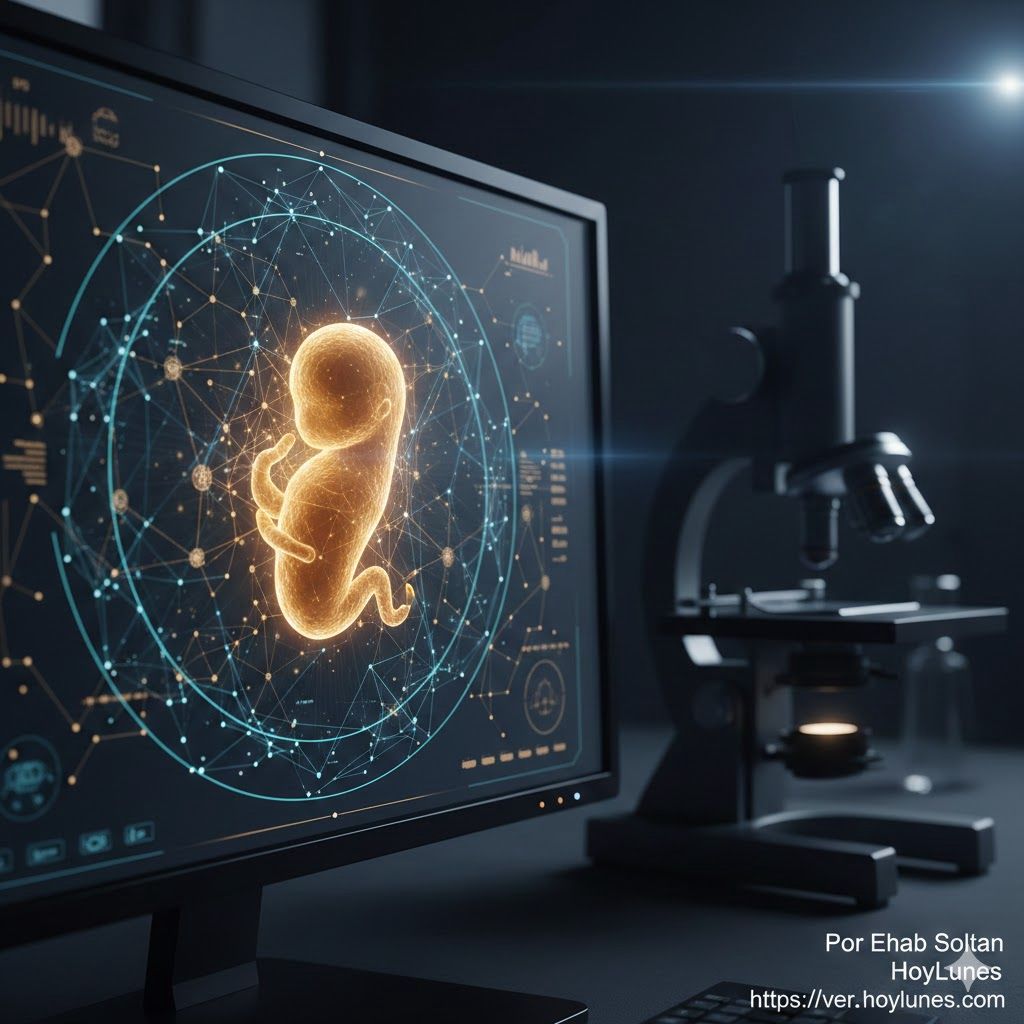
HoyLunes – For decades, embryology was a discipline of “clinical intuition” and artisanal mastery. Specialists observed through the microscope, assessed blastocyst symmetry, and, based on their experience, assigned a grade. It was a rigorous science, yet inevitably subjective: two experts could envision different destinies for the same cell. Today, the reproductive laboratory is undergoing a “systemic tipping point”: the transition from artisanal medicine to “scalable predictive medicine”. The introduction of Deep Learning-based systems allows for the analysis of thousands of morphokinetic parameters per second, replacing the old hand-drawn map with a high-resolution GPS that charts the beginning of life. In a continent conditioned by a demographic winter—particularly in powers such as Germany and the surrounding DACH countries—fertility has ceased to be a purely medical issue to become a strategic asset. Here, Artificial Intelligence (AI) acts as the definitive bridge between cellular biology and the data economy.
Clinical Validation and Published Evidence
The adoption of AI in embryo selection responds to a robust foundation of scientific evidence accumulated over the last five years. Pioneering research, such as that by “Khosravi et al. (´npj Digital Medicine´)”, has shown that neural networks can classify embryos with an accuracy exceeding 90%, surpassing the consistency of certified embryologists. Likewise, the work of “Tran et al. (´Fertility and Sterility´)” validated deep learning models capable of predicting clinical pregnancy directly from time-lapse video sequences.
From an institutional perspective, the guidelines of the “European Society of Human Reproduction and Embryology (ESHRE)” emphasize the importance of standardization to eliminate inter-observer variability. Although the review by “Armstrong S. et al. (´Cochrane Database Systematic Review´)” calls for more randomized controlled trials to confirm superiority in “live births,” multicenter studies indicate a significant reduction in ´time-to-pregnancy´ through the use of morphokinetic algorithms such as “KIDScore” or “iDAScore”.
The Intelligent Laboratory: Fundamentals of Morphokinetics
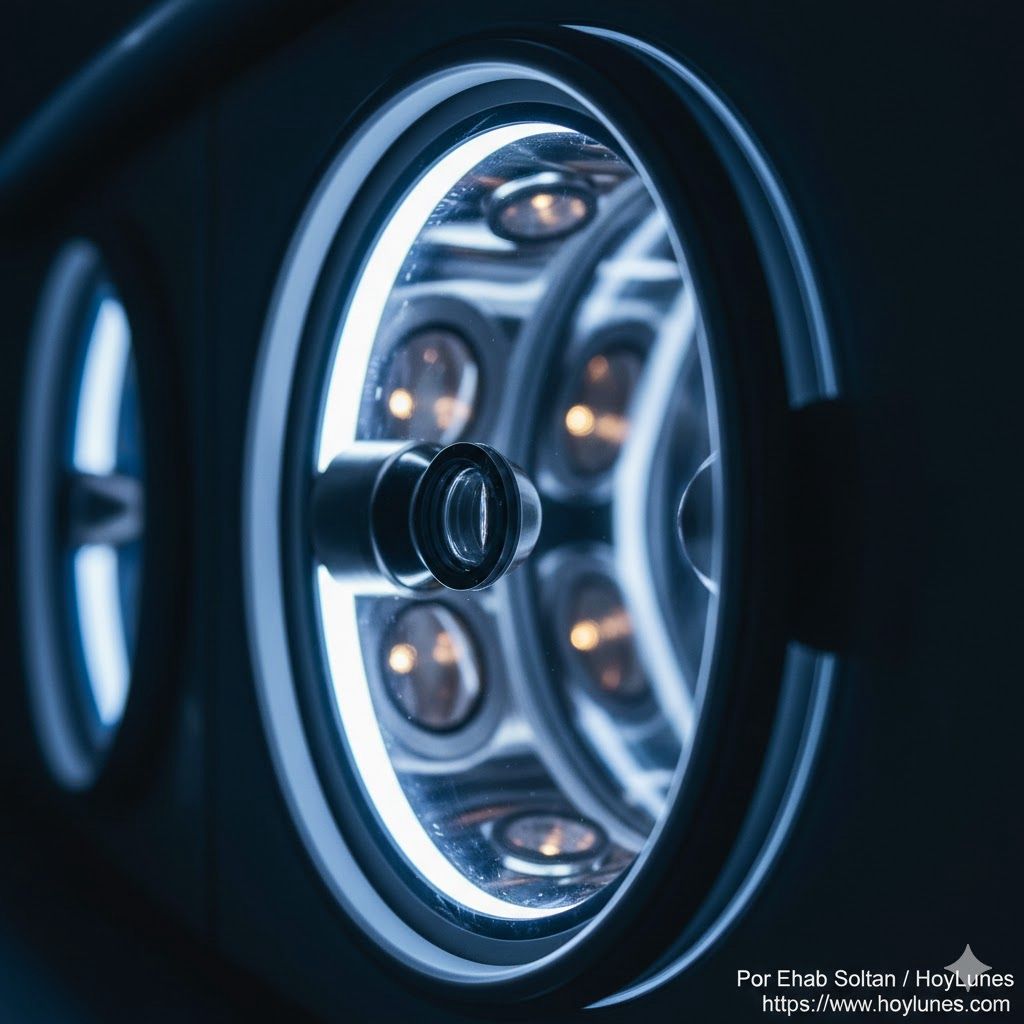
Time-Lapse Technology (TLT) has transformed the incubator into a 24/7 continuous monitoring system. By integrating high-resolution cameras into a stable homeostatic environment (°C, stable ), systems such as the “EmbryoScope” allow for the identification of temporal biomarkers invisible to the human eye:
-
$t_2, t_3, t_5$: Precise times of cellular division (2, 3, and 5 cells).
-
$ECC_2$ ($t_3-t_2$): Duration of the second cell cycle, a critical predictor of viability.
-
Mitotic Synchrony: The regularity of the division rhythm as an indicator of chromosomal health and implantation potential.
| Indicator | Conventional Evaluation (Morphology) | AI + Time-Lapse (Morphokinetics) |
| Implantation per transfer | $32\%$ (Estimated basal average) | $+10-15\%$ relative increase |
| Inter-observer variability | Moderate-High ($>20\%$ discrepancy) | Negligible (Algorithmic consistency) |
| Reduction of multiple transfers | Limited by clinical uncertainty | High (Favors Single Embryo Transfer) |
| Embryo manipulation | Daily (Thermal extraction stress) | Zero (Constant in situ monitoring) |
Algorithmic Limitations and Intellectual Maturity
Recognizing the system’s boundaries is vital for scientific rigor. Generalization bias remains a challenge: models trained on specific populations may lose accuracy when faced with the higher average maternal age demographics typical of German clinics. Furthermore, there is the risk of “overfitting”, where the algorithm becomes an expert in the conditions of a specific incubator or culture medium, failing when faced with external variations.
In this context, the “Embryonenschutzgesetz (EschG)” or Embryo Protection Act in Germany imposes additional pressure: AI must be extremely precise from the earliest stages, given the legal restrictions on the number of embryos that can be developed simultaneously.

Ethics and Transparency: Beyond the “Designer Baby”
It is imperative to strip AI of its science-fiction patina. Current algorithms do not “design” humans nor select aesthetic traits; they detect biological viability. The ethical debate in Europe is now shifting toward “data governance”: How are models trained? What geographical or demographic biases do they contain? Personalized medicine demands independent auditing and absolute transparency in the datasets that fuel these decisions.
The Algorithm of Existence
The true “Second Big Bang” does not occur within the incubator, but in the integration of computer vision with assisted clinical decision-making. The European reproductive laboratory is ceasing to be an artisanal workshop to become a high-intensity biological analysis unit. For the patient, it represents a reduction in the margin of uncertainty at the most vulnerable moment of their life. For the sector, it is the consolidation of an industry that no longer sells promises, but informed probabilities.
If the first Big Bang gave birth to matter, this second one redefines how we select which life has the highest probability of flourishing. A decision that, in 2026, is as biological as it is algorithmic.
Selected Bibliographic References
-
ESHRE Guidelines (2024). Good practice guide for ART laboratories.
-
Armstrong, S., et al. (2019). Time-lapse imaging for embryo selection in IVF. Cochrane Database of Systematic Reviews.
-
Khosravi, P., et al. (2019). Deep learning enables robust assessment and selection of human embryos. npj Digital Medicine.
-
Tran, D., et al. (2019). Deep learning as a predictive tool for fetal heart pregnancy. Fertility and Sterility.
-
Goodman, L. R., et al. (2016). Morphokinetic algorithms in human embryo selection. Human Reproduction.
`#TheAlgorithmOfLife` `#EhabSoltan` `#HoyLunes`