
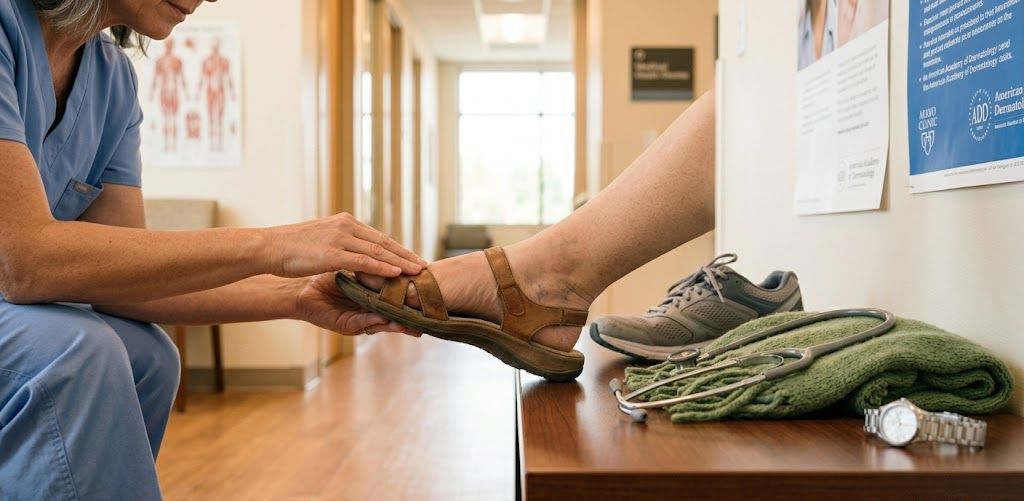
How to interpret the signals from our base, distinguish temporary discomfort from medical alerts, and care for our bodies with scientific criteria.
By Ehab Soltan
HoyLunes – For Ana, a 52-year-old woman, active and always on the move, summer used to be her favorite season. However, last July, that feeling of lightness began to fade. Her ankles, usually slender, started to swell to the point where their contours disappeared beneath the skin. “It’s just the heat”, she told herself while looking for wider shoes. But what Ana felt was not a simple reaction to the sun; it was her body sending an early signal of venous insufficiency, a condition that often becomes evident when the temperature rises.
As happened to Ana, we often forget that our feet are the furthest point from the heart. This distance makes them the first messengers of any imbalance in blood flow or the nervous system. Summer does not “invent” these ailments; rather, it acts as a high-visibility stage where the weaknesses that winter footwear kept hidden finally come to light.
The message hidden beneath the skin
In the organism, nothing functions in isolation. The feet act as sensitive terminals that react to internal chemical and physical changes. For example, that uncomfortable pressure we feel at the end of the day—the famous “fluid retention“—is what is known in medicine as edema. In many cases, it is nothing more than a natural response: blood vessels dilate in an attempt to cool the body. However, when that swelling becomes the rule and not the exception, it is asking us to look a little further.
«The foot is not just our support; it is a sentinel that warns when the internal balance begins to waver».
In the same way, certain changes that we sometimes dismiss as simple aesthetic problems, such as the tone of the nails or the temperature of the skin, can be the peripheral reflection of more complex processes. It is essential to understand that these signals are not diagnoses on their own—having cold feet does not confirm anemia, nor does a yellowish nail always imply a lung problem—but they are valuable clinical clues that, joined with other symptoms, help specialists understand our global health.

Frequent signals and their possible meaning
| What you notice | Most frequent cause |
| Swelling in both feet | Reaction to heat or signs of venous insufficiency. |
| Itching and peeling | Fungal infection (common in humid environments). |
| Heel pain upon waking | Possible plantar fasciitis due to inadequate footwear. |
| Persistent tingling | Nerve compression or altered sensitivity. |
| Thickened and yellow nails | Generally onychomycosis (nail fungus). |
The importance of knowing how to react
Sometimes, the line separating a typical summer discomfort from a true medical need is very thin. To identify when it is time to stop waiting and book an appointment with a professional, the following table details situations that require an expert assessment to avoid complications, following the recommendations of institutions such as the Mayo Clinic.
Signals that require immediate attention
| Situation detected | What it could be indicating |
| Swelling on one side only | If only one foot or leg swells suddenly, it could be a warning of a localized circulatory problem or venous obstruction. |
| Color changes and intense pain | A foot that turns reddish, feels very hot to the touch, or hurts intensely without a prior injury. |
| Difficulty breathing | When swelling in the feet appears alongside a feeling of unusual fatigue or shortness of breath. |
| Wounds that do not heal | Blisters or chafing that show no signs of closing after two weeks, especially in people with diabetes. |
| Loss of sensitivity | Loss of feeling in the toes or noticing numbness that does not resolve by moving or changing posture. |
The science of habit: what adds and what subtracts
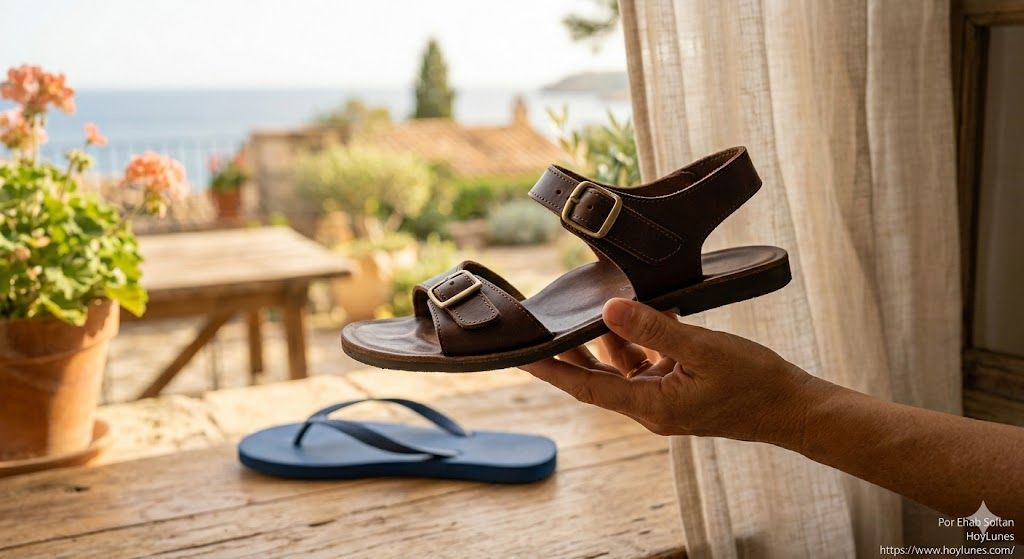
From a biomechanical point of view, our daily decisions write the health of our feet. Although rubber flip-flops seem like the ideal footwear for the heat, their lack of structure forces the arch of the foot (the plantar fascia) to perform an excessive effort. This does not mean we must ban them, but rather understand that their prolonged use during long walks can lead to painful inflammation.
On the other hand, women’s health has undeniable particularities. Hormonal changes directly influence tissue elasticity and how blood vessels manage fluids. In women who have already passed menopause, as in Ana’s case, the foot can be a silent sentinel: persistent pain after a walk along the shore could be a warning of a bone structure that needs more protection and firmer support.
Roadmap for a healthy summer
To enjoy the summer without our feet paying the price, it is essential to adopt routines that protect their integrity. This table gathers the habits that podiatry and dermatology specialists consider essential to keep infections and structural pain at bay.
Practical recommendations for daily care
| Recommended action | Expected benefit |
| Conscious hydration | Drinking water keeps the skin elastic. Using specific creams prevents cracks that serve as entry points for bacteria. |
| Thorough drying | Drying well between the toes is the best defense against onychomycosis, which affects 1 in 10 adults. |
| Protection in common areas | Wearing footwear in pools and public showers drastically reduces the risk of warts and other contagious infections. |
| Elevated rest | Elevating the feet above the heart for 20 minutes a day helps blood return more easily. |
| Footwear rotation | Not wearing the same shoes two days in a row allows the material to air out and prevents constant pressure on the same spots. |
«Caring for our base is not a gesture of aesthetics, but an investment in our mobility in the long term».

The foundation of our well-being
That summer, Ana discovered that her feet were not simply the support for her sandals, but a key piece of her well-being system. By starting to listen to them and choosing footwear with better support, not only did the swelling disappear, but she also regained the joy of walking without discomfort.
We often worry about the aesthetics of our feet when the heat arrives, but their true beauty resides in their ability to take us where we want to go. Paying attention to what they try to tell us is, at its core, an act of respect toward the vehicle that connects us to the world.
Sometimes, the first warning that something inside us needs attention does not appear as a major symptom, but silently, at the exact point where the body touches the earth.
#PodiatricHealth #FootCare #HealthySummer #Prevention #VenousInsufficiency #PlantarFasciitis #Onychomycosis #WomensHealth #Wellbeing #HoyLunes #EhabSoltan