When medicine stops asking “how to heal?” and begins questioning “how far to transform?”, the operating room becomes the final frontier of the human condition.
By Ehab Soltan
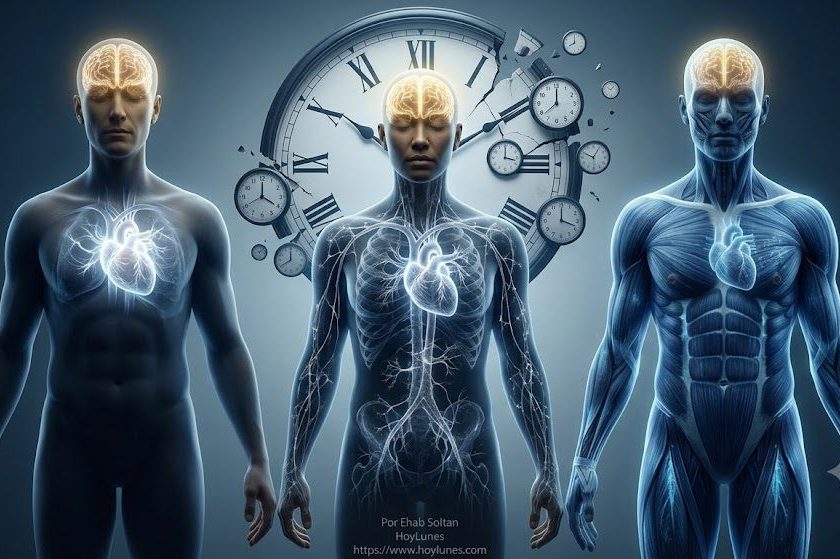
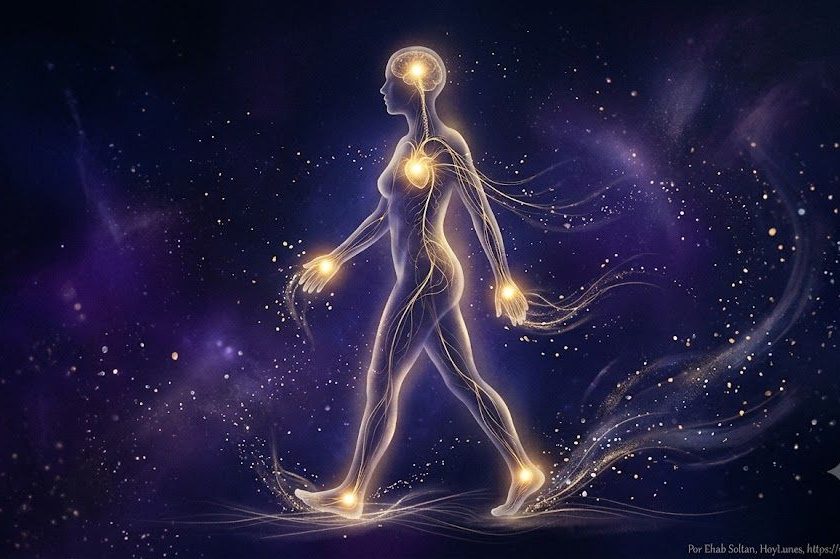
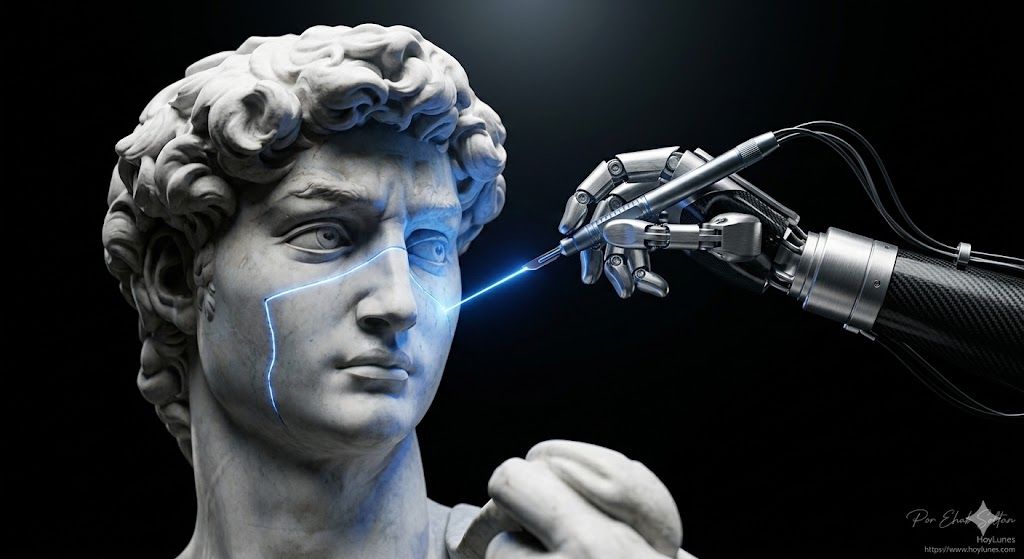
HoyLunes – The human body has never been strictly biological; it is identity, symbol, and narrative. For centuries, the medical act was limited to the restoration of homeostasis and functionality: suturing, amputating, resuscitating. Its normative horizon was health understood as the absence of disease. Today, however, the landscape has mutated: the operating room is also a design studio; the laser not only extirpates neoplasms but also erases time; and AI algorithms do not only detect carcinomas but also project “optimized” faces according to mathematical canons.
The border between biological function, subjective aesthetics, and medical ethics has ceased to be a stable limit and has become a disputed territory, where technique often outpaces prudence.
The very definition of health becomes a battlefield here. If we accept the classical formulation of the World Health Organization—health as a state of physical, mental, and social well-being—medicine acquires an expansive mandate that can justify almost any intervention. But if we redefine health as adaptive capacity and functional balance, the horizon changes radically. The issue is not semantic: it is normative. How we define health will determine the extent to which we legitimize medical intervention on healthy bodies.
Ontologically, we are faced with a mutation of the concept of the patient: from an organism seeking a cure to a subject demanding perfection. In this transition, medicine risks abandoning its healing vocation to transform into a technology of desire.
The Body as Organism and as Project
Modern medicine was born with a restorative vocation. Restoring a heart valve or reconstructing a jaw after severe trauma were milestones of functional physiology. However, the emergence of high-precision robotic surgery and genetic editing via CRISPR has shifted the objective from repair toward optimization.
As the philosopher Byung-Chul Han aptly warns, we live in a culture of self-exploitation where the individual perceives themselves as a permanent “project”. Under this prism, aesthetic dissatisfaction ceases to be a psychological process and is treated as a clinical pathology, demanding medical intervention to validate a digitally amplified social construction of beauty.
Function and Biological Imperative: Technical Overflow
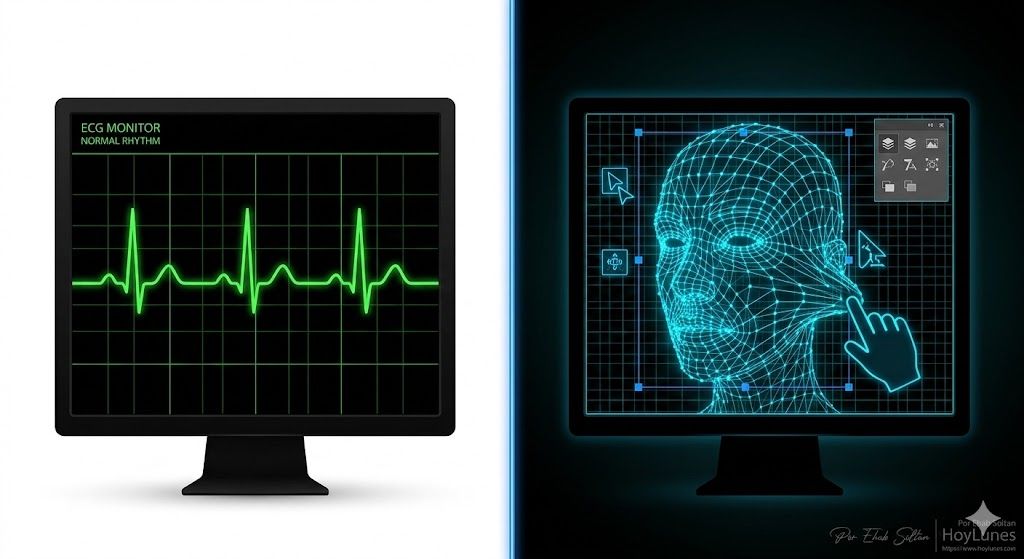
In clinical terms, medicine pursues restitutio ad integrum. This criterion seems objective when we speak of restoring respiratory capacity or correcting cardiopathy. However, in today’s surgical environment, the concept of “normality” is contingent.
Reconstructive surgery is the perfect example of convergence: restoring the face of a burned patient is not a luxury; it is returning their functional and social dignity. Nevertheless, the limit fractures when intervention seeks transhumanism: prosthetic muscle enhancement, extreme body modifications, or pharmacological cognitive enhancement in healthy subjects. Is it medicine to expand standard biological capacities, or are we facing a logic of performance where biology is merely an upgradeable hardware platform?
A paradigmatic example is breast reconstruction after an oncological mastectomy. Here, function and aesthetics are inseparably intertwined: restoring volume is not a cosmetic whim but an element of bodily identity and psychological recovery. In contrast, requests for multiple facial surgeries in patients without anatomical alterations evidence the shift from repair toward competitive modification. Both scenarios use the same technical tools; what changes is the ethical foundation.
Aesthetics: From Subjective Well-being to Healthcare Consumption
The clinical argument in favor of aesthetic medicine is rooted in mental health: improving self-esteem. But medical evidence warns of phenomena such as “Snapchat dysmorphia”: patients who attend consultations with filtered images of themselves, demanding a physical reality that defies human anatomy.
From a technical perspective, the dilemma is profound. If bodily perception is mediated by algorithms that distort the image, the autonomy of the patient—a pillar of bioethics—is compromised. The professional no longer operates on tissue but on a hyper-aestheticized cultural imaginary. When the patient transforms into a client, clinical criteria risk surrendering to market demand, turning medical practice into an industry of narcissism.
From clinical psychiatry, body dysmorphic disorder is associated with persistent distortions of self-image and a high rate of post-surgical dissatisfaction. Various studies show that aesthetic intervention does not correct the psychopathological core when it is primary. Operating on a distorted perception does not always modify the distortion; sometimes it reinforces it. Here, the surgical indication ceases to be technical and becomes an act of clinical discernment.

Ethics as Arbiter Under Technological Pressure
The principle of Non-Maleficence (primum non nocere) acquires a critical dimension in non-therapeutic procedures. Every intervention carries risks: sepsis, anesthetic complications, or tissue necrosis. Accepting these biological risks to satisfy fluctuating aesthetic standards generates an ethical tension that medicine cannot ignore.
The principlist framework of Beauchamp and Childress (autonomy, beneficence, non-maleficence, and justice) was designed to treat diseases, not insecurities. The physician is not a mere executor of technically possible desires; they are the custodian of the integrity of being. Diagnostic AI and 3D simulations increase the power of the surgeon, but that power demands proportional responsibility: technical capacity does not, by itself, grant moral legitimacy.
Artificial intelligence is not neutral. Algorithms trained with aesthetic databases reproduce cultural biases regarding youth, symmetry, or facial proportion. If the mathematical model implicitly defines what is “more beautiful”, medicine risks automating social canons without subjecting them to ethical deliberation. The challenge is not only technical but epistemological: who programs the bodily ideal?
There is, furthermore, a less visible but crucial dimension: distributive justice. In healthcare systems with finite resources, every high-cost elective intervention poses an uncomfortable question: what other medical needs are being sidelined? Clinical ethics does not operate in a vacuum; it is inscribed in a healthcare architecture where the allocation of resources is also a moral act.

Toward an Ethical Aesthetic
Contemporary medicine possesses an unprecedented transformative capacity, but it must look at itself in its own mirror. An ethical aesthetic does not demonize beauty, but it demands:
Rigorous psychopathological evaluation before elective interventions.
Absolute transparency regarding iatrogenesis and real risks.
Professional resistance against the medicalization of aging.
Medicine must remember that not everything technically possible is morally justifiable. Its mission is not to perfect bodies to infinity but to preserve the integrity of the person. When the scalpel stops responding to disease and begins to obey the market, the medical act loses its ethical center. True innovation does not consist of transforming more, but in knowing when to abstain. There, in that conscious renunciation, lies the moral maturity of contemporary medicine.
Sources and Clinical References
World Health Organization (WHO). Constitution of the WHO and definition of health.
Beauchamp TL, Childress JF. Principles of Biomedical Ethics. Oxford University Press.
Byung-Chul Han. The Burnout Society (La sociedad del cansancio). Herder Editorial.
American Society of Plastic Surgeons (ASPS). Cosmetic Surgery Statistics Report 2025-2026.
Sarwer DB, et al. “Psychological considerations in cosmetic surgery”. Plastic and Reconstructive Surgery Journal.
Moreno JD. The Body Politic: The Battle over Science in America.
`#Bioethics` `#MedicalEthics` `#ClinicalPhilosophy` `#HoyLunes` `#EhabSoltan` `#AestheticMedicine` `#DigitalHumanism` `#FutureOfHealth` `#MentalHealth` `#CRISPR`
This is for informational purposes only. For medical advice or diagnosis, consult a professional.