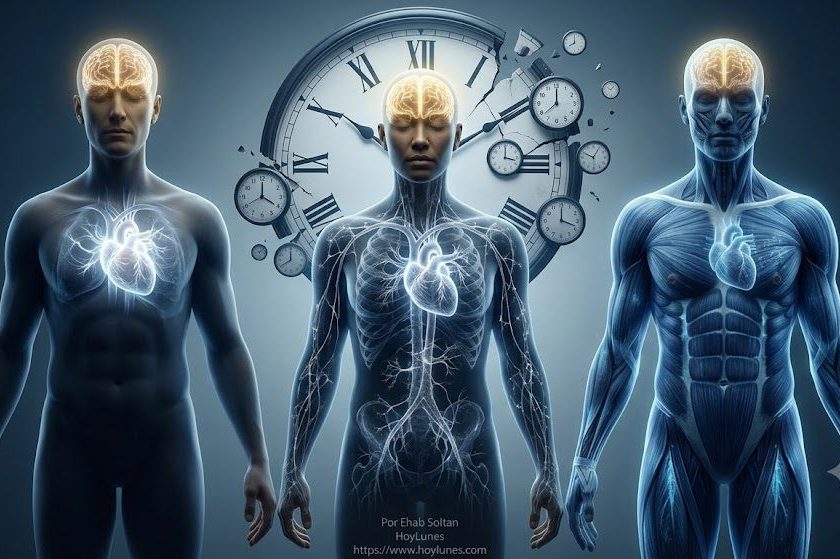
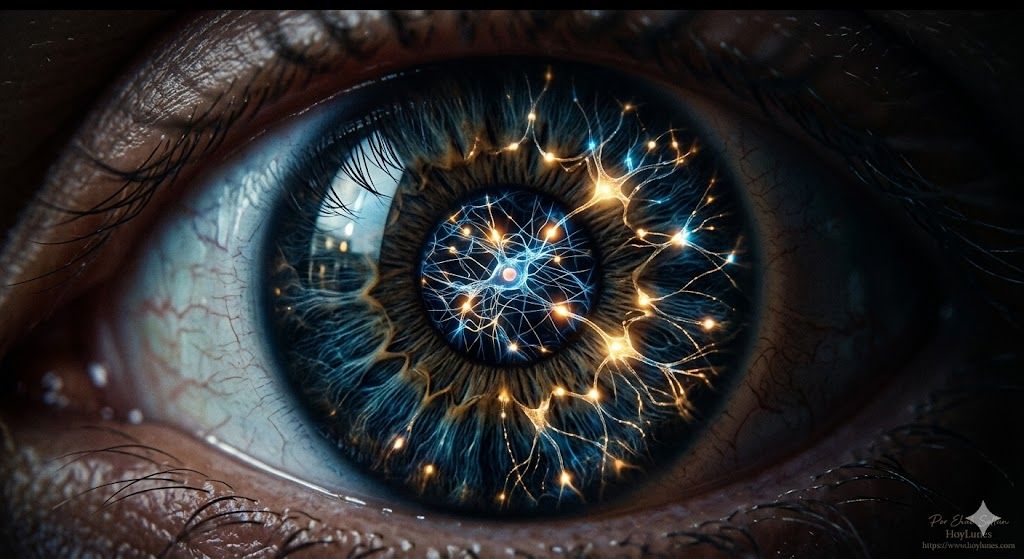
The Retina as the Brain’s Biological Clock: The Eye Could Reveal Decades of Neural Aging. How neuro-ophthalmology and artificial intelligence are turning the fundus into a tool for measuring the biological age of the nervous system.
By Ehab Soltan
HoyLunes — Historically, we have accepted the brain as a black box—a territory whose true age and wear we could only intuit through costly MRIs or cognitive tests, often when the damage was already evident. However, science is shifting its gaze—literally—toward a tissue that has been right in front of us all along. The retina, that delicate tapestry of cells at the back of our eyes, is emerging as the most precise biological chronometer of the central nervous system.
In a world where life expectancy already exceeds 80 years in many European countries, brain aging has become one of the great challenges of modern medicine. Diseases such as dementia or mild cognitive impairment are typically diagnosed only after neurodegenerative processes have been advancing in silence for years.
A New Medical Frontier: When Ophthalmology Measures the Brain’s Time
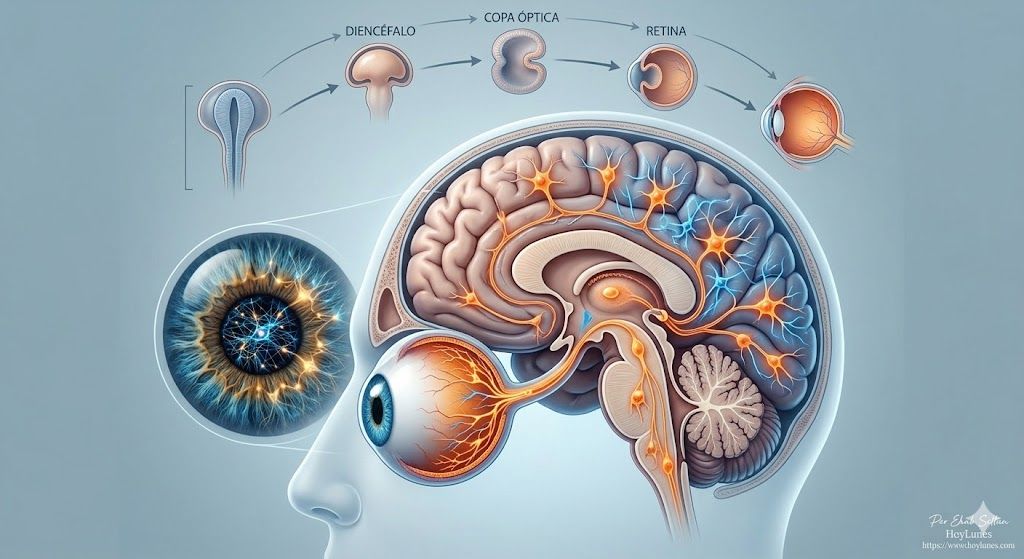
For decades, medicine has operated within silos: the ophthalmologist cared for vision, and the neurologist for thought. But embryology tells a different story. During gestation, the retina does not “grow” toward the eye; it is, in reality, a protrusion of the brain that extends outward. Originating from the diencephalon, retinal ganglion cells share the same vulnerabilities to degenerative processes and microvascular alterations as cortical neurons.
This intimate connection means that the retina does not just resemble the brain—it is brain. It shares its neural architecture, its microvascular network, and its degradation processes. Today, measuring brain aging no longer requires looking “through” the skull, but rather observing the reflection of time in the retinal tissue.
The Retina: The Only Visible Part of the Central Nervous System
The great diagnostic advantage of the retina is its transparency. It is the only window where doctors can observe living neurons and blood vessels without a single incision. Thanks to Optical Coherence Tomography (OCT), introduced in the late 20th century, we have moved from seeing an orange blur to mapping microscopic strata with near-histological resolution.
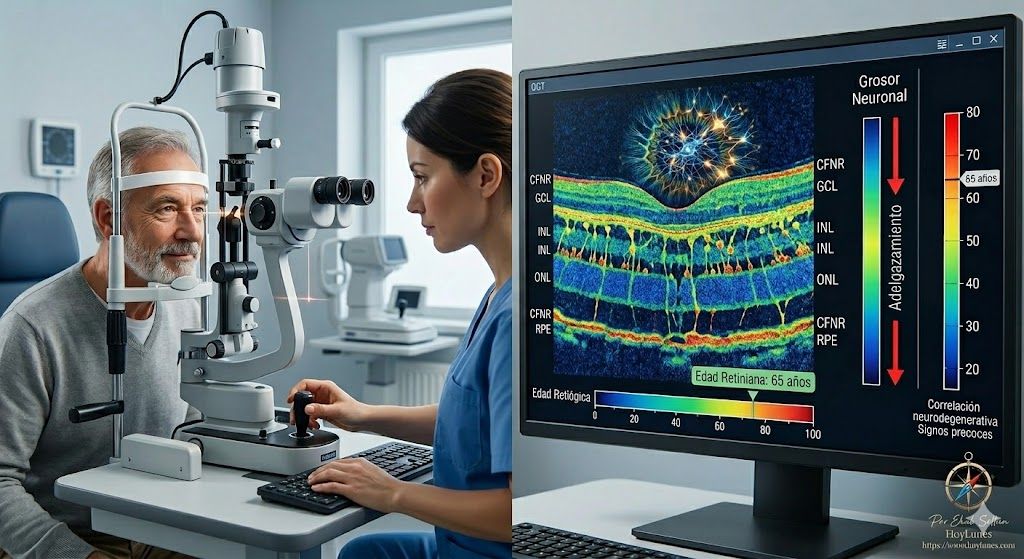
Just as magnetic resonance imaging revolutionized neurology, OCT has transformed ophthalmology by allowing the measurement of retinal layers with micrometric precision. By analyzing the thickness of neural layers and the density of nerve fibers, modern neurology is finding astonishing correlations: what occurs in the microcirculation of the retina is often a direct echo of what is happening in the deeper vessels of the cerebral cortex.
Retinal Thinning as a Marker of Neural Aging
How does an idea age? Biologically, it translates into the loss of synaptic density and the reduction of the neuronal population. Recent research has detected that retinal thinning often precedes—by years—the loss of brain volume detectable in a conventional MRI. This phenomenon, observed in pathologies such as Alzheimer’s, Parkinson’s, and multiple sclerosis, suggests that the eye is an early warning system.
The reduction of the retinal nerve fiber layer (RNFL) acts as a sentinel; when these cells begin to dwindle, the “clock” of neurodegeneration has already begun to tick. This is where gerontology finds an unprecedented predictive tool: the possibility of intervening before memory begins to fail.
The “Retinal Clock” Hypothesis
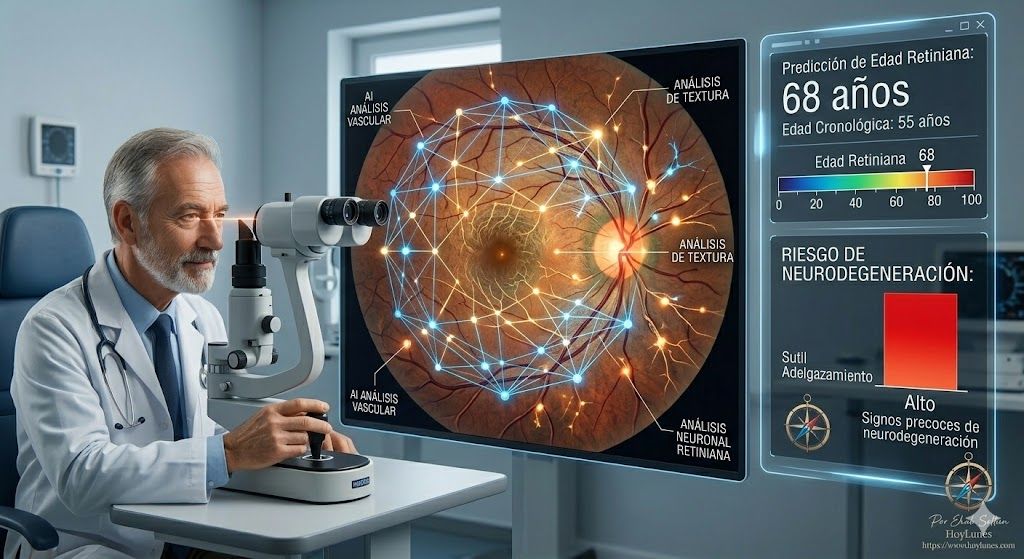
The most ambitious proposal from current scientists is the creation of a “retinal age algorithm.” The idea is revolutionary: if your retina looks like that of an 80-year-old, but you are 60, your risk of neurodegenerative diseases is drastically higher. This “biological clock” measures the gap between chronological age and the real health of the nervous system.
Although researchers warn that this approach is still in the validation phase, retinal age is a promising indicator that would allow for a distinction between normal physiological aging and incipient neurological decline.
Artificial Intelligence and the Diagnosis of Brain Aging
The true catalyst for this paradigm shift is Artificial Intelligence (AI). Through deep learning, biomedical engineering algorithms can analyze vascularization patterns and cellular textures invisible to the human eye. These systems are already capable of predicting a patient’s biological age with a minimal margin of error, identifying subtle signs of cardiovascular and neurological risk. AI does not replace the physician but grants them “superpowers” of diagnostic observation.
A New Preventive Medicine
The clinical validation of the “retinal clock” will reposition the ophthalmologist at the heart of preventive medicine. If these methods are integrated into public health programs, the eye exam could become a low-cost, high-efficiency neurological screening tool. In the near future, a five-minute exam could be enough to detect:
Early signs of cognitive decline.
Predisposition to neurodegenerative diseases.
The actual rate at which our central nervous system is aging.
When Looking into the Eyes Means Looking at the Brain
Popular wisdom has always said that the eyes are the mirror of the soul. Twenty-first-century science has corrected the phrase: the eyes are the mirror of the brain. What began as an anatomical curiosity has become one of the brightest promises of precision medicine.
At the end of the day, understanding how we age requires looking toward where life becomes visible. And it seems the answer was always there, waiting in the depths of our gaze. Perhaps the future of neurology does not begin in the skull, but in the retina.
Scientific Sources
National Eye Institute (NEI): Advances in retinal layer visualization and public health. [https://www.nei.nih.gov]
Harvard Medical School: Research on the eye-brain axis and optical biomarkers. [https://hms.harvard.edu]
Nature – Scientific Reports: London A. et al. Study on the retina as a window to the nervous system.
The Lancet Neurology: Cheung CY et al. Retinal imaging as a biomarker of neurodegeneration.
This information is for purely informative purposes. For medical advice or a diagnosis, consult a professional.
#Neuroscience #Ophthalmology #ArtificialIntelligence #PreventiveHealth #HoyLunes #EhabSoltan