
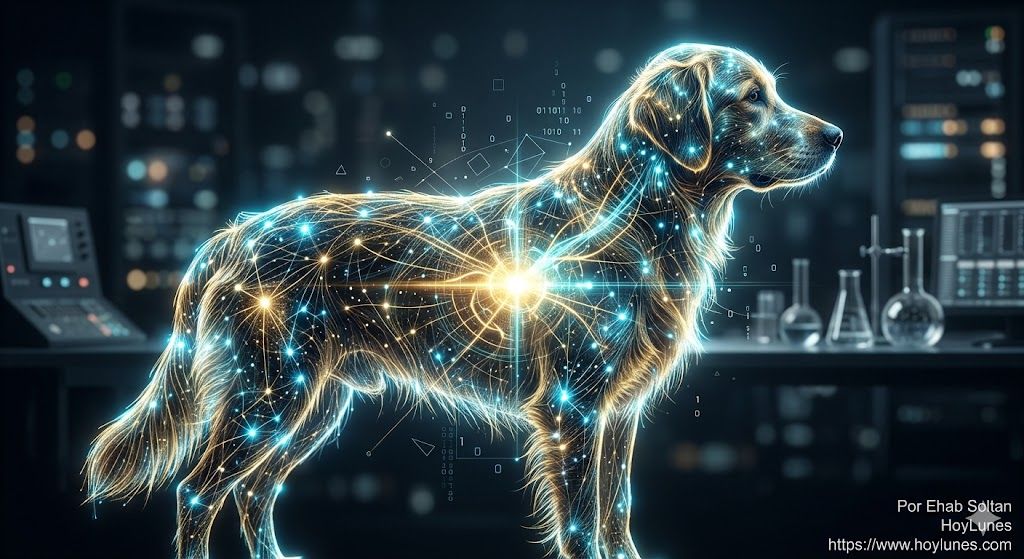
The petcare industry is sliding toward a paradigm shift where the convergence of biological data, genomics, and animal behavior promises something audacious: deciphering the individual’s health long before disease appears.
By Ehab Soltan
HoyLunes (Analysis | Health and Transformation of the Pet Sector)
For decades, the maturity of the animal nutrition market has been audited using linear and visible metrics: the migration toward human-grade ingredients, the sophistication of formulations by breed or life stage, and the explosion of the premium segment.
Today, however, we are witnessing a much deeper tectonic plate shift, though less evident to the naked eye.
Nutrition is ceasing to be an isolated transactional event—the simple act of filling a bowl—to transform into the central node of an integrated biological and behavioral ecosystem. In this new equation, the following intervene synchronously:
Behavioral telemetry (activity and rest patterns).
Physiological biomarkers (microbiome, metabolomics).
Granular consumption dynamics.
The market evidence points clearly: the sustained growth of functional and personalized nutrition is not a passing fad, but the response to a demand for proactive health. The incorporation of nutraceuticals, prebiotics, and specific fatty acids no longer seeks merely the “absence of disease,” but rather homeostatic optimization.
We are not simply facing a product improvement. We are facing a structural change in its function within animal welfare.
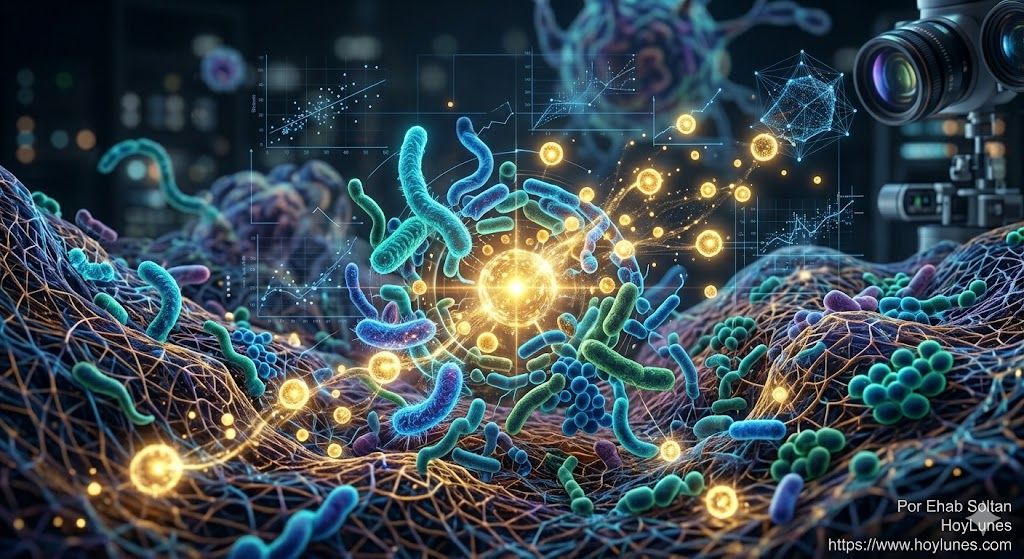
The Great Shift: From Therapeutic Reaction to Biological Anticipation
The central hypothesis that is beginning to structure the future of the market is as ambitious as it is clear:
Pet nutrition is mutating toward a system of precision algorithmic prevention, underpinned by data.
This vector change implies a tectonic shift in sector strategy:
From Clinical Reaction → to Physiological Anticipation.
From Population Standard → to Genomic Individualization.
From Commodity Product → to Continuous Health Service.
The global increase in the prevalence of food sensitivities and chronic pathologies linked to diet only accelerates this direction. Facing these challenges requires a sophistication that the current model, based on averages, cannot offer.
Nevertheless, the scientific potential is immense, but market implementation is, for now, asymmetrical. And it is precisely in that asymmetry where the lucid strategic opportunity lies for visionary actors.

The Biometric Subscription: Nutrition as an Uninterrupted Relational Bond
The second catalyst for this transformation does not emerge from biology, but from the architecture of the business model.
The convergence of IoT devices (smart feeders, wearables), digital platforms, and subscription models is reconfiguring the nature of the brand-user relationship. These technologies already allow, for example, in situ monitoring of intake kinetics and dynamic adjustment of the ration in real time.
This digital ecosystem introduces a critical transition:
We move from punctual and fragmented purchasing to a symbiotic and continuous relationship.
With this, a profound shift in value operates:
The physical product ceases to be the end in itself.
Data-derived intelligence and user experience replace it as the true asset.
For sector corporations, this transcends “product innovation”; it is the construction of a biological loyalty infrastructure.
Companies operating on a European scale, such as digital distribution platforms and specialized petcare ecosystems, find themselves in a particularly strategic position to lead this transition. Not only because of their logistical capacity or market reach, but because of their privileged access to consumption patterns, recurrence, and user behavior. In this context, the challenge is not only to incorporate innovation but to orchestrate it coherently within a user experience that translates complexity into trust.
In this context, platforms with a direct and recurring relationship with the end user do not just distribute product: they are in a position to interpret early signals of consumer and animal behavior. This opens a relevant strategic question: to what extent can these platforms evolve from an intermediation role toward a role of active curatorship of animal welfare, where the recommendation not only responds to demand but anticipates it?
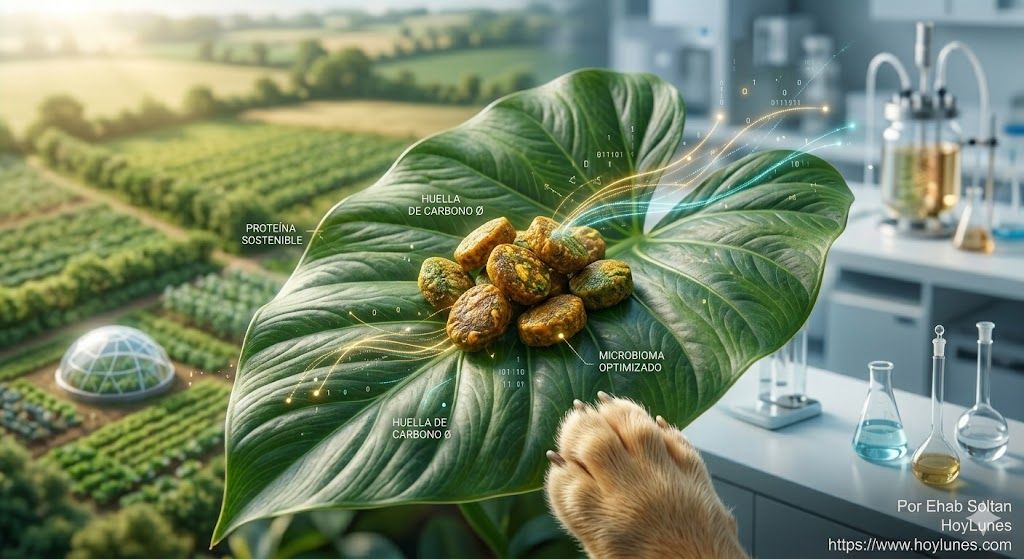
The Sustainability Equation: A Non-Negotiable Variable
The “premiumization” of the market has brought with it an unsustainable ecological contradiction. Various macroeconomic and scientific analyses have highlighted the significant water and carbon footprint of certain diets based exclusively on conventional animal protein.
The industry’s initial response—alternative proteins (insects, fermentation), regenerative agriculture—is necessary, but is still in the market validation phase.
Here an inescapable strategic line is articulated:
The contemporary high-value consumer not only audits organoleptic quality; they are beginning to audit the ethical and environmental impact of the formulation.
Operational Translation: What This Shift Implies for the Sector
Beyond the conceptual framework, this transition is beginning to translate into concrete decisions:
Evolution toward subscription models based on the animal’s profile.
Progressive integration of behavioral data into product recommendation.
Greater consumer sensitivity toward sustainability and transparency.
Need to simplify scientific complexity into clear messages.
Competitive advantage will not be found in adopting these lines, but in integrating them before they become standard.
Strategic Provocation: Adapt or Interpret?
This map of changes does not describe a final destination. It describes a territory in a state of flux.
For consolidated companies and emerging disruptors, the imperative is not simply to react to these trends with marketing tactics. The challenge is to interpret them in their essence before the new paradigm stabilizes.
In this competitive context:
Anticipating silent biological needs.
Forging continuous and deep bonds.
Translating biological complexity into algorithmic nutritional decisions.
It will be a much more decisive competitive advantage than mere expansion of the SKU catalog.
The Trust Nexus: The Balance Between Science, Ethics, and Experience
The deployment of this predictive approach raises the most fascinating ethical and operative question for this decade:
¿How do we orbit toward data-driven hyper-personalization without alienating the animal’s guardian and maintaining rigorous consistency between scientific evidence, product integrity, and brand narrative?
The organizations that manage to decipher that nexus will not only capture market share. They will consolidate a position of reference in the sector.
Intelligence as the Final Ingredient
The future of the pet industry does not gravitate around what we sell.
It gravitates around how we interpret the animal’s biology through the metabolic signal of what it consumes.
In this algorithmic nutrition scenario:
Nutrition is the entry point.
Data is the nervous system.
And scientific trust is the only determining asset.
This scenario does not define an arrival point, but a space for shared construction. For companies operating in the petcare ecosystem, the opportunity lies not only in adapting but in actively participating in the definition of this new framework: connecting science, product, and experience in a coherent and accessible way for the end user.
#PredictiveNutrition #AnimalWelfare #PetcareIndustry #DataDrivenNutrition #VeterinaryInnovation #ProactiveHealth #EhabSoltan #HoyLunes