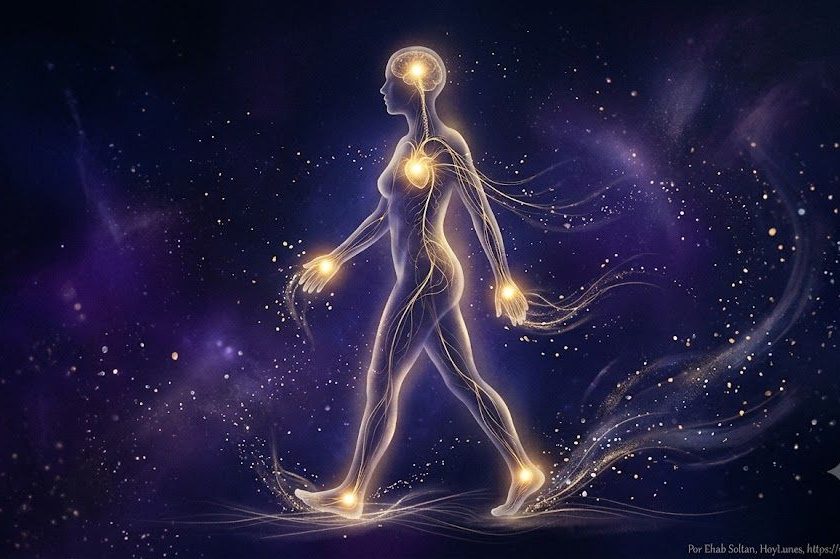
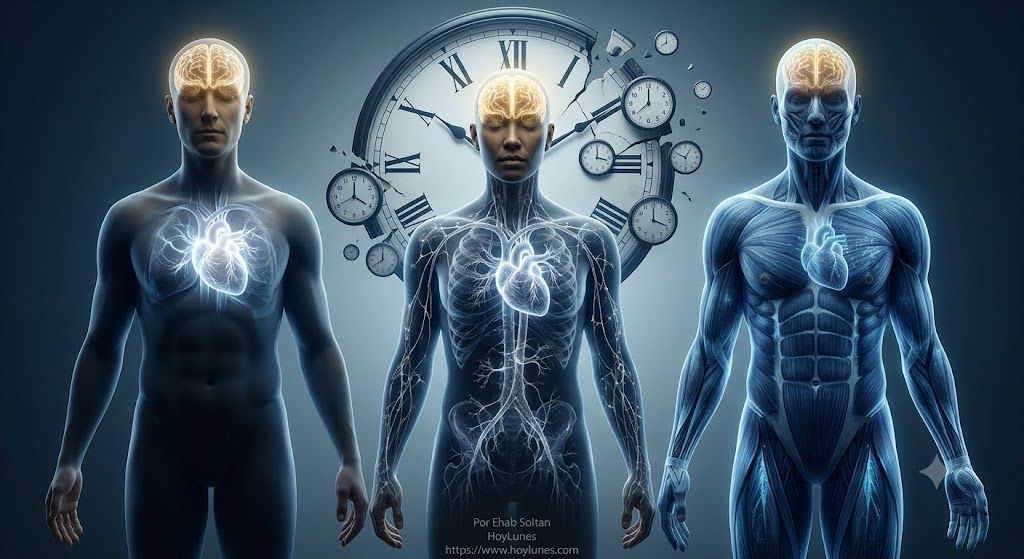
Our body does not age as a single unit; each organ follows its own biological calendar.
The human heart, brain, immune system, muscles, kidneys, and skin can age at different biological paces. The next revolution in medicine might not lie in determining our age, but in identifying which parts of our body live in different decades.
By Ehab Soltan
HoyLunes – Imagine entering a clinic and, after an advanced analysis of biomarkers and proteomics, the doctor hands you a report with the following data:
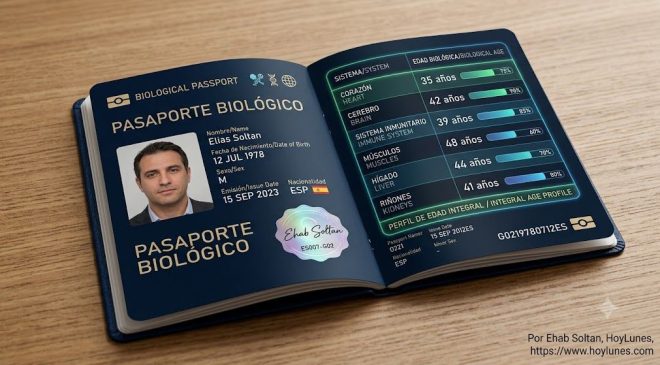
Your passport: 52 years old.
Your heart: 43 years old.
Your immune system: 67 years old.
Your brain: 49 years old.
Faced with this scenario, the mandatory question ceases to be the one we have asked ourselves for centuries. It no longer matters to know “how old am I?”, but rather “which age should I believe?”.
Over the past decade, science communication has been obsessed with the concept of “biological age” as a single, definitive number—a second clock that corrects the chronological one. However, the most recent research from institutions at the forefront of biological gerontology suggests that this approach remains incomplete.
What if biological age, as we understand it, did not exist? Emerging science invites us to tear down the myth of the single clock and accept a far more fascinating reality: we are a mosaic of times passing at different speeds. Welcome to the era of asynchronous aging. And that changes one of the oldest questions in medicine. Perhaps two people with the same chronological age do not need the same prevention, because they are not aging in the same way.
Medicine is beginning to map the body’s internal time, not just its diseases.
The Invention of Time: Why Birthdays Became the Medical Metric
To understand how we got here, we must remember that medicine adopted chronological age—birthdays—not because it was a perfect biological measure, but because it was a flawless administrative metric. Counting the Earth’s revolutions around the Sun is easy, predictable, and standardized.
Historically, public health systems and insurance companies needed a threshold to predict when a population would begin to fall ill. If you cross the 65-year line, you automatically enter the “older adult” category. For over a century, this convention worked reasonably well for mass health management.
The problem is that cellular biology does not know how to read calendars. The calendar organizes society; it does not organize the wear and tear of the body. By treating chronological time as the primary cause of decline, traditional medicine homogenized humanity, assuming that two people born on the same day of the same year share the same internal deterioration.
The Problem: Damage Does Not Accumulate Equally
Aging is not a genetic program designed to destroy us in a coordinated manner; at its root, it is a gradual accumulation of molecular and cellular damage that exceeds the organism’s repair capacity. And herein lies the error of conventional medicine: no organ accumulates that damage in the same way. The organism shares a single birth, but not the same biological rhythm.
Each tissue in our body experiences life differently. Your skin cells are exposed to ultraviolet radiation and environmental temperature fluctuations; your kidney cells filter metabolic toxins under constant hydrostatic pressures; the neurons in your brain, mostly non-renewable, must survive and integrate into electrical circuits throughout your entire existence. Thinking that the kidney and the brain are going to degrade in perfect synchrony ignores the fundamental laws of physics and cell biology.
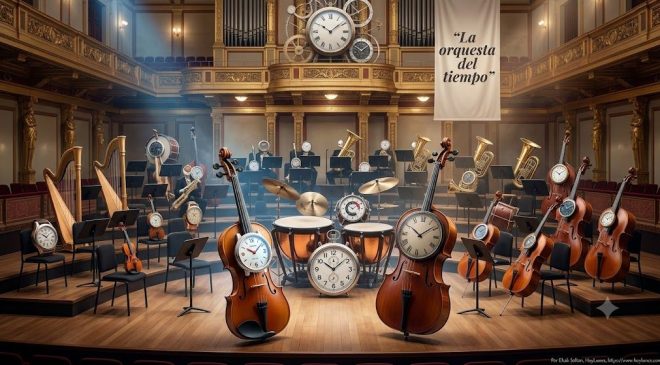
New Maps of Aging: The Orchestra of Biological Clocks
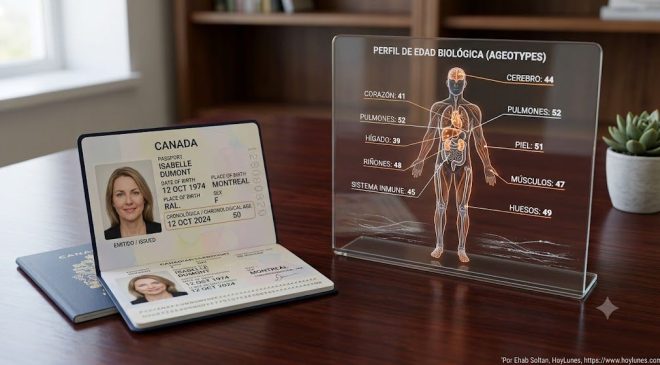
Thanks to breakthroughs in artificial intelligence applied to medicine and “omics” analysis (genomics, proteomics, metabolomics), scientists have begun to map what are known today as “aging types” or “ageotypes”. We could call it the “temporal profile of the body”: the map showing that each organ lives at a different biological speed. Current research demonstrates that aging behaves like an orchestra without a conductor, where each instrument plays at its own tempo.
Today we can measure and isolate different clocks:
| Biological Clock | Key Indicators | Clinical Implication |
| Cardiovascular Age | Arterial stiffness, intima-media thickness, biomarkers of myocardial stress. | Evaluates the resilience of the oxygen-pumping system. |
| Immunological Age | Naive/memory T-cell ratio, levels of inflammatory cytokines (inflammaging). | Measures defense capacity and the level of silent inflammation. |
| Metabolic Age | Insulin sensitivity, advanced lipid profiles, mitochondrial function. | Determines efficiency in managing and transforming energy. |
| Cognitive Age | Functional connectivity in neuroimaging, hippocampal volume, beta-amyloid protein load. | Reflects cognitive reserve and neuronal processing speed. |
| Epigenetic Age | DNA methylation patterns in specific tissues (second and third-generation Horvath clocks). | Measures the rate of wear and tear at the level of gene expression. |
When these clocks are analyzed independently, the divergence is astonishing. A 50-year-old person can possess the heart of a 38-year-old, the immune system of a 62-year-old, the cognitive agility of a 45-year-old, and the muscle mass of a 70-year-old. We are neither old nor young; we are a combination of both. Age ceases to be a fixed point to become a biological profile.
[Chronological Lifeline: 52 years old]
├── Heart: ……. 38 years old ……. (Resilient)
├── Brain: ……… 45 years old ……… (Stable)
├── Immune: ……….. 62 years old ……….. (Exhausted)
└── Muscle: …………. 70 years old …………. (Accelerated)
Why Do Organs Differ? The Physics of Asynchrony
This internal disparity is not accidental. Organs diverge due to four critical factors:
- Different environments and cellular niches: The liver lives in a metabolically hostile but highly regenerative environment. The heart, conversely, is trapped in a perpetual biomechanical cycle with an almost non-existent cell renewal capacity after childhood.
- Different stressors: A sedentary lifestyle can accelerate an individual’s muscular and metabolic age, while chronic stress or a lack of sleep accelerates their cognitive and immunological age. Stressors are not distributed equally throughout the body.
- Different repair systems: The efficiency of autophagy mechanisms (cellular cleanup) and DNA repair varies substantially among cell types. Some give up sooner than others.
- Tissue-specific gene expression: Although all your cells share the same genome, each organ activates a distinct set of genes. Genetic polymorphisms that protect you against neurodegeneration might offer no protection against renal fibrosis.
That is why no preventive treatment can aspire to be universal.
The next medical revolution might not consist of adding years to life, but of discovering which part of the body needs time before all the others.
The Paradigm Shift: Reconfiguring Medicine’s Questions
Biomedicine is not looking for the elixir of generalized eternal youth; it is changing the questions it formulates in laboratories.
For generations, medical journalism and clinical practice have focused on watertight compartments: How do we prevent diabetes? What causes Alzheimer’s? Contemporary longevity research takes a step back to look at the big picture. Instead of asking “What disease does the patient have?” or “How old is the patient?”, researchers increasingly ask:
Which part of this patient is aging fastest, and how is it dragging down the rest of the system?
Disease ceases to be the starting point; it becomes the visible consequence of a biological clock that had been running years ahead of the rest. This approach transforms medicine from a reactive discipline into a living systems engineering science. If we discover that a patient’s immune system is aging twice as fast as their cardiovascular system, we know exactly where to apply the intervention long before the first clinical manifestation of disease appears.

The Implications of a Multitopic Body
Accepting that we live in multiple biological timelines redefines the future of human health across five fundamental axes:
- Ultra-early detection: By identifying which organ is deviating from the normal aging trajectory years before traditional symptoms appear, the window of intervention expands substantially.
- Real personalized prevention: It no longer makes sense to speak of general wellness guidelines. If your biological Achilles’ heel is renal age, your nutrition and habits must be radically different from those of someone whose vulnerability lies in endothelial age. Personalized medicine will no longer consist solely of adapting treatment to each person, but of adapting it to the organ that needs it most.
- Targeted drug development: Clinical trials of the future will not seek to “reverse aging”, but to slow down specific clocks. Senolytics or mitochondrial activators will be directed at target tissues with surgical precision.
- Clinical trial optimization: Grouping patients in scientific studies by their chronological age introduces massive statistical noise. By grouping them by their immunological or metabolic age, the efficacy of new therapies can be measured with unprecedented clarity.
- Healthy longevity (Healthspan): The ultimate goal is not to add years to the end of life in a state of systemic fragility, but to synchronize the clocks. The current medical ideal is to ensure that all your organs reach old age with uniform vitality, preventing the premature failure of a single organ from collapsing the entire system.
Inhabiting Our Own Timelines
Perhaps the greatest mistake of modern medicine has been to believe that human beings all age at once, like a monolithic block dragged by the leaves of the calendar.
Perhaps we never had a single age. What we truly have is a biological landscape where some organs advance, others resist, and others need help long before symptoms appear.
Science is showing us that we are not a single aging body. We are a complex colony of organs, tissues, and cells that experience time individually. Relieving the pressure of chronological age allows us to look at our body with a new dose of wonder and respect: not as an obsolete machine that deteriorates equally, but as a dynamic ecosystem where some parts remain young and resilient, waiting for science and our habits to give them the necessary time to balance the scales. Perhaps the future of medicine does not consist of asking ourselves how much we age, but of discovering which part of us needs help before the others.