In a market dominated by science, perception, and regulation, consumer trust has become the primary risk—and the most unstable asset—of the sector.
By Ehab Soltan
HoyLunes – For decades, the cosmetics industry has built its empire on a foundation of aspiration and rigor. Success has been cemented by an implicit promise: visible efficacy backed by science. Time-defying creams, serums with molecular precision, and treatments that seem to verge on technical perfection. The language is deliberately technical; the results, aspirational. However, the contemporary consumer no longer buys just a product; they buy certainty.
From a strategic perspective, this shift is not merely reputational. It is structural. It directly affects pricing power, consumer loyalty, and, ultimately, the sustainability of the business model for the entire industry.
And that certainty, for the first time in industrial history, has ceased to be unconditional.
In an ecosystem where access to information is capillary and health sensitivity is a new form of activism, the question has mutated. It is no longer enough to know if a product “works”. The question that now keeps strategy directors awake at night is much deeper: “Can I afford to believe in this?”
This transformation is not a cosmetic adjustment. It is a structural break in the chain of trust.
Science vs. Perception: The New Seismic Shift in Laboratories
Giants like L’Oréal have invested fortunes and decades into research centers that many universities would envy. Their technological muscle is, objectively, unquestionable. But the battlefield has shifted coordinates: the challenge no longer occurs within the formulation, but in the narrative.
We are facing an inescapable reality: the most advanced industry in applied biotechnology is, simultaneously, one of the most besieged by public suspicion.
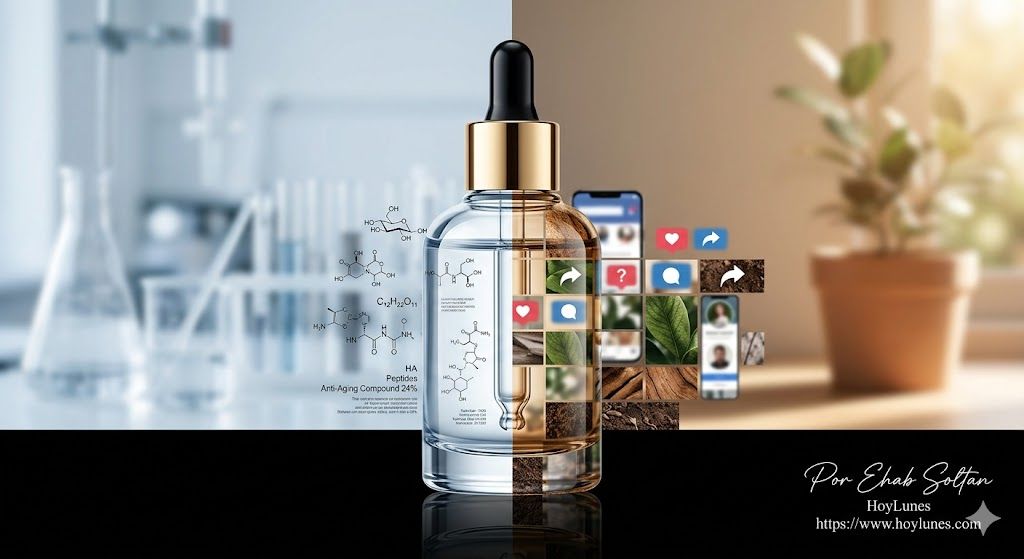
Today, the perception of an ingredient is not decided by a committee of experts in Brussels, but in the chaotic interaction of multiple layers: the virality of an influencer, the rigor (or lack thereof) of a component analysis app, and a regulation that often trails behind social demand. In this scenario, scientific evidence is systematically losing ground to emotional and algorithmic dynamics that companies do not control.
For companies of L’Oréal’s stature, this poses a critical dilemma: investing in science no longer guarantees leadership if the terrain of perception is not mastered simultaneously.
Sustainability: The End of the Era of Adjectives
There was a time when the word “sustainable” was an elegant ornament, a differentiator for the premium segment. Today, it is a field of permanent auditing.
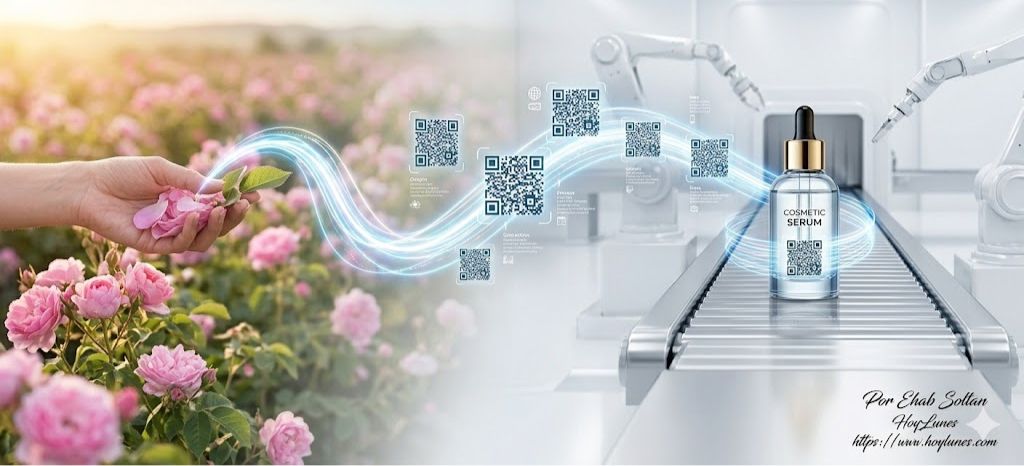
Recyclable packaging or natural-origin ingredients no longer impress unless they are accompanied by radical traceability. The market has developed a keen sense for detecting greenwashing, and scrutiny is relentless. Here, the strategic tension emerges: To what extent can a global corporation be transparent without exposing itself to the competition?
Sustainability can no longer be a marketing department; it must be a verifiable architecture from the origin of the raw material to the end-of-life of the packaging. The companies that understand that transparency is not a loss of control, but a gain in brand sovereignty, will be the ones to survive the cycle shift.
This scrutiny is not just reputational. Regulatory initiatives driven by bodies such as the European Commission are tightening criteria for environmental claims, turning any ambiguity into a direct legal risk.
The Consumer as Chief Auditor
The balance of power has shifted irreversibly. The consumer has transitioned from a passive recipient of promises to a real-time auditor. They analyze the INCI (International Nomenclature of Cosmetic Ingredients), question the ethics of the supply chain, and compare labels with almost professional precision.
Mobile ingredient-analysis apps and digital evaluation platforms have amplified this phenomenon, allowing any user to question formulations in seconds, regardless of their scientific background.
This democratization of knowledge (and pseudo-knowledge) introduces a systemic risk: the loss of legitimacy. A company can have the most revolutionary formula on the market, but if its communication fails to connect with the user’s ethical demands, that formula is born dead. Trust has ceased to be an asset owned by the company to become a shared and extremely volatile capital.
Communicating Complexity: The Art of Not Simplifying
The industry’s greatest sin has often been underestimating the public’s intelligence, translating complex chemical processes into empty slogans. The current challenge is Herculean: explaining without confusing, convincing without overacting, and innovating without sparking suspicion.
When the narrative detaches from the evidence, credibility shatters. But when science shuts itself in its ivory tower and fails to communicate, perception (and often fear) takes its place. Strategic success today lies in finding that “sweet spot” where brutal honesty becomes the most powerful sales tool.
Brands that fail to solve this equation will not only lose credibility; they will lose conversion capacity, margin, and positioning in the premium segment.
Toward a New Ontology of Value
We are at a turning point. The value of a cosmetic product no longer rests solely on the classic tripod:
Proven efficacy.
Sensory experience (texture and scent).
Brand aura.
Today, value expands toward intangible but decisive variables: the coherence between what the company says in its annual reports and what the consumer feels upon opening the jar. In this new stage, credibility is not an attribute of the product. Credibility is the product.
This forces a redefinition of internal metrics: trust ceases to be an intangible to become a measurable strategic indicator, directly linked to retention, recurrence, and customer lifetime value.
The future of cosmetics will not be decided solely in laboratories or marketing campaigns. It will be decided by the ability of companies to maintain coherence between science, communication, and corporate behavior in an environment of permanent vigilance.
For sector leaders, the question is no longer whether they must adapt, but how to do so without eroding their brand identity or profitability. The question remains open—and it is purely strategic:
Is your organization prepared to operate in a market where every claim can be audited in real-time by the consumer?
This is not a theoretical debate. It is a direct invitation to rethink the model.
Sources and Reference Frameworks:
European Commission – Regulatory framework on safety and claims.
SCCS (Scientific Committee on Consumer Safety) – Scientific risk and safety assessments.
OECD – Standards for responsible business conduct in supply chains.
McKinsey & Company – Consumer trends analysis.
Statista – Global consumer behavior data.
#CosmeticCredibility #BeautyIndustry #ConsumerTrust #SustainabilityClaims #CosmeticRegulation #HoyLunes #EhabSoltan