
Cruise bookings for 2027 reveal a silent transformation in the tourism industry: when price ceases to be the sole argument, imagination becomes the real product, and destinations are compelled to compete for memory.
By Ehab Soltan
HoyLunes – There is a scene that has not yet occurred. A traveler looks at the calendar with many months still remaining before the marked date; the ship has not arrived at the port, and the sea envisioned in their mind still belongs to the future. They have not tasted the ship’s cuisine, gazed at the horizon from the deck, walked down the gangway, or strolled through any of the cities listed on the itinerary. And yet, they are already traveling. They have not experienced anything yet, but they have already begun to imagine everything.
They have booked.
At first glance, it appears to be merely a financial matter: berths sold for 2027 while we are still navigating 2026, high prices that hold firm, and bookings arriving earlier than expected compared to the sector’s historical rhythms. But looking solely at the numbers would be remaining on the surface. Underlying this economic dynamic is a far deeper transformation: tourism is learning to sell the future before it happens.
Buying Before Arriving: The Economy of Expectation
For a long time, price was one of the tourism industry’s most powerful attraction tools. Waiting carried a reward; comparing, negotiating, hunting for a last-minute deal, or relying on the appearance of an opportunity formed part of many travelers’ habitual behavior. However, something changes when a person is willing to commit their budget a year or more in advance and accept a high cost. At that moment, they are no longer purchasing merely transportation, accommodation, or a succession of port calls: they are acquiring the peace of mind of securing a date and the promise of an experience that, for months, will exist solely in their mind.
That imagination holds genuine economic value. For those marketing the journey, persuading the client to buy it before living it represents more than filling a seat: it means converting a future expectation into a present decision.
In this new context, price does not disappear, but its meaning changes. Consumers accept a larger outlay when they perceive that what they are acquiring possesses a value that is difficult to replace. Price ceases to be an isolated figure and begins to be weighed against what the traveler fears losing: a specific date, a particular itinerary, a family celebration, a cultural experience, or the certainty of securing their desired trip before it sells out.
The decisive question for the sector will not merely be how much the traveler is willing to pay, but what they are willing to pay to experience.
The Real Product Is Not the Cabin: The Port as a Stage
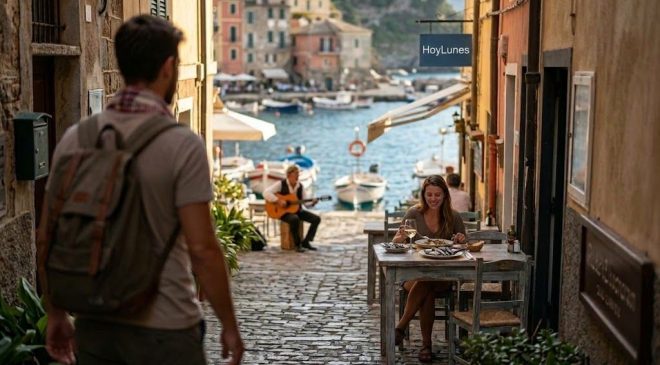
This transformation forces an examination of the role of destinations. If the cruise line markets the voyage, the port city must ensure that the arrival carries meaning. A port can receive thousands of passengers and leave them with a fleeting impression, or it can achieve something far more valuable: making visitors feel that they have genuinely entered the life of the territory. The difference lies not merely in the size of the terminal or the berthing capacity, but in the quality of the experience.
When the traveler disembarks, the answer is not found in logistics alone. It might be a square, a market, a chance conversation, a local dish, or music they did not expect to hear; sometimes, the difference between visiting a place and knowing it fits within a few minutes. For this reason, the tourist port can no longer be understood solely as a transit infrastructure between sea and land. The current question is whether the port can also transform into a stage: not to become an artificial theme park, but to allow the territory to express itself there by bringing together landscape, culture, gastronomy, heritage, and local life.
By shifting from a transit infrastructure to a welcoming space, the visitor ceases to be a passenger and becomes a guest. And a guest should not merely pass through a place: they should feel that, even if only for a few hours, that territory has opened a door to them.
The Competition for Memory and the Rigor of the Promise
Destination marketers have historically competed to attract visitors and, subsequently, to increase their average stay and spending. Today, the most demanding competition is fought for memory. A traveler can tour several cities in a week and forget the details of most, but they will remember an unexpected conversation, a shared table by the water, or the feeling of having discovered something authentic. The economics of tourism rely on statistics, but memory is built with moments. And those moments are difficult to manufacture when there is no clear identity behind them.
On the other hand, selling so far in advance introduces an operational demand and a requirement for managing expectations. The earlier an experience is marketed, the more time the promise has to grow in the client’s imagination, but also the more time it is exposed. The longer the promise exists, the more time the traveler has to compare it with reality. During that period, economic circumstances, weather, itineraries, or consumer perceptions can fluctuate. Therefore, anticipation requires a trust that cannot be built solely with advertising messages, but through the rigorous fulfillment of what was promised.
The Sea as a Living Space and the Port of Call as a Gateway
For maritime tourism to respond to this advance demand, cultural elements, gastronomy, music, heritage, and social initiatives must cease to be treated as incidental add-ons and instead integrate into the destination’s identity. The sea can be much more than the backdrop for a photograph: it can be the space where the experience unfolds. A musician playing as the landscape shifts, a route that allows heritage to be understood from the water, or a social initiative that transforms a tourist call into a human encounter bestows a different dimension upon the journey.
For a port, receiving a vessel is an operational achievement; for a destination, it must be the beginning of a relationship. If the port of call is limited to a standardized excursion and a hurried return to the ship, the connection with the territory dissolves. If, conversely, the port offers a proposal connected to local identity, it stops acting as a border and transforms into a gateway. Its true value lies not merely in permitting entry, but in awakening curiosity for what exists on the other side.
The analysis of advance bookings reveals occupancy data, but also variables that are more complex to measure: trust, desire, and the capacity to imagine an experience before living it. For businesses, the challenge consists in marketing the expectation; for ports, in transcending infrastructure; and for destinations, in understanding that hospitality begins in the mind of the traveler.
The journey can begin long before the ship reaches the port: it begins the day someone imagines how they will feel there. Therefore, the great question for the industry in the coming years will not merely be how many visitors will arrive, but this:
What will we have made them imagine before they arrive?
Because when price ceases to be the sole reason to choose, imagination becomes part of the product. And the destination that manages to occupy that space in the traveler’s mind before they set sail has already begun, in some way, to welcome them.