
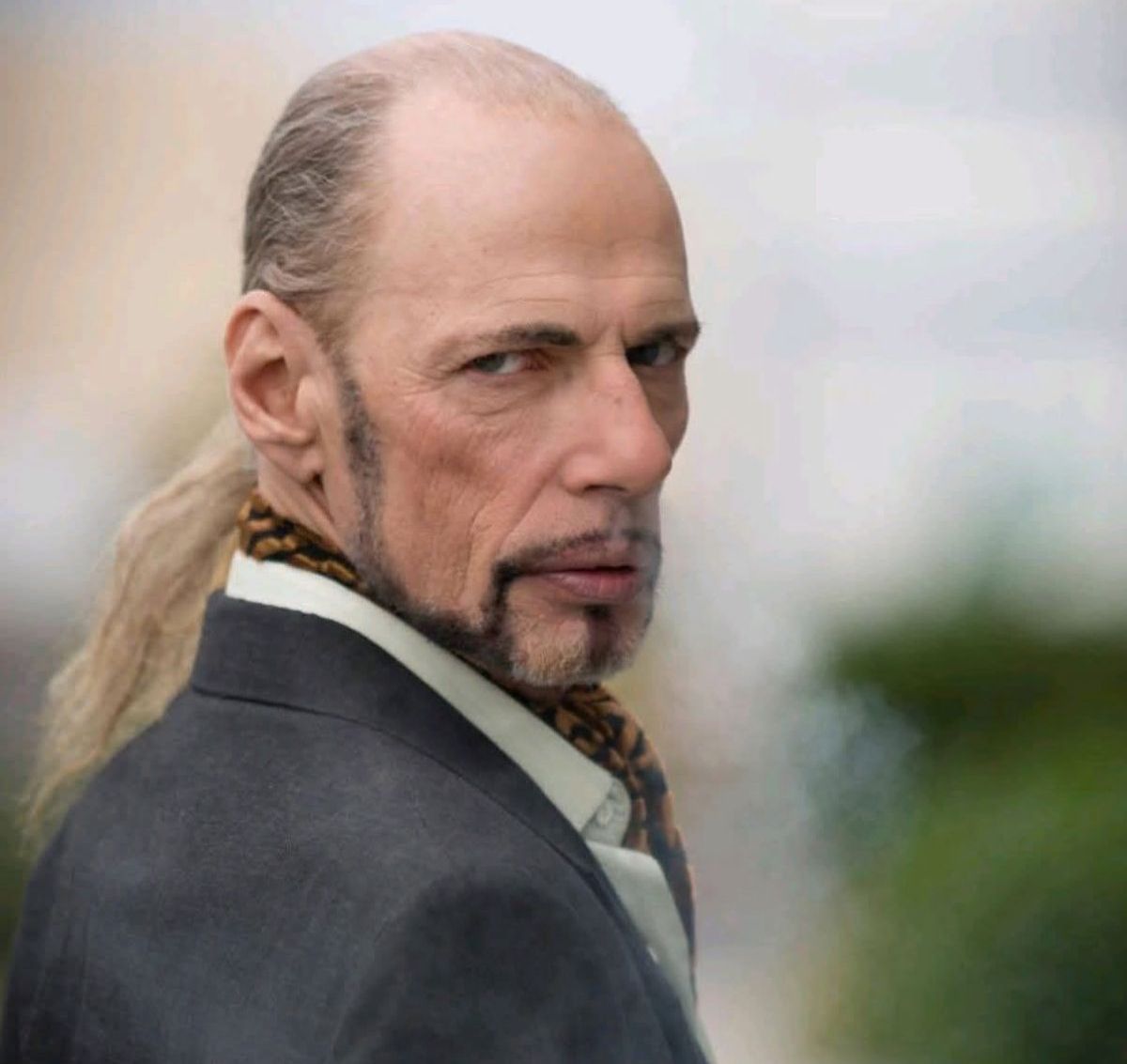
Frankie Ray: “I wanted to be honest in the film, vulnerable, to remind others that, deep down, we all want to love, to be loved, to be included”.
By Jorge Alonso Curiel
HoyLunes – After more than three decades working as an actor, Frankie Ray has found in Bad Haircut, directed by Kyle Misak, the character that could mark a turning point in his career. His portrayal of Mick, a peculiar and tormented barber, has become one of the film’s main attractions and has earned praise on its international festival circuit. In recent days, Ray traveled to Paris for L’Étrange Festival, where the organization went so far as to define him as a “brilliant” actor and “a festival in himself“. In Valladolid, in the month of July, Bad Haircut won the Best Film Award at PUFA 2026.
Ray speaks exclusively to Hoylunes.com and Andares de Escritor about his career, his struggles, the craft of acting, and what it means for him to play Mick. “Acting is something very intimate. The camera sees everything. It doesn’t like exaggeration. It appreciates experience and emotional honesty”, he says. A sincere conversation in which the actor lays bare the man behind the character and reviews a life marked by struggle, art, solitude, and an endless search for opportunities. Come in and enjoy.
Welcome, Frankie. After 36 years as a character actor in independent film, television, and commercials, you have finally achieved broad recognition from both audiences and critics thanks to your portrayal of Mick, the eccentric barber in Bad Haircut (2025), the fourth film directed by Kyle Misak. Did you ever imagine you would achieve this kind of success?
Every single day for the past 37 years. As an artist—not rich, not famous—who has struggled in supporting roles, or with lead roles in movies that were never finished or released, roles with no arc or journey, just bad guys; or as a human being who, throughout his life, never really managed to master or succeed in everything he set his mind to…
Looking back, in retrospect, I’ve realized that I’ve spent years developing certain skills and, almost every time, right before they have the chance to bear fruit, I’ve quit: “Okay, I’ve gotten good at this. Let’s try that”. Without staying to master it and reap the rewards of my labor.
I’ve told myself on every occasion that I am developing skills I can use to build valuable things for myself as a whole or for my work. But really, what is the deepest seed? The fear of success. Success is uncharted territory where I have zero experience.
I’ve learned that if you give a million dollars to a poor person, they will get rid of it as fast as they can to get back to something familiar. The struggle. Does that make sense? What keeps us going? Artists, human beings—is it the end result? Getting there, hitting the jackpot, wealth, achievements, recognition?
For me, I choose to believe that whatever we focus on, whatever we repeat and hold in our mind, attracts that into our world. So, in response to your question, I maintain an affirmation. One I’ve repeated for years. I’ve repeated the mantra endlessly in my head. While driving, while walking, when the world takes a shit on me: “I am healthy, I am rich, I am happy, I am a superstar”.
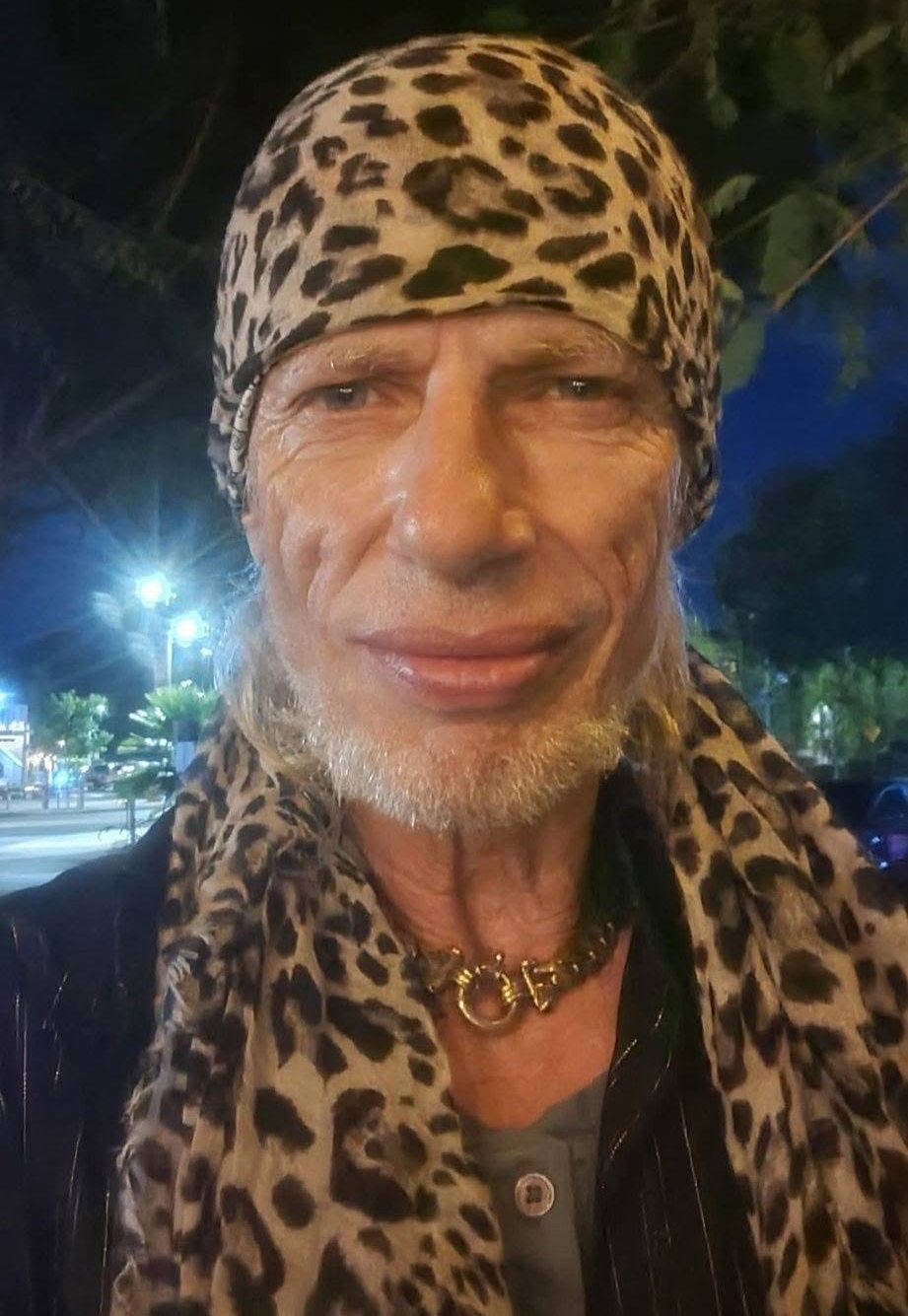
For the last three years, my mind and emotions have been on hold, ever since we wrapped shooting on Haircut. Waiting for it to be released. Waiting to know if I measured up, if I have what it takes or not. Hoping that, after 34 years as an actor, I’ll get the chance to take off, to get an opportunity to work at the highest levels of the business, where quality work has the chance to be seen by the industry and the general public.
Doing good work is useless if the public or the industry doesn’t see it, if they aren’t aware of what you can bring to the table. So I’ve imagined it, hoping, wishing that maybe one day I’d get a shot. And I got that shot. The stars aligned. Now we wait to see how the world outside the festivals receives it, how the industry receives it.
The press has been mind-blowing, saying all the things an actor could ever want to hear, all the things we imagined they might one day say about our work. For me, this movie was everything. I know it sounds strange, but when you work, plan, and fight your way to be allowed to make ART, you can look in the mirror and think: 34 years and I’m still not there. Maybe I’m not really good. Or maybe I just haven’t had the right projects. Maybe it will never happen.
Three decades is a long time. Obviously, I know the industry knows I’m here. I’ve done 50 national commercials, film, television, and yet, one logically begins to doubt oneself.
If your screen work is fascinating and unique, your biography is even more extraordinary. Your life seems written by a great novelist—or a great screenwriter. It’s filled with human and vital experiences, enough to inspire an extraordinary movie. You’ve been a professional dancer, dance instructor, singer, actor, stuntman, special effects technician, and writer, and you’ve also gone through periods of homelessness. There is, however, one detail that is especially surprising: as a young man, you enlisted in the U.S. Military and spent three years stationed in Germany between 1979 and 1982. How does an artist like you, endowed with such sensitivity, end up in a world so far removed from artistic expression? What did your time in the military mean to you?
I enlisted at 17 in 1979. I was poor, living in Bend, Oregon. I was starving; in the winter, I was freezing. My best friend at the time enlisted, and I didn’t want to be left behind. My stepbrother, whom I looked up to and lived with, Jimmy, was in the army in Germany and told me lots of stories. I did basic training at Fort Gordon, Georgia. Then I went to McKee Barracks in Germany. At first it was fine, but then I discovered beer and hashish. I entered as a private, and three years later, I was still a private. I was a shitty soldier, even though I was good at the skills required to be one. I wasn’t very good at listening, obeying orders, or following rules; I was always getting into trouble. But there I discovered two things: that I was good at dancing and playing the guitar.
My roommate, Tim Patterson, introduced me to the guitar back around 1979/1980. Dancing and playing guitar were the only artistic things in the army. I was just a defiant young punk throwing away the opportunity the military gave me. We abused any drugs we could get our hands on, and that is one of my biggest regrets.
I got out of the army at Fort Lewis, Washington. In 1982, AIDS had just surfaced. Crack, too. I joined a band called Lamore where they let me play rhythm guitar, but we had no gigs and I had no income. The band kicked me out of the house where we lived, and I went to live in a plastic shed next to the highway in Tacoma, Washington.
I started looking for work. At 20 years old, with no skills and no education. I got a job in a restaurant as a dishwasher and saw an ad in the newspaper for a training course to become a ballroom dance instructor for Fred Astaire Studios. My thought was: I can learn music from the dancers’ perspective. It would help me understand music and how those who listened to it interpreted it. And it would help me on my path to becoming a rock star.
I thought I could succeed there. It seemed like a good plan. It was a six-week course; every night, four hours, unpaid, and the top three students would be invited to join the staff. So I moved on from the band, from rock, to scrubbing floors by day and learning the waltz, foxtrot, tango, and more dances, plus learning how to teach them.
But on top of all that, I was selling weed to survive and getting high. The same old dysfunctional, self-sabotaging pattern in me.
Earlier I mentioned that your life could become a great movie. Which director would be the ideal person to bring it to the screen? And which actor would be right to play you?
Hmmm. I’ve never thought about this. Actor? A young Steve Buscemi? A young Willem Dafoe? Director? I think Quentin Tarantino would do it justice. He has a balance between nuance and the absurd. I think he’d love to meet me, haha. I’ve toyed with a film called Those That Abuse. The truth about the ballroom dance business. It’s a truly horrible, manipulative, and emotionally abusive business, which is why I left it after 11 years.
But that’s another story.
A great actor? I feel like all we can do, all I can do, is understand the character, find myself in him, and then be myself within the constraints of the imaginary situations the writer and director put on paper.
Frankie, how does one acquire the extraordinary screen presence you possess, the kind that makes the audience remember you? I imagine it takes more than just a weathered face and a voice as deep and unforgettable as yours. What qualities does someone need to become a great actor?
Acquire “charisma”? Oh hell, I don’t even know what that is. Brad Pitt has charisma. Me? I’m still a lost soul. A great actor? I don’t know if I belong in that category. I’d say no. Maybe I’m just a decent one. I think greatness comes at the top of the game, working with the best, rising to the level of the best, and I’ve learned that I can do that.
There are tons of great actors. I feel there is so much undiscovered talent. For me, acting is one link in a very long chain of things that have to happen, that have to fall into place in a movie for a performance to be “great”. At my level, we rarely get the chance to be in that space, when all the necessary elements are there for a performance to shine, to connect. Most of the time, the bad guy is simply taken too far, without drawing any emotional or psychological arc; he’s just bad.
They say that no matter how good a performance is, if the sound, cinematography, editing, co-stars, script, direction, assembly, and everything else that goes into a movie don’t shine, then a GREAT performance won’t either. It can even vanish in the editing room.
And then there’s the business side. No matter how good a movie or performance is, if there’s no publicity, if the right people don’t support it and push it into the consciousness of the public and the industry, there’s nothing you can do.
In the past, a movie had a few months to build momentum. Now it only gets a weekend. And it requires massive amounts of advertising and noise to stand out above all the market noise. A great performance, a great movie, can easily slip by unnoticed.
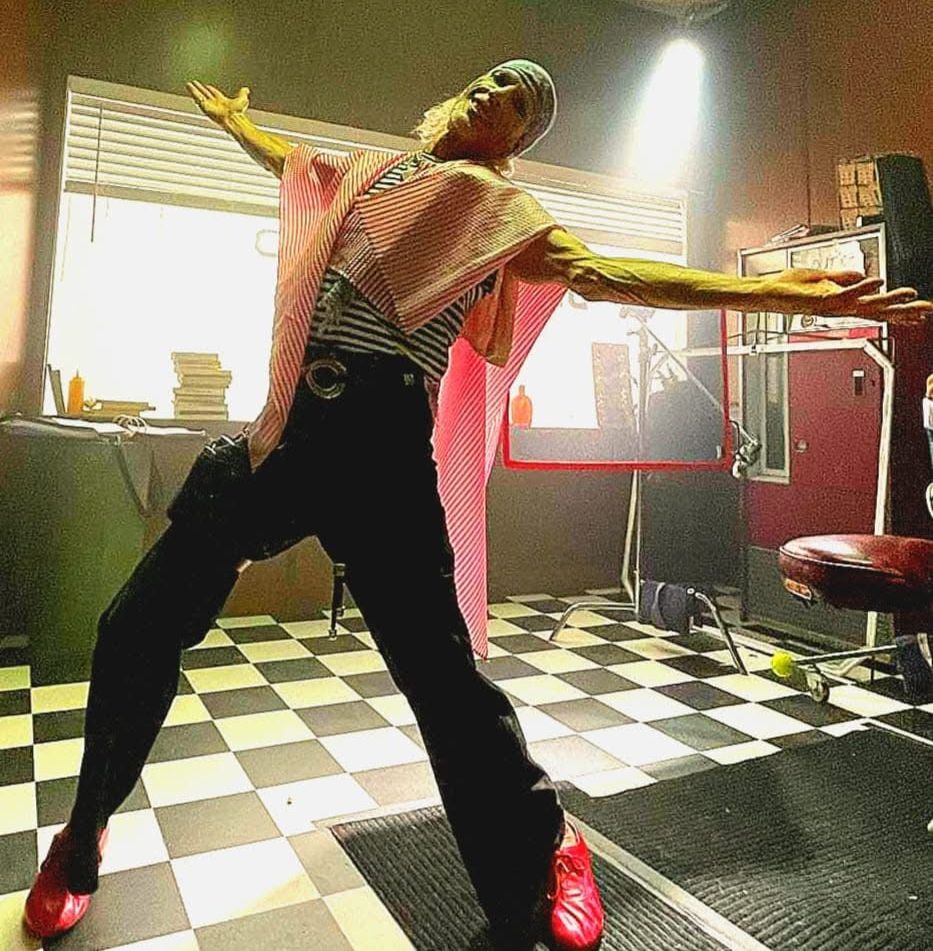
It might be discovered by a few, but getting the general public, critics, and the industry to see it in theaters, getting major press to review it, takes a village and millions of dollars. All to try to cut through the overwhelming market noise. As you know very well, there’s art and there’s business. Haircut doesn’t have the financial backing needed to break through. The distribution business is a tough game.
There are only a limited number of theater slots and release windows to recoup the investment. With Haircut, we are on the verge of getting it into 1,500 theaters right now. It’s in front of some very powerful producer and director teams. That’s the goal: a wide release, hoping it works. Like in any artistic endeavor, we need someone to back us and champion us.
Remember: it’s an $800,000 independent film, shot over 50 days, with no big stars or industry backing, shot during the writers’ strike. Then, two years of post-production and a year since its premiere at Fantastic Fest, with no ad budget. It’s represented by Film Seekers out of London.
The production lost the lead, Mick, an actor with a bit of a name who had been hired over a year in advance, due to a health issue. And they found me three or four weeks before production started.
I got side-tracked. A great actor… Well, I don’t think it’s really that hard to be good at acting. After 36 years in the craft, one should be able to explain how to do it. Acting is something very intimate. The camera sees everything. It doesn’t like exaggeration. It appreciates experience and emotional honesty, or so I believe. It has been said that acting is being willing to be private in a public setting. Mick was very private. I’m someone who prefers subtlety. With Mick, we struggled with that; truth be told, I was a real headache for Kyle, the director.
I was obsessed with Mick’s nuances because I knew what a unique opportunity we had to create an original character, without wanting to push him into being cartoonish, fake, or too big or too soft. Finding a balance was necessary. I feel we hit the mark in many ways and missed it in others.
I’ve drifted off again. What qualities are needed to be a good actor? Many of the great artists have weighed in on this. I think it’s subjective. I only have my perspective, as I’ve said, my idea of what is good and what I like, my point of view and my opinion. I think if I like it, there will be a certain percentage of society, of other people, who will like it too. Mick wants to be understood; he wants to connect. He contradicts himself and then contradicts himself again.
I wanted to be honest in the film, vulnerable, to remind others that, deep down, we all want to love, to be loved, to be included”. Frankie Ray
A great actor? I feel that all we can do, all I can do, is understand the character, find myself in him, and then be myself within the limitations of the imaginary situations the writer and director put on paper.
The story, the lives of the characters, only live in the writer’s mind. They are concepts that someone tries to convey to others by putting them on paper, aiming for other people’s emotional structures and programming to allow them, to encourage them, to have an emotional response or an experience created through our shared human nature.
I believe a great actor, a great filmmaker, truly understands human nature and how to manipulate it. I learned this in the ballroom dancing business, but unfortunately, that’s another conversation. I hate emotional manipulation, but that’s what human beings do. It’s what we do when telling stories. We create an environment that invites others to suspend their own realities and allows us to create something inside them, or the conditions that allow them to choose to follow us. Isn’t that truly the ultimate form of manipulation?
I don’t know what a great actor is. I only know when someone is feeling something. When I am honest, and if all the other elements are in place, then it can become a great performance that takes others on an emotional journey. I wanted to be honest in the film, vulnerable, to remind others that, deep down, we all want to love, to be loved, to be included.
I think we should be balanced beings. Even though I am anything but balanced, haha. I think a great actor truly lives inside the emotions of the moment.
I wanted the viewer to care about Mick, to understand him, and maybe, through that, to understand me.
Given your many talents and the different facets of your trajectory, which aspect of your career makes you feel most at home? Acting?
AHHHHHH. SHIT. Here it is again: that wall between saying what you’re supposed to say and what is true. Long pause to check my intention. Screw it. I’m a Gemini. A double Gemini, born on June 7th. So they say there are four personalities inside me. Hmmmmmm. Not encouraging. I’ll say it clearly: no aspect of my career makes me feel at home. To be honest, I haven’t felt at home even once in my life since I was seven years old. Always on edge, scared, worried, full of anguish.
Simply put, my mother put me and my five older sisters into foster care when I was seven years old. Consider theta and alpha brainwaves in a child’s development. Seven is a critical age. We were placed in Mormon foster homes in Spokane, Washington. In 1969, there wasn’t much therapy for kids, so that original wound never healed. A mother’s rejection…
You can imagine how it festered, how it grew, how it contaminated the emotional structure and thinking of a child who was barely entering full consciousness—that is, alpha wave states. Thus, a lifetime lacking self-esteem, constantly seeking the approval of women. An intense desire to be loved, to love, to fit in, to find a place. And then hiding from the pain through drugs…
Unfortunately, this is the void I confronted when playing Mick. I thought that through my endless studies of psychology, of all religions, of every guru I could find, of a lifetime trying to discover and understand the hole inside me, I had come to face it, healed it, or at least managed to stop it from affecting me. But the character of Mick was too personal for me; he mirrored me.
For example, the cast of the film didn’t include me in their nights out having fun, doing to me exactly what was done to Mick his entire life. Meanwhile, I was constantly filled with thoughts of self-loathing and self-destruction. Isolated, alone, misunderstood, cast aside, while I wrestled with my own identity for 50 days. I wanted to be included in the film and during the shoot. So I built the worst backstory for Mick I could imagine, to push him beyond the boundaries of civilization, to the point of kidnapping someone to try to win their love.
How does someone come to make that decision? How do they rationalize it without being crazy? Mick isn’t crazy, nor is he evil. He simply reaches the limit of his capacity to endure loneliness. I decided that was my chance to find out if I had what it took to stand in the fire, to be number two on the call sheet, to carry the weight of a film, knowing that if I didn’t hit my mark, the character would be nothing more than a bad guy and the film wouldn’t work, turning into just another low-budget teen movie. Just another villain. An exaggerated character played by a B-movie actor in a B-movie. I made sure to give it everything, knowing that for Kyle and his team, this was also their big break. Kyle, a devout Christian man, truly a good man. I was determined and set on giving it my all. I don’t know how other actors, other character actors, method people survive, but I admit I went too far.
Something broke inside me down there, with Mick and Frankie. I’ll leave it to you, as a viewer, to decide if all that work made it onto the screen, if it remained sealed inside the character. When I watch the movie, I only feel shame, pain, a lifetime of loneliness and exclusion. I really wanted the audience to care about Mick, to understand him, and maybe, through that, to understand me.
Usually, I can shut down the characters I’ve played after a few months, but Mick remains. He whispers in my ear: “You know who we are”. “You remember what Mom did”. I’ve opened the can of worms on myself, and that bastard doesn’t want to crawl back into its hole.
So since the age of seven, I’ve never felt at home. Not yet. It’s truly shocking to discover and learn this.
A woman I was talking to a few weeks ago asked me when was the last time I was happy. When I said “at seven years old”, she cried. We cried.
Music and singing are wonderful outlets for me. Acting can be too. But as I said, at my level in the craft, I rarely get the chance to do honest, meaningful work. I know we had that opportunity with Mick. So I threw myself into it. My hope is that, through Mick, I’ll be given the opportunity to play honest human beings—flawed, but honest. And that those roles can be seen by audiences, where they have the financial backing necessary to stand a chance.
That’s my hope. But first, I need to survive Mick and myself.
I’m doing better now. The last two years were…
Throughout your long career, you’ve worked alongside major acting and directing figures like Marlon Brando and David Fincher. But who are your own influences? Who have you learned the most from?
I’ve always admired and identified with two actors: Willem Dafoe and Joaquin Phoenix, though I haven’t worked with them or met them. To me, they play very complex characters. Very flawed. But there’s a softness, a humanity in them that they allow to seep into their roles. I’m sure they fight to achieve that in movies, and I admire it. I find it fascinating. I like the clash between the complex and the tender. Finding that balance isn’t easy. I think they’re masters at it, and that’s what I aspire to. The truth is, if I can’t be honest, human, present, and real in a role, I’d rather not work. But hey, the bills keep coming. So we’re forced to take empty roles for money… holding onto the hope that one day a Mick will come along.
Finally, Frankie, I’d like to focus on an especially significant chapter in your life. After touring Japan as a lead singer and dancer in a theatrical production, you went through a period of living on the streets in Los Angeles in the early 1990s. How do you remember those years? What did they teach you?
I got my first movie job, The Mambo Kings, while sleeping under a bank bench in Century City. There was a gap about 90 centimeters high that I could crawl into and hide. I was teaching salsa at a place called Hy’s, which became the Century Club. In my free time, I snuck into rehearsals for the film. Tito Puente asked me to dance with his niece in the movie. He said I understood the difference between salsa and mambo.
What did that teach me? That you are where you are by your own hand and your own decisions. It’s a cliché, but that doesn’t make it any less true.

Thank you Jorge, for your support of Our Film Bad Haircut, for choosing us with the honor of best picture. This is no small thing. ‘At least not to me.
For offering this opportunity to speak of my journey with Mick and the film. It would be intriguing to do the prologue, how Mock got to where he was at the start of bad haircut.
Don’t know if I would survive that.
Or possibly, it may may heal me? Set me free.
Thank you for seeing me. Loving me.
Frankie Ray “this thing called LIFE”