
In Praise of the Pause: The art of silencing external noise to hear our own voice once again.
By Nuria Ruiz Fdez
HoyLunes – I remember the first time I sat down to read The Red Leaf (La hoja roja) by Miguel Delibes. It wasn’t in a library, nor in a corner prepared for concentration: I was in my living room, with the window open to the street, listening to the hum of traffic and the daily hustle and bustle. And yet, in that book, I found a space of pause so profound it seemed to absorb everything else. Each page asked me to breathe, to stop ´doing´, and to allow myself simply to ´be´. Reading how an elderly man faces solitude after retirement, death, and family distance, I understood that silence is not absence, but presence.
Today, in a world that seems incapable of being quiet, I continue to seek those silences. The phone never stops ringing, social media hijacks half of our lives, messages pile up, and, without realizing it, the minutes slip away. But there is a certain “something” in sitting down to read a book, in listening to the silences between the lines that reminds me what it means to live with intention—without having to open tabs or scroll. It is a gesture, perhaps trivial, small, yet radical: telling the world that, for a moment, I do not want to be available.
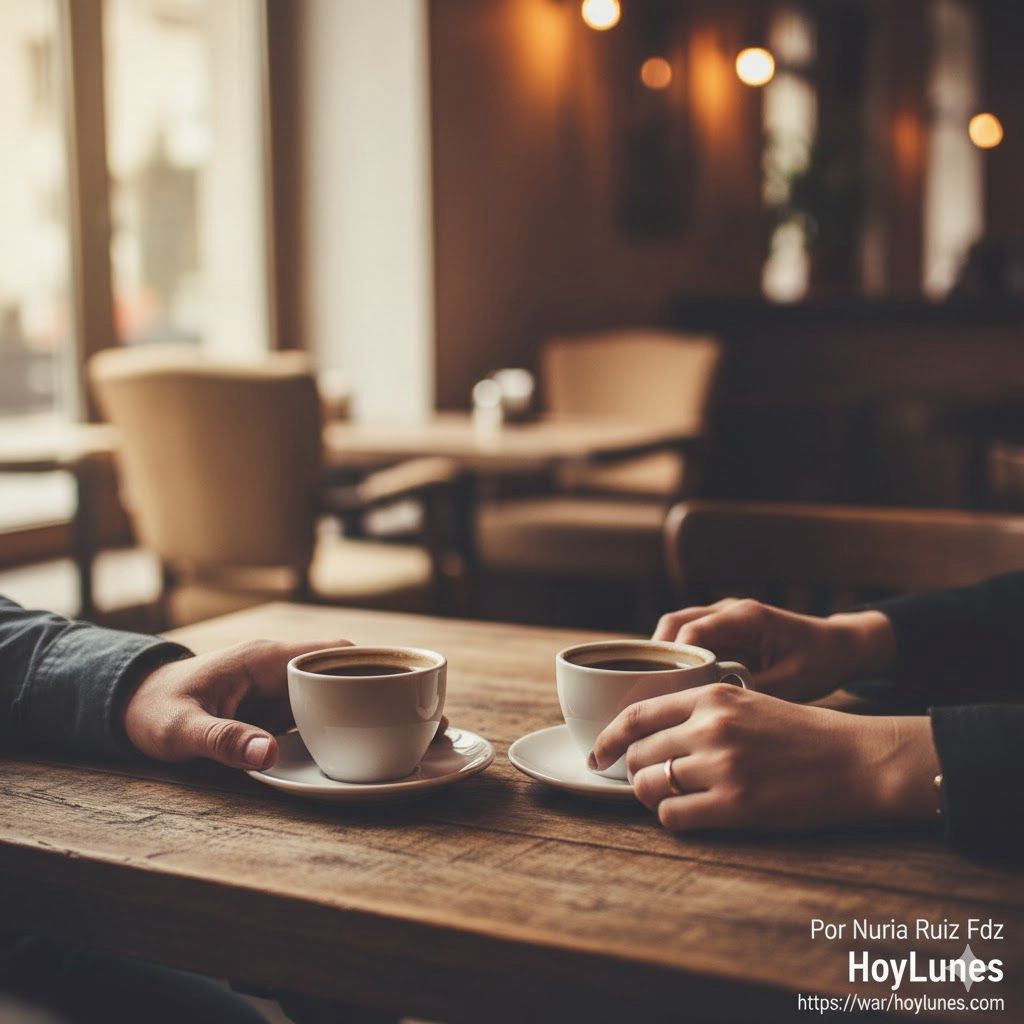
I have learned to recognize the difference between noise and deep conversation. Recently, in a café, I met a friend and, instead of half-talking while checking our phones, we set our devices aside. We spoke slowly, letting each sentence breathe, letting each silence be part of the dialogue. That conversation became a small ritual: it didn’t need cameras, likes, or witnesses. It only needed our shared attention, a time where our silences were not awkward, but necessary.
Silence also appears when I write. I don’t always plan what I am going to write; many times I begin with a blank page and my gaze lost somewhere in the room. I let the words arrive on their own and I observe them as if they were strange silhouettes around me. There are pauses that cannot be forced: in them, emotion, memory, and a connection to a “something” I cannot name are concentrated. To write in silence is to dialogue with myself and, at the same time, with everything that surrounds me. The page becomes my refuge where words do not shout at me, but wait for me to let them into my life.
I remember an afternoon at home with nothing special to do—rare for me. I put some music on my phone very low, almost as if I were ashamed to disturb anyone. I wasn’t truly listening; the music was merely keeping me company. At some point, I began to notice the pauses more than the melody—those seconds where nothing happened between songs and, even so, everything remained the same: the world continued on its path, I remained alive. I stayed still, without picking up my phone, letting that “accompanied silence” do its work. And then I thought that something similar happens within oneself when one says nothing, when one stops explaining, justifying, or responding. There are silences that bring order, that put things where they belong without the need for words. To be silent, at times, is not to hide: it is to trust that silence also knows how to put everything in its place.

This relationship with silence becomes especially clear to me when I read. When I allow myself not to interrupt my progress, not to underline with a mind set on correcting or drawing quick conclusions, when I let a paragraph pass me by and return to it without guilt. In those moments, silence becomes a small, intimate revolution. It has happened to me with books that, at first, seemed distant, and only opened up when I agreed to read them slowly, respecting their spaces. This was the case with ´The Necessary Pause´ (La pausa necesaria) by Carmen Sánchez Melgar. In the stillness of her poems—in what is left unsaid as much as what is said—an intimate dialogue began to form that reminded me of something essential: that literature is a place where one can be with oneself, without intermediaries, listening to what the text—and oneself—needs to say, in a whisper.
Silence has taught me another lesson: it makes us more human. In times of hyper-communication, this gesture of being quiet—of biting one’s tongue on many occasions and letting things go—becomes almost transgressive. It is not a withdrawal from the world; it is a conscious way of inhabiting it, of choosing what deserves our attention and what we can or should let pass.
Though I do not want to romanticize it. Sometimes, silence is frightening. I have caught myself holding a book in my hand and feeling as though I should be doing something else—responding, connecting—as if I were wasting time. Reading without the pestering of social media, conversing without interruptions, listening to slow music: all of this is silent resistance, but also a profound form of self-care.
I have noticed how the practice of silence changes one’s relationship with time. Days feel longer, denser. There is space for thought without haste, for feeling without judgment, for remembering without urgency. And there is a kind of joy in that slowness, a satisfaction that does not depend on external recognition or applause. It is a “something” that is experienced more than commented upon, a “something” that is felt more than explained.
We do not always need to fill everything, explain everything, or react to everything. Sometimes, being present in the stillness is the best way to participate in what they call “the cultural environment.” In this sense, the culture of silence is not an eccentricity; it is an act of self-respect. In a world that never stops talking, learning to be silent can be the most profound way to learn how to listen.
Silence also connects me with others. With those who share a gesture, a glance, a space without the need for words. With those who understand that the pause is a necessity, that silence is a space where the best stories are built, where we feel emotions that are still untouched, and where we can enjoy culture without reducing it to consumption, opinion, or immediate reaction. That, I believe, is the true essence of life: to breathe, to listen, to wait, and—in doing so—to let it slowly transform us.

#hoylunes, #nuria_ruiz_fdez, #CulturaDelSilencio