How nocturnal heat, air conditioning, and thermal fatigue are silently accelerating biological wear and tear, even in people who believe they are healthy.
Many believe that exhaustion disappears simply because they stop sweating. However, ´ceasing to sweat does not necessarily mean the body has regained its balance´. Sometimes, it simply means the body no longer has an efficient margin to continue dissipating heat.
By Ehab Soltan
HoyLunes — The dinner invitation in Madrid was simple: a welcome for Dr. Amira Mansour, one of the most lucid voices in current gerontology, passing through Spain after a conference in Cairo. What I imagined as a protocol of medical courtesy transformed, amidst the aroma of saffron and the clinking of glasses, into something far more urgent.
It was not the doctors who took the floor. It was the guests. With May just around the corner, the terrace air was already beginning to feel heavy. The conversation drifted, almost anxiously, toward that exhaustion that assaults us every summer and which, as many confessed, seems to leave a mark that does not fade when autumn arrives.
Dr. Mansour listened, observing the diners with a blend of empathy and scientific rigor. “The problem”, she finally said, in a voice that silenced the table, “is that we treat summer as a vacation, but our body experiences it as a debt management crisis”.
The Silent Aggression of Heat
There is a deeply mistaken idea about summer: we believe that heat only affects us when it makes us sweat. However, thermal medicine has spent years describing something far more disturbing. True wear and tear does not always appear as a visible blow. Sometimes it occurs slowly, inside the body, while we continue working, driving, walking, or trying to sleep as if nothing were happening.
Modern heat does not act as a sudden aggression; it acts as continuous biological pressure. It forces the organism to redistribute blood, accelerate the heart, alter stress hormones, and consume energy simply to maintain a temperature compatible with life.
The most dangerous part is that many people continue to function while this occurs. They answer emails. They attend meetings. They exercise. They smile. But inside, the body has been working in emergency mode for hours.
“The cruelest thing about heat”, the doctor commented as someone asked for water for the third time, “is that it can exhaust you before you even begin to feel truly ill”.
The Athlete’s Thermostat and the “Three O’clock Slump”
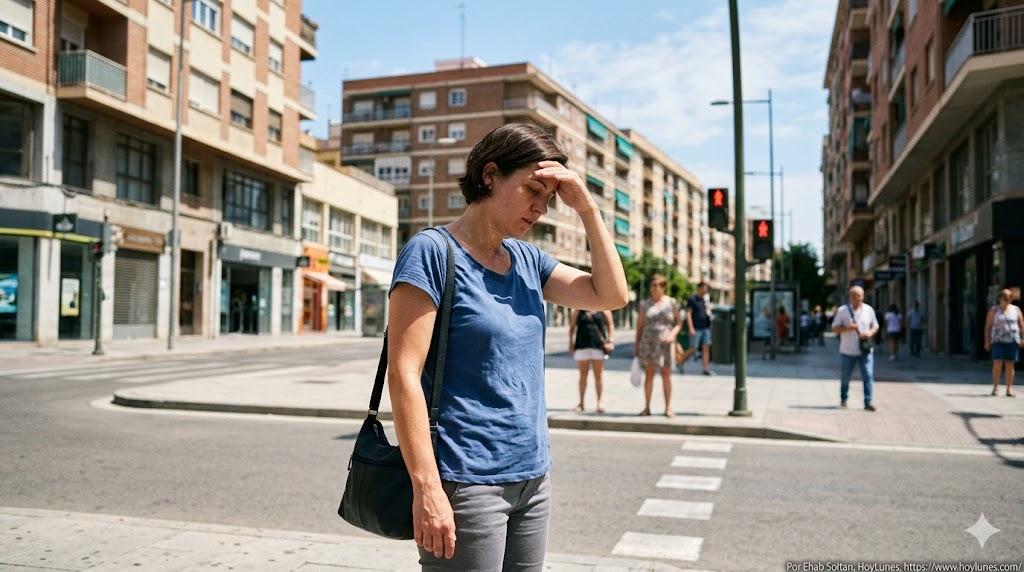
Sophie, a woman in her mid-30s, lean and with the sun-touched skin of someone who plays tennis three times a week, was the first to ask. “Why is it that, despite being in the best physical shape, in August I feel my energy completely vanish by midday? It’s as if I’ve been unplugged”.
The specialist looked at her intently. “Sophie, your body is a precision machine, but heat is a saboteur of cortisol. In active, thin people like you, the metabolism accelerates to cool the blood. Your heart is running a marathon while you think you are sitting down. That ‘slump’ is not laziness; it is your operating system entering power-save mode because you exhausted your thermal energy budget before lunch”.
The Silent “Oven” and Overweight Fatigue
Near her, Carlos, a broad-shouldered man with evident excess weight, nodded heavily. “I don’t even make it to three in the afternoon. As soon as I step outside, I feel like the heat stays with me, even under the air conditioning”.
“You are right, Carlos”, Dr. Mansour explained. “Adipose tissue is an excellent thermal insulator. It’s fantastic in the Arctic, but in Madrid, it’s a coat you cannot take off. Your body retains internal heat much longer than Sophie’s. When you enter an office at 21 degrees (70°F), your interior is still at 38 (100.4°F). That temperature conflict generates oxidative stress that inflames your cells. You aren’t tired just because of the weight; you are tired because your internal engine cannot turn off”.
Air Conditioning Does Not Always Mean Recovery
Here appeared another great modern confusion: thinking that entering a cold room is automatically equivalent to recovery.
“That is not always the case”, the specialist clarified. “The human body does not function like a mobile phone that cools down and immediately returns to one hundred percent”.
She explained that after hours of accumulating heat, the organism can remain altered even within a climate-controlled environment. The heart rate remains elevated, blood vessels remain tense, and the nervous system continues to act as if the thermal danger has not ended.
Worse still: the abuse of air conditioning can create another silent problem. The extreme contrast between the street and enclosed spaces forces the body to make constant micro-adaptations. We move from 39 degrees (102°F) outside to offices at 20 degrees (68°F), then to the subway, then to a hot car, and back to artificial cold.
“That is not always rest”, the doctor said. “Sometimes it is a war of thermostats”.
The Danger of Invisible Fatigue in One’s Fifties
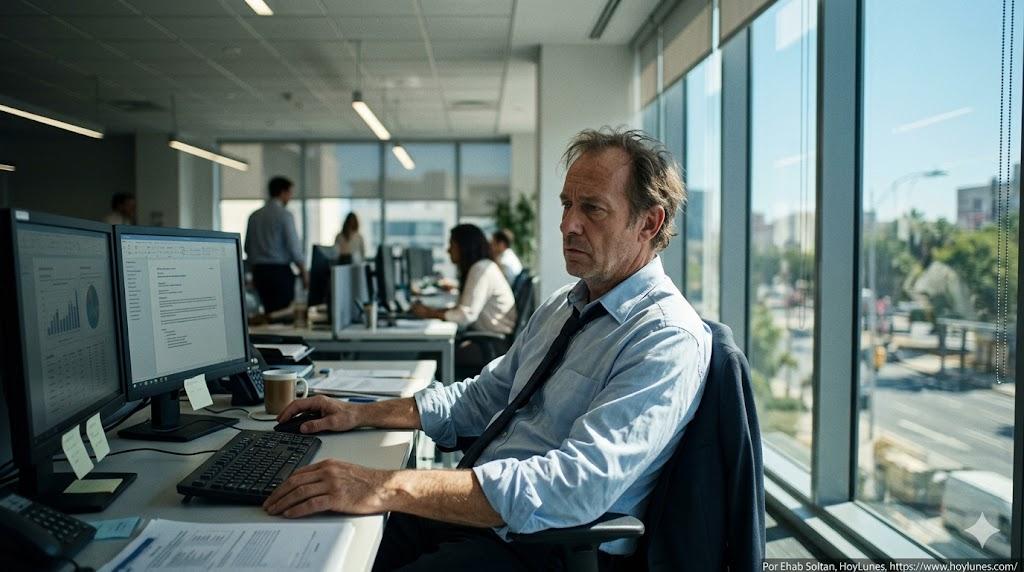
Hector, who had recently turned fifty and dealt with well-controlled type 2 diabetes, intervened with concern: “I don’t sweat like I used to. I thought I was adapting to the heat, but I feel heavier, slower”.
The researcher’s gaze turned more serious. “That is the most dangerous trap, Hector. With age and conditions like yours, our ‘thermostat’ loses sensitivity. You stop sweating, you stop feeling thirsty, but your blood becomes denser and your organs work twice as fast to avoid collapse. Your fatigue is ‘phantom’ because you don’t feel the physical oppression, but your cells are aging at an accelerated rate due to a lack of deep hydration”.
The Night: Where the Brain Cannot “Wash” Itself
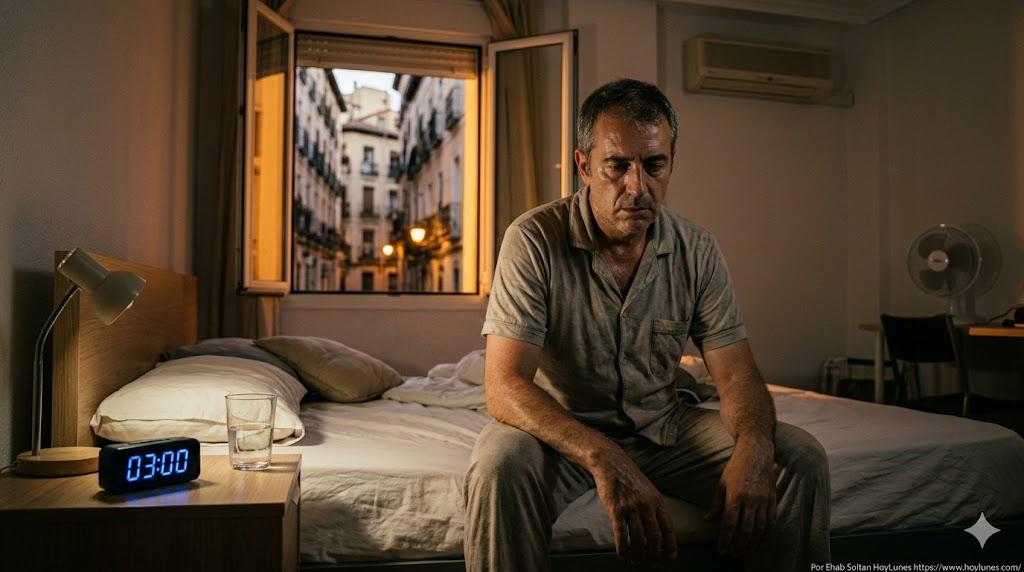
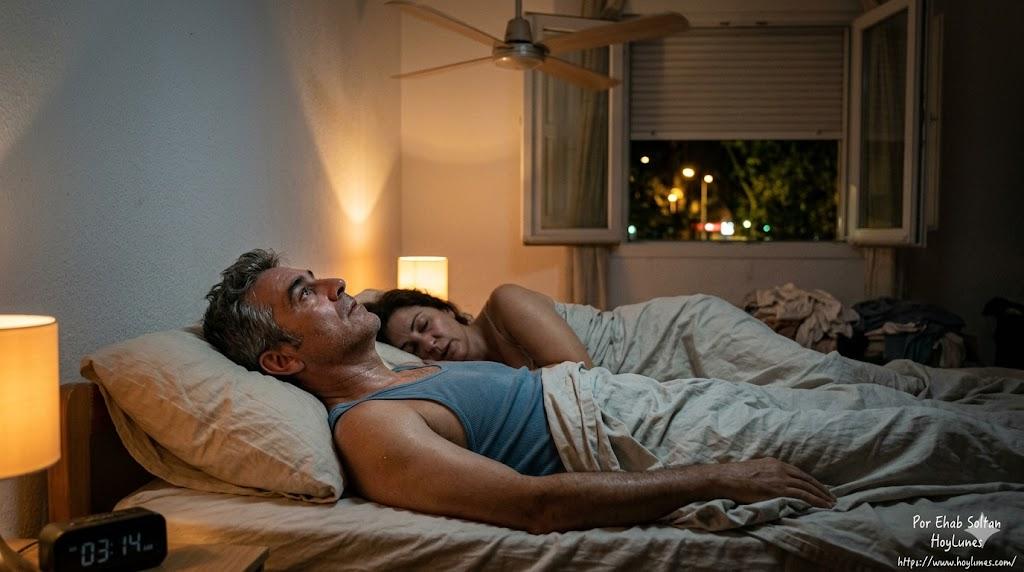
The conversation became more intimate as we reached dessert. A young woman asked why, despite sleeping eight hours with the air conditioning on, she woke up feeling as if she had been beaten.
“That is the highest tax of the summer”, Dr. Amira replied. “For your brain to repair itself, its temperature must drop by one degree. If the body is busy trying to cool down because the room is hot, or because the air conditioning creates an artificial cold that tenses your muscles, the glymphatic system—your brain’s cleaning service—stops. You wake up with the metabolic waste of the previous day. It is like trying to clean a house while there is a fire in the kitchen. There is no cleaning, only survival”.
She then paused briefly and added something no one at the table would forget:
“Aging rarely arrives all at once. Sometimes it begins on seemingly normal nights, when the body spends hours trying to defend itself from the heat instead of repairing itself”.
No one replied. Because we all understood, in silence, that many people have spent years waking up tired without suspecting it isn’t just stress, or work, or age. Sometimes it is simply an organism trapped in a summer that is too long.
So… What Should a Normal Person Do?
The question appeared near the end, when the conversation had lost its intellectual tone and become deeply human.
“So, what do we do?” someone asked. “Because we cannot stop working every time the temperatures rise”.
Dr. Mansour smiled wearily, like someone who has spent years watching the human body silently plead for a truce.
“It isn’t about living in fear of summer”, she explained. “It is about ceasing to act as if the body were an infinite machine”.
She spoke of things seemingly simple, but biologically decisive:
Hydrating before feeling thirsty;
Reducing cumulative solar exposure, not just avoiding heatstroke;
Ceasing to normalize poorly slept nights for weeks on end;
Understanding that constant fatigue is not always “just age”;
Lowering physical and mental intensity during hours of peak temperature;
And, above all, ceasing to compete against the climate as if resisting were a test of courage.
“The human body can adapt to many things”, she concluded. “But adapting does not mean emerging unscathed”.
Aging on Credit
At the end of the night, the silence at the table was absolute. It was not a silence of fear, but of revelation. We understood that every summer of insomnia, every afternoon of irritability, and every thermal shock between the street and the office were not mere seasonal anecdotes. They were small biological scars.
“Aging”, the specialist concluded as she stood up, “is not something that happens only with the passing years. It is the sum of all those nights in which the body asked for a truce and we did not grant it. Modern summer is charging us a tax in cellular time, and the worst part is that many of you believe it is ‘normal’ for your age”.
We stepped out into the Madrid street, where the air still held the heat of the asphalt. We no longer felt it as a simple meteorological nuisance. Now we knew that, beneath our skin, a silent ledger was recording every extra degree, every hour of lost sleep, and every night in which the organism remained awake trying to cool itself while we believed we were resting.
Because perhaps the true wear of summer does not occur when we sweat under the sun, but when the body spends entire months surviving the heat without ever finding complete repair. And perhaps aging, in this new thermal era, consists precisely of that: accumulating summers that the organism never managed to fully recover from.
#BiologicalHealth #Aging #ThermalStress #FragmentedSleep #SleepHealth #RealCare #HoyLunes #EhabSoltan