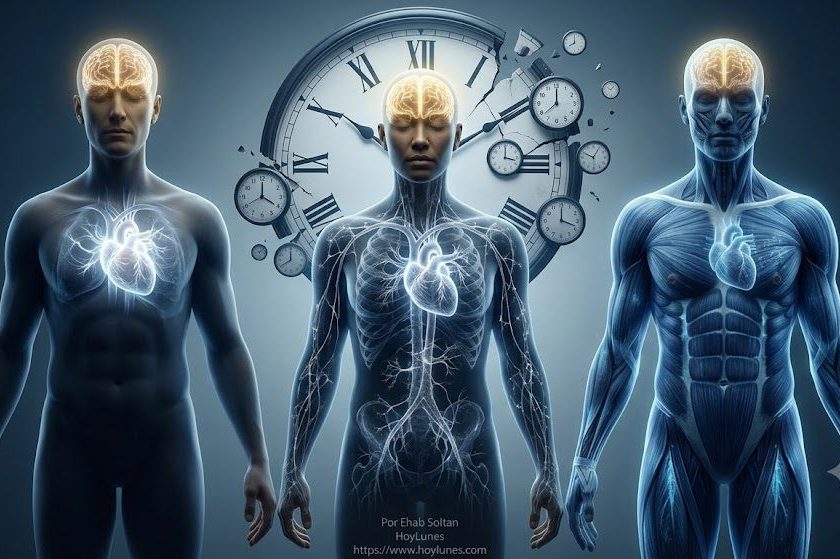
Medicine has managed to add decades to human life. The challenge now is not biological, but the struggle to maintain a sense of belonging in a world that moves faster than memory.
By Ehab Soltan
HoyLunes — The second hand of the wall clock in Ignacia’s living room ticks with an almost intrusive clarity. It is the sound of **accumulated time**.
“How are you today, Ignacia?”
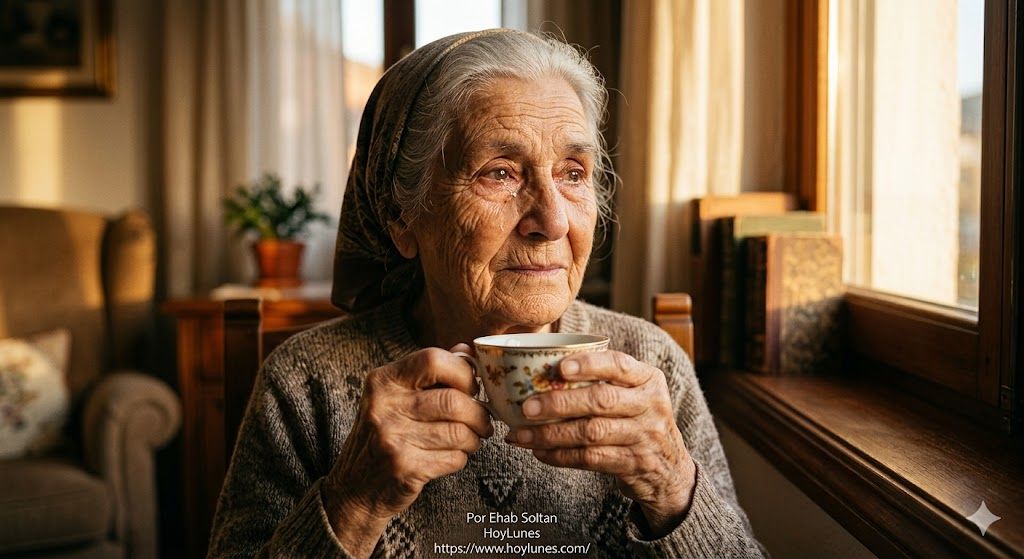
She slowly raised her head from the chair by the window—that personal observatory from which she watches a rushing world. The afternoon light filtered in softly, almost timidly, illuminating the plants she still tended every morning with **sacred discipline**, as if her own right to remain resided within the greenness of those leaves. She was 93 years old. Her hands were a relief map of **veins and wisdom**; her voice had the texture of someone no longer in a hurry, and her eyes, clouded by time, seemed to have witnessed too many farewells.
“Fine, son,” she replied. “Still here”.
Ignacia is my neighbor. For months, our encounters were limited to remarks about the weather or the price of bread—that invisible script we write to avoid touching the depths of things. Until one afternoon, before saying goodbye, I asked her a question that changed the tone of our coexistence, shattering the glass of courtesy:
“Is there anything I can do for you?”
Ignacia took a moment to respond. The silence grew dense, as if the offer were arriving from a distant frequency—a radio signal crossing an ocean of indifference.
“Yes,” she finally said, her gaze anchoring into mine. “Say hello to me when you can. Tell me about a problem, something happening to you. I need to know that I can still be useful to someone. Because sometimes, even though I have food and medicine, I feel like the world has stopped counting on me“.
There was no drama in her tone, only raw honesty. It was a serene, almost technical description of a room falling silent. That night I understood that longevity, our species’ great victory, brings with it a question thrumming at the margins of science: What is the value of accumulating time if a person feels exiled from the attention of others?
The Mismatch Between Science and Society
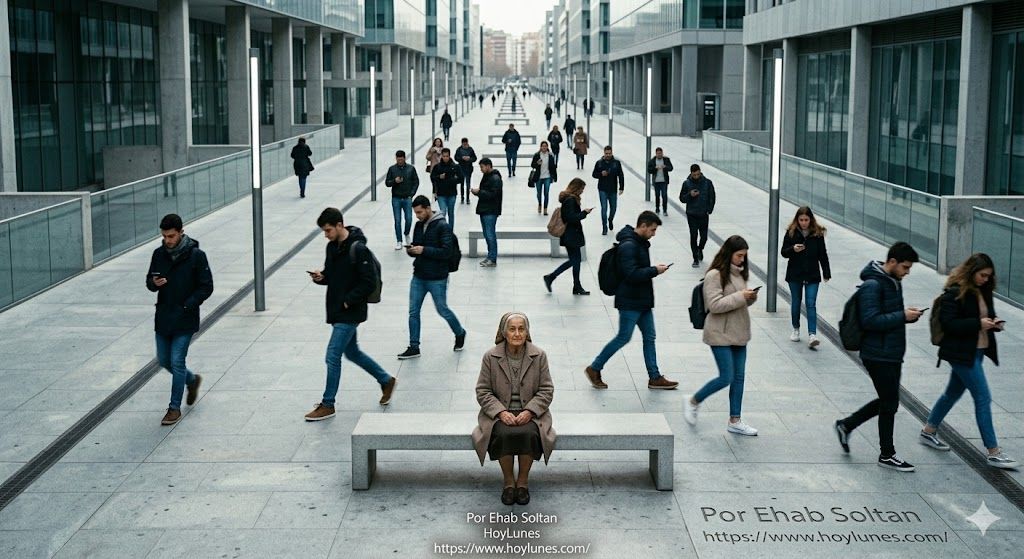
During the 20th century, gaining years of life was an unquestionable goal—a laboratory trophy. Medicine advanced, and bodies learned to withstand the onslaughts of the century. However, while the body stretches, the social structure shrinks. It is not just about lengthening the journey, but about ensuring the trip is not taken in a bubble of invisibility, where the traveler looks out the window but no one looks back at them.
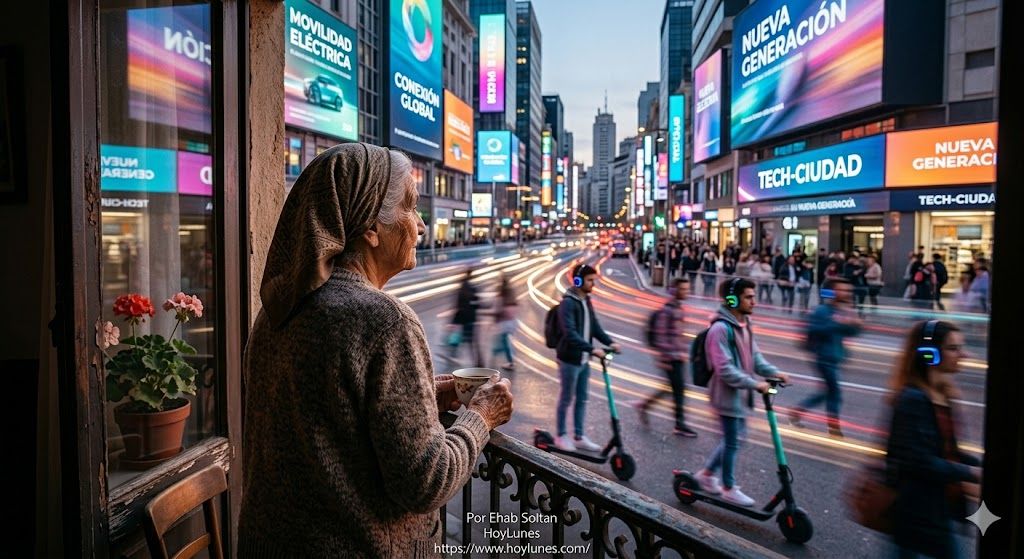
A few days later, I met Ignacia again. She was watching the street from her balcony, like someone watching a film in a language they no longer fully understand.
“Do you know what the hardest part of living so long is?” she asked without looking away from the asphalt. “That things start to disappear before you do“.
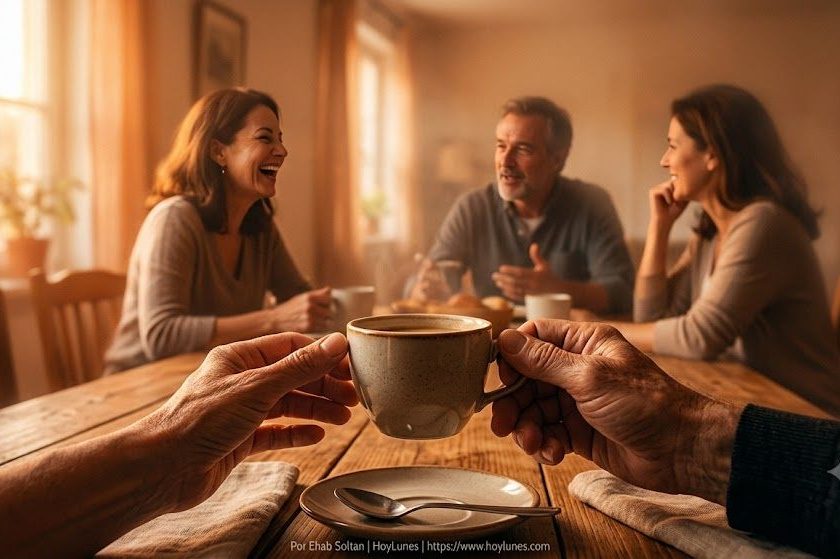
She wasn’t talking about death—that is the great misunderstanding. She was talking about the disappearance of contexts. The coffee-shop friends who are gone, the lifelong businesses replaced by cold glass, the shared codes that no one remembers. When a person lives nearly a century, they traverse multiple psychological eras. they experience what some call biographical fatigue: the exhaustion of having to rebuild one’s identity within a world that sheds its skin every decade, leaving you with a suit that no longer fits.
A Challenge Beyond the Laboratory
Unwanted loneliness in longevity is a complex reality felt on the skin and measured in hospitals. It directly impacts physical health—from the cardiovascular system to cognitive decline—but its root is not a virus; it is profoundly social. It is the great paradox: we have learned to prolong life faster than we have learned to accompany it.
Fortunately, the diagnosis of this “social coldness” has mobilized efforts to bridge the gap between years gained and years lived:
Institutional Efforts: The WHO and various governments have stopped viewing loneliness as a sentimental complaint and started treating it as a public health priority, creating “radars” to detect isolation before it turns into absolute silence.
Social and Community Programs: Outreach networks and intergenerational programs where the energy of youth and the memory of old age share the same roof, reintegrating the elderly into the flow of daily life.
Friendly Cities: Urban planning that recovers the sidewalk bench and the plaza, understanding that a city with frenetic rhythms and no spaces for pause is, in reality, a city that expels its veteran citizens.
The Dignity of Being Needed
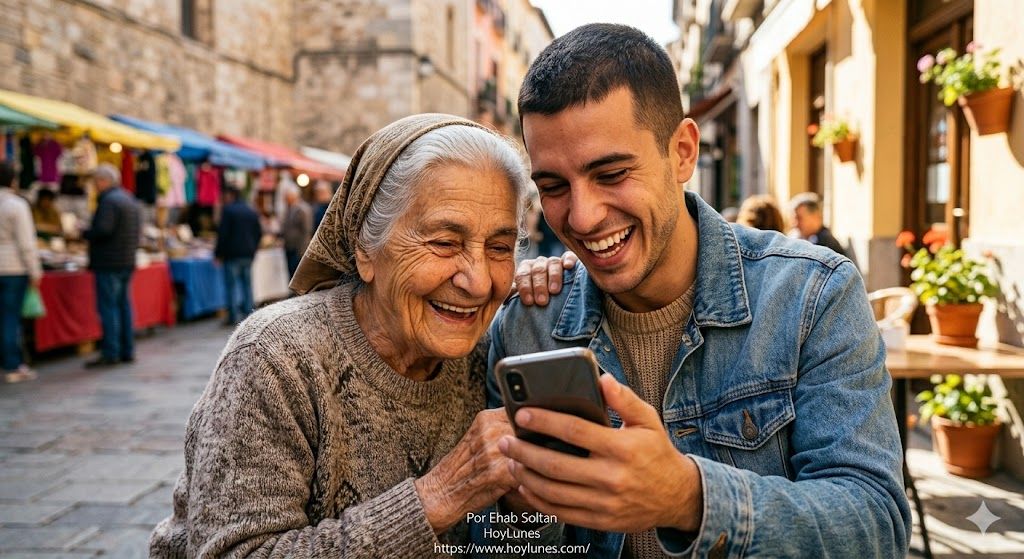
Many elderly people do not deteriorate solely due to the wear and tear of their cells, but due to the erosion of their purpose. Ignacia explained it to me with the force of someone who has survived everything: “When you are young, everyone needs you for something. Then, one day, the phone stops ringing the same way”.
The error of our modernity is believing that longevity is a technical maintenance issue. Human beings need, even more than vitamins, to occupy a real place in the eyes of another. Human connection is the purest form of prevention. Living a hundred years makes sense when those years preserve bonds and, above all, the dignity of being heard.
Medicine can provide the means for the train to travel further, but it is society—laws, architecture, family—that decides if the landscape the train passes through is worth seeing. Physical health and emotional support are the two rails of the same track; if one fails, the journey loses its meaning.
One afternoon, as the sun hid behind the buildings, I asked Ignacia if she was afraid of the future.
“No”, she replied with a minimal, almost imperceptible smile. “What is scary is feeling that you are no longer needed“.
That sentence summarized the true challenge of the 21st century. The true longevity revolution will not consist of reaching 100 years with a strong heart. It will consist of ensuring that no one arrives there feeling like a stranger in their own time.
Thank you, Ignacia, for reminding me that being seen and being heard is the deepest need that keeps us alive.
When I finally said goodbye and the elevator doors began to close, I caught one last glimpse through the gap. Ignacia remained there, holding her front door open for a few seconds more, her hand resting on the frame and her gaze fixed on the empty hallway, as if she were still waiting for someone to come back and ask her how she was.
#CaringGlances #TheValueOfTime #LonelinessThatSickens #EhabSoltan #HoyLunes