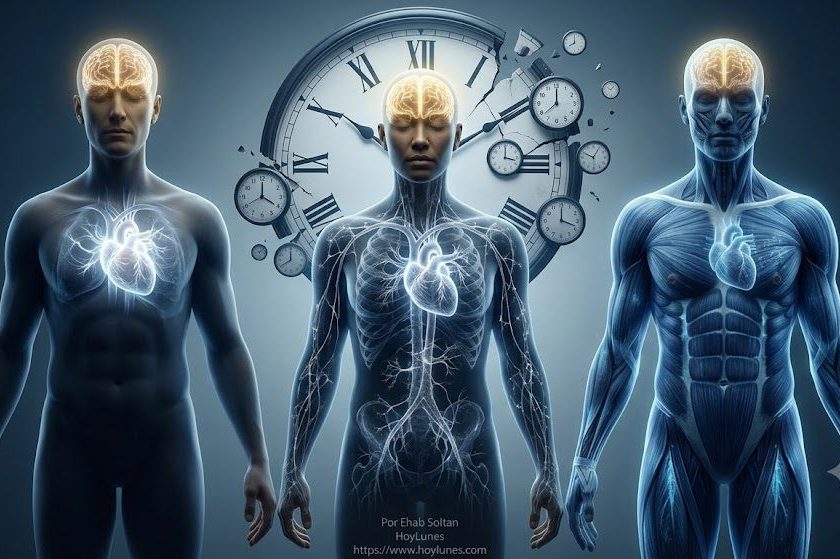

The hidden impact of insulin on seasonal inflammation: A metabolic correction protocol for fluid retention during the hot months.
By Ehab Soltan
HoyLunes – The May sun has begun to strike with unusual intensity, reminding us that the sweltering heat does not wait for the calendar. But inside the office, the atmosphere was charged with a different kind of heaviness. Amanda, always the first to walk toward the coffee machine with a firm stride, was anchored to her chair today. Her face reflected a fatigue that did not fit a Monday morning.
—”Amanda? I’ve called you three times. Are you alright?” —I asked, approaching her desk.
She looked up and forced a smile that stopped halfway. She tried to stand up, but a wince of pain betrayed her. She slumped back down, pointing under the desk with frustration.
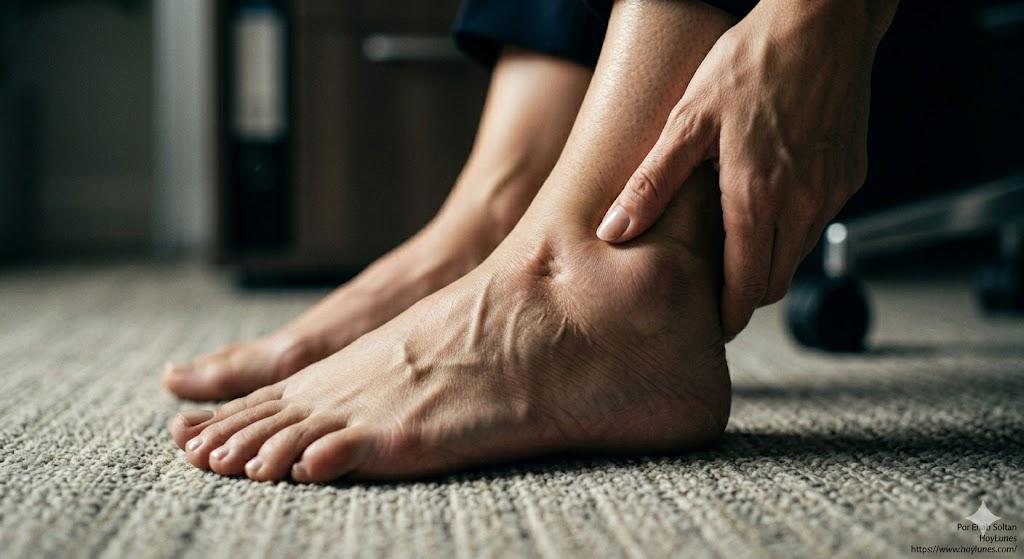
—”It’s this sudden swelter… again”, —she whispered —. “I feel like my legs weigh a ton. They are two rigid columns. Look at my ankles; the edge of the shoe has sunk in so deep it looks like the skin is going to tear. Walking to the car has become an ordeal”.
I knelt down and saw it up close. The edema was evident. Upon pressing her skin with my thumb, the fingerprint remained marked for several seconds, as if her body had lost the ability to regain its shape.
—”I was given the usual explanation: that it’s circulation due to the change in weather”, —she continued despondently—. “The typical recommendations: drink plenty of water and cut out salt. I’ve been following that script to the letter for three days, drinking liters upon liters and eating salads with croutons, and I feel worse“.
—”It’s not that your body is failing you, Amanda,” —I told her —. “It’s that the information you’re working with is incomplete. They’ve convinced you that the problem is the sun, but the heat is only the trigger. You are providing the fuel with what you believe to be a ‘light’ diet”.

The Biological Connection: From Intake to Tissue
Amanda looked at me with incredulity —. “My diet? What does a sandwich or a juice have to do with my shoes not fitting?”
—”Much more than meets the eye. When you ingest refined starches (bread, pasta, cookies) and sugars (desserts, juices, or high-glycemic fruits), a precise physiological response is triggered”:
The Hormonal Signal: Upon entering the bloodstream, these foods raise glucose levels. The pancreas responds by releasing insulin to balance the system.
The Renal Order: Insulin travels to the kidneys, where it acts like a switch: it orders them to reabsorb sodium instead of filtering it for excretion.
Fluid Hijacking: The retained sodium pulls water in via osmosis. For every gram of glycogen stored, the body is forced to retain approximately 3 or 4 additional grams of water.
The Overflow: With May temperatures, blood vessels dilate to thermoregulate the body. That internal pressure, combined with the volume of water the kidneys do not release, forces fluid into the interstitial space. You are swollen because your mineral balance is blocked by an excess of insulin.
The Roadmap for Real Relief
—”Is there any way to stop this?” —she asked. —”Something other than simply resigning myself to waiting for the swelter to pass?”
—”There is. It’s an Osmotic Reset. It’s about adjusting your internal chemistry so the kidney recovers its drainage function”.
Intervention Strategy: Osmotic Reset (14 Days)
To evacuate accumulated fluid, it is imperative to force sodium excretion by regulating the Insulin-Potassium axis.
Beyond the plate: how starches send direct orders to your kidneys.
Food Selection Guide
| Phase | Direct Action | Biological Justification |
| Days 1 to 5 | Restriction of Flours and Sugars: Eliminate bread, pasta, white rice, and nectars. | Vertical drop in insulin levels, allowing the kidney to release trapped sodium. |
| Days 1 to 14 | Biophysiological Potassium Intake: Prioritize spinach, avocado, zucchini, and oily fish. | Potassium displaces sodium from the extracellular space into the bloodstream for filtration. |
| Hydration | Electrolyzed Solution: Water with a pinch of whole sea salt (unrefined) and lemon. | Stabilizes the osmotic signal so the body stops retaining water as a survival mechanism. |
Irrefutable Clinical Evidence
| Parameter | Metabolic Function | Documented Source |
| Natriuresis and Insulin | Insulin reduction inhibits sodium reabsorption in the distal tubule of the kidney. | Journal of Clinical Investigation |
| Na:K Balance | Increased potassium reduces extracellular fluid volume systemically. | The New England Journal of Medicine |
| Vascular Integrity | Compounds present in dark fruits strengthen venous capillary walls. | Cochrane Library |
A New Monday
Seven days later, Amanda entered the office with a completely different air. Her step was light, almost agile. She was wearing shoes that would have been impossible for her to put on the week before.
—”How is that heaviness in your legs?” —I asked.
She stood up and showed me her ankles, now defined and without a trace of inflammation. The doubt that previously clouded her gaze had transformed into a confidence based on facts and results.
—”I’ve dropped 3 kilos of water volume in just a few days. But what I value most is having understood the process. It wasn’t a summer curse; it was my body’s response to what I was eating without knowing it”.
Biochemistry does not lie. When insulin levels stabilize, the body regains its balance, no matter how hard the sun beats down.
#MetabolicHealth #FluidRetention #SeasonalEdema #TherapeuticNutrition #HeavyLegs #InsulinAndHealth #RealWellness #AppliedBiochemistry #EhabSoltan #HoyLunes