
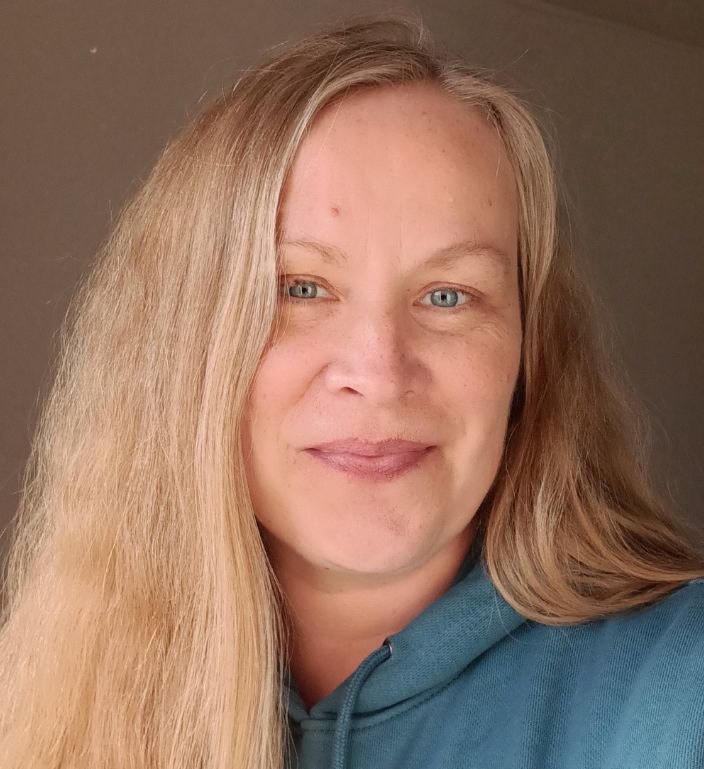
From the trails of the Camino de Santiago to the classrooms of Spain, an educator reveals why the secret to fluency isn’t a grammar book—it’s a connection.
By Ehab Soltan
HoyLunes – For many Spanish speakers, the biggest barrier to fluency isn’t a lack of vocabulary—it’s a mental wall built on the fear of imperfection. While traditional methods focus heavily on rigid rules, native English speaker and educator Simone Saavedra took a different approach. Since 2018, after teaching thousands of adult students across Spain, she noticed that the same literal translations and structural habits kept holding learners back. More importantly, she realized that language isn’t just an academic exercise; it’s an emotional and social connection.
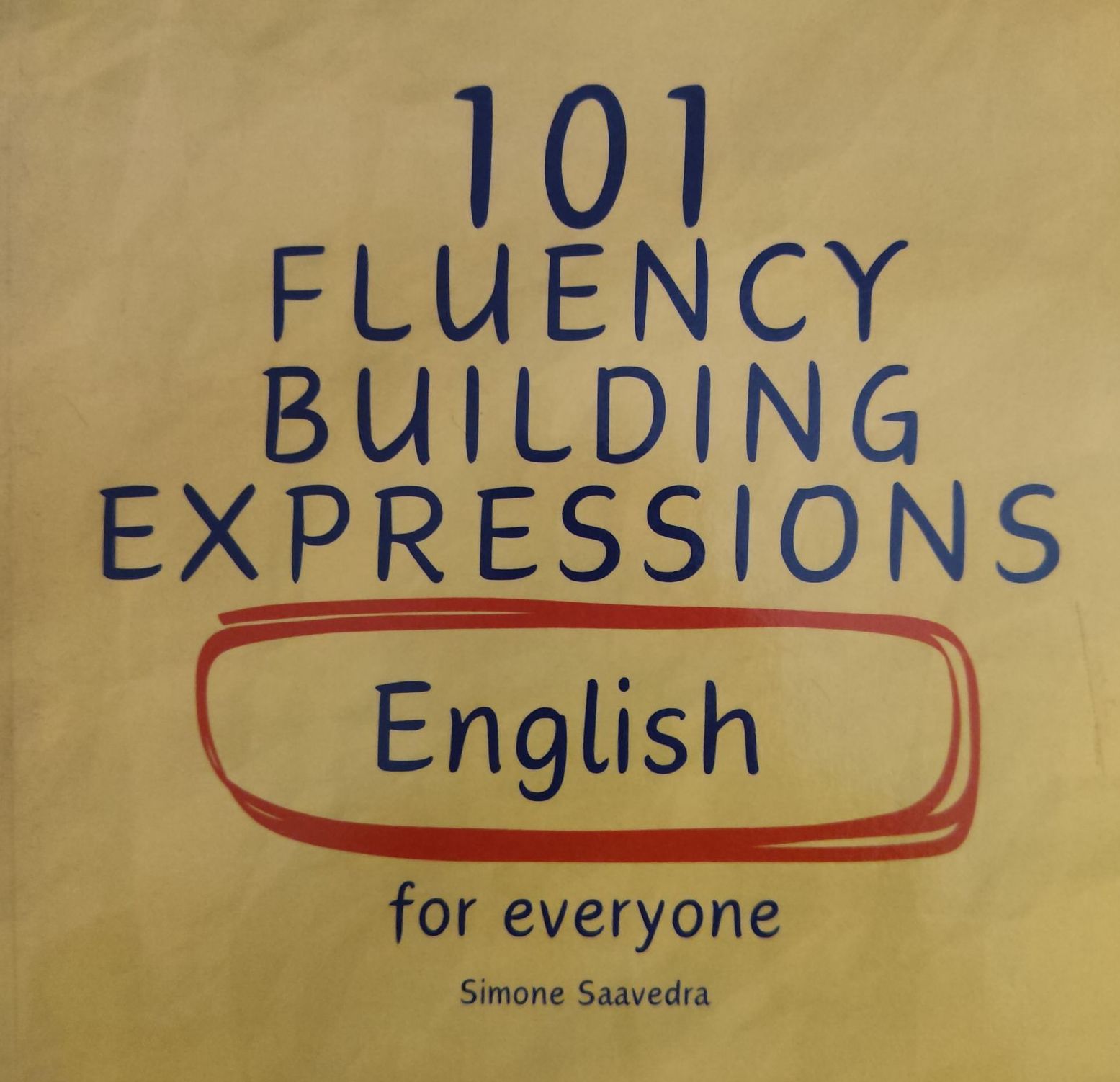
What started as a simple desire to log these recurring patterns eventually became two hit self-published books: 101 Common Mistakes: English for Spanish Speakers and 101 Fluency Building Expressions. Renowned by her students for her deep patience and ability to build immediate trust, Simone joins us to dismantle the myth of “perfect English,” explain why sentence structure is your ultimate secret weapon, and share how treating AI like a “drunk best friend” might just be the tool you need to accelerate your learning.
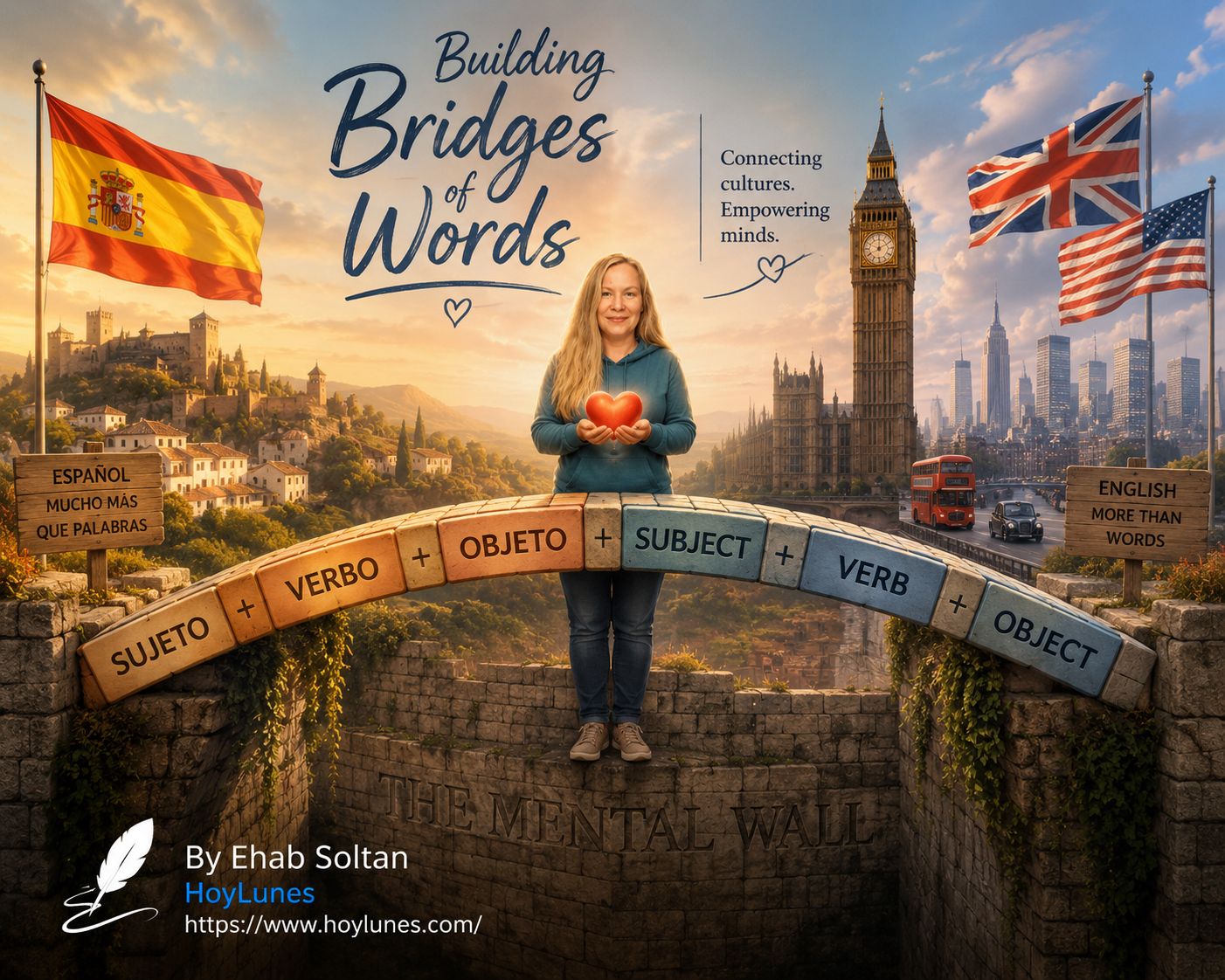
You mention that many Spanish speakers feel a “mental wall” when trying to speak English. In your experience, is this more of a linguistic problem or a psychological one?
Both.
First of all, Castellano is held up to a much higher standard than English is, in normal life. There is more pride and attention paid to grammar and syntax. So the psychological barrier is real.
There are dialects of English where grammar is purposefully wrong, where people say “He don’t”, or “You seen”. Because English is the language of many colonised countries, it has taken on aspects of other languages and is in fact a mongrel, a mutt. The argument is often made that there’s no ‘perfect’ English. Any such idea is a social construct rooted in colonial power structures.
The linguistic problem, on the other hand, is nothing new. It’s the necessary barrier of having to translate until you start thinking in that other language, once you’ve learned its structures. That’s why listening is so valuable, you start to absorb these naturally, without having to understand why.
What was the specific “lightbulb moment” that made you realize you needed to write ´English for Spanish Speakers´?
After about 2 years of thinking that I should be writing them down, I finally started to write down the mistakes I heard on a daily basis from thousands of ESL students across Spain. After collecting a long list for months, one day I thought, “I could post this on LinkedIn, in case anyone is interested”.
I wrote it out plainly, a written post about how ‘familiar’ is a false friend and ‘family oriented’ is how we say that.
Sabrina Sanchez, a dear colleague (now friend) reached out and held taught me how to use Canva, to make the post more ‘socal media friendly.’ About 6 months later, she again held my hand, this time teaching me how to self publish on Amazon. Honestly, without Sabrina, (whose YouTube channel is Ms. Sabrinas Bilingual Playtime Spanish English, by the way) I would never have gotten this far.
If you had to pick just one common mistake that Spaniards make—one that is easy to fix but makes a huge difference—what would it be?
The biggest mistake is the belief that native English speakers are criticising your English. Stop worrying about being perfect, because none of us is. The person who would do that likely isn’t learning to speak other languages or able to understand the journey. Ignore them.
But to answer your language question:
In a nutshell: sentence structure!
Spanish: Is special
English: It is special
Subject + verb + adjective + noun:
Spanish: Appeared a car red
English: A red car appeared
How/where/when come at the end:
Spanish: She reads happily at night in bed her book
English: She reads her book happily in bed at night
In Spanish, you can start a sentence with the verb, but not in English, unless you’re giving orders ➡️ Go to your room.
If you start a sentence with a verb, it’s in the ‘ing’ form, as the subject ➡️ Running is fun.
In general: subject ➡️ verb ➡️ object ➡️ how/where/when
These changes don’t just get you thinking in English. Just as importantly, they help your listener follow you more closely.
“The biggest mistake is the belief that native English speakers are criticising your English. Stop worrying about being perfect, because none of us is”.
Your book focuses on using English to connect with people, not just to learn grammar. How does changing that focus help a student stay motivated?
We undervalue the emotional impact of learning. On a cellular level, we learn best in relationship, in community. The more emotional something is, the better we remember it. Stress has the opposite effect. Stress inhibits memory.
Think about why you’re learning the language you’re studying. That’s where the motivation lies. There are some who study English to read but for most it’s about relationships: personal and professional. There’s a reason they say the best way to learn a language is to fall in love with someone in it. Context is everything, and relationships give us the richest context of all.
For someone who feels they are “too old” or “not good at languages” to start now, what is the first small step you would recommend?
In fact, the older you are, the more important something like learning a language is, because it keeps your mind sharp. So don’t think of it as, “It’s harder”. Think of it as, “It’s more valuable and useful than ever”.
If languages are difficult for you, do more listening. Soak it up. We listen to our native tongue for 3 or 4 years before we start speaking it and then another 5-10 years to get it mostly right most of the time. Give yourself all the time you need to get where you’re going. There’s no rush. Enjoy the process.
Simple step: speak to yourself in that language when you’re alone. In the mirror, to your pets, driving your car. I did this with French, just so I wouldn’t lose it. (Lucky for me, I didn’t and it’s the language I share with my husband!) I would talk about my day, my next day, what I was thinking about in life. There’s no one to hear you, so no shame. It’s fun to see what you know when there’s no pressure to sound good. Then, when you come up against a block, something you don’t know how to say, go look it up, write it down, stick it to your mirror or fridge.
“Treat AI like your best friend. They mean well, but they’re a little too eager to please and think they know everything”.

Beyond textbooks, how do you see the role of everyday culture (like memorizing songs or watching movies) in mastering a language? And in this modern era, do you think Artificial Intelligence (AI) will genuinely speed up learning, or will it have the opposite effect?
If you’ve got your phone set to the language you’re learning, you’re using social media and reading the news in that language, you’re already way ahead of the game.
I’m a big believer in passive learning. Having music on in the background, a podcast while you’re running or biking, a meditation in your target language while you fall asleep, are all easy things to integrate into your daily routine without skipping a beat. You’ll be surprised by how much you pick up and what starts to sound right, rather than having to learn the rules.
AI speeds up access to learning. It’s an amazing tool, I use it every day. The key is in the prompt and if you’ve got that, you’ve got everything. But as my business coach says, treat it like your drunk best friend. They mean well but they’ve a little too eager to please and at that overconfident stage where they think they know everything.

About Simone Saavedra
Having spent her twenties working random jobs in hospitality to keep traveling through Europe, Simone spent her thirties studying alternative therapies, from Daoyin to Kundalini, from Biodynamic Craniosacral to Attachment therapy, in a small mountain town in Canada.
At 37, she quit her job, sold everything, left her apartment and followed her heart to walk 7 weeks on the Camino de Santiago in 2012. There she met her Catalan husband in the only language they shared, the French she’d not studied for 20 years. Six years later, they traded a basement apartment in Vancouver for an old country house in Palencia, right on the Camino’s path, minutes from that first meeting place.
Simone loves nothing more than getting emotionally invested in podcasts about scammers while making empanadas or baking another pie. When she’s not doing breathwork or Feldenkrais, she’s reading graphic novels and collaging birthday cards. You can find her singing to her dogs in the countryside while searching for heart-shaped rocks to add to an already enormous collection before heading home to dissolve into ASMR.
#EnglishForSpanishSpeakers #LanguageMindset #SimoneSaavedra #FluencySecrets #CaminoDeSantiago #LearnEnglishSpain #BeyondGrammar #LanguageConnection #AILearning #SentenceStructure #HoyLunes #EhabSoltan