Amid vessels, floating notes, and a charitable commitment to Fundación Navega, the renowned international pianist reflects on the power of music when it leaves auditoriums to merge with light, the maritime landscape, and human warmth.
By Ehab Soltan
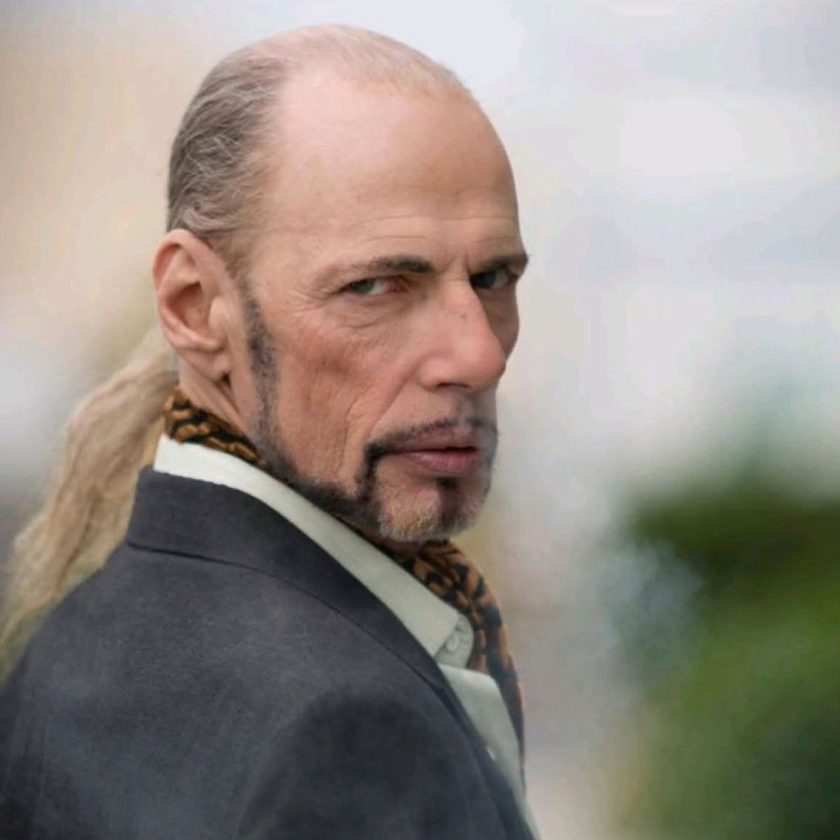
HoyLunes – There are recitals where music is heard, and others, far rarer, where music is inhabited. When the international career of Francisco Álvarez—a pianist with academic and concert prominence spanning Spain and the United States, guided always by the dissemination of Hispanic repertoire—meets the sunset light at Puerto Sotogrande, the traditional framework of a concert shatters.
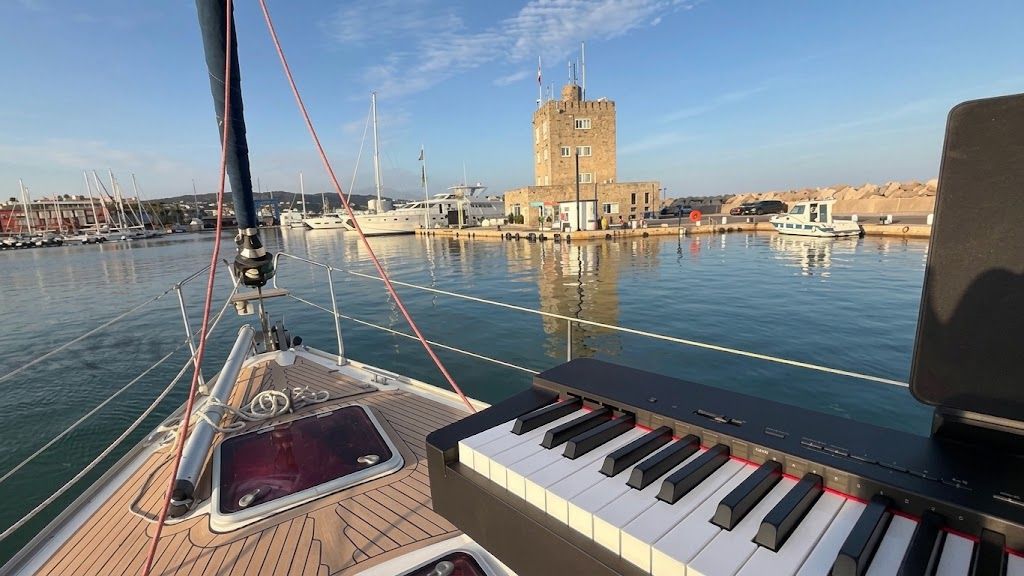
Aboard a vessel, surrounded by the gentle swaying of boats and facing the iconic Control Tower, the keys of the piano did not merely play sheet music: they engaged in a direct dialogue with the marine horizon and the social mission of Fundación Navega. In this intimate conversation for HoyLunes, Francisco Álvarez invites us to discover what happens when art, landscape, and human commitment come together in harmony.
Francisco, throughout your career, you have performed on very diverse stages. From a personal perspective, what emotions did playing the piano surrounded by the vessels of Puerto Sotogrande—with their crews and passengers aboard—convey to you, and to what extent did this experience transform your way of feeling and interpreting music?
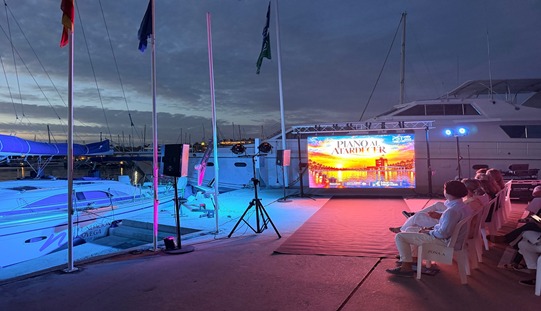
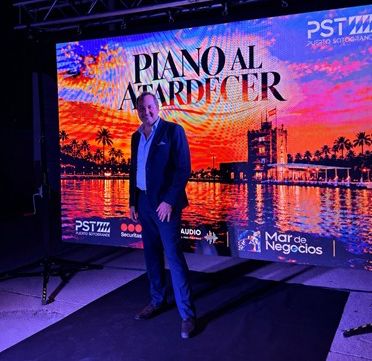
It was an especially moving experience to play pieces of various musical styles on the piano aboard a vessel, surrounded by the sea and the setting of Puerto Sotogrande. The contribution of Sotoaudio was fundamental and exceptional in terms of both sound quality and the LED screen.
Puerto Sotogrande possesses a personality of its own, through its architecture, its design, and its constant relationship with the sea. To all of this was added a spectacular sunset, which made the performance on the boat and around the Control Tower a memorable experience.
On this occasion, the audience was not simply seated in front of a stage: they were sailing, contemplating the landscape, and listening to live music. What happens when music leaves a concert hall and meets the sea?
The sea has always been a source of inspiration for music, painting, and literature… Performing in connection with it makes you feel a special companionship and peace.
When music meets the sea, both seem to form a whole. The sea ceases to be merely a landscape we contemplate; it seems to speak and listen through the music.
That feeling turns the moment into a very intimate experience.
Behind every musical program, there is always a common thread. When selecting the pieces for this concert, what motivated the choice of each one, and what message were you seeking to convey to the audience?
It so happened that, in a way, the pieces were chosen by the sunset, the sea, and Puerto Sotogrande. I tried to flow with the environment and envelop it with music, as if it were an embrace. Sharing the beauty of the moment through the piano was wonderful.
The recital also had a charitable component, as proceeds went to Fundación Navega and its social, cultural, and nautical projects. What meaning does it have for a musician to participate in an initiative where music does not end when the concert ends, but can contribute to other projects?
It meant a lot to me. One of the vocations that has accompanied my career has been contributing to social projects. I believe that one way to achieve personal fulfillment is to give the best of ourselves to others, especially to those who need it most. Therefore, participating in this initiative with Fundación Navega gave an even deeper meaning to the concert, because the music could leave a mark beyond that moment and contribute to other projects.
My personal connection with Sotogrande began in 2004, and since then, that relationship has never stopped growing. The connection between the audience, the sea, the sunset, and the music created an experience I will always remember. As a performer, I felt that the environment itself was part of the concert and that each piece acquired a different, more intimate, and special meaning. That kind of experience makes you listen to and feel music in a different way.
The Puerto Sotogrande experience brought together music, navigation, landscape, and solidarity. Do you believe that this type of proposal can become a new way of understanding cultural tourism and people’s relationship with destinations?
Totally. I believe that, with the support of the Management of Puerto Sotogrande for these projects, experiences can be created that bring a cultural and human dimension to the Port.
Music, navigation, landscape, and solidarity make it possible to experience a place in a special way and establish an emotional bond with it. Those who participate take with them the memory of what they felt and shared. I believe there is a very interesting path there for cultural tourism and residents alike.
From your international experience, what difference do you find between offering a concert in a traditional auditorium and participating in a cultural experience tied to a specific location, such as Puerto Sotogrande?
For me, musical vocation is a commitment to others, driven by the desire to create well-being through music, whether in an auditorium or in our beloved Puerto Sotogrande.
Every space offers a different form of encounter. In an auditorium, attention is concentrated on listening; in Puerto Sotogrande, the environment, the sea, and closeness to the audience are part of the performance. The setting changes, but I am moved by the same purpose, which is to share music and reach people.
If you had to imagine a future experience where music meets the sea once again, what would you like to explore: another repertoire, another type of navigation, another time of day, or even a collaboration with other artists?
The repertoire will always vary because every moment inspires different music. On this occasion, we enjoyed ideal sailing through the port, and I would like to continue exploring that union between music and the sea at different times of day. Each light and each atmosphere can give rise to its own unique experience.
I would also be delighted to collaborate with other artists and share new musical perspectives in this environment.
Finally, after having lived this experience in Puerto Sotogrande: What image do you take away from the port, and what do you believe a place like this can come to represent when it decides to open its spaces to culture, navigation, and social initiatives?
The first thing I would highlight is the human value of those who make Puerto Sotogrande possible. From the Management to all the staff, there is a level of work and dedication reflected in how well-kept and welcoming the environment is.
Collaborating in the creation and implementation of an annual cultural program that offers memorable moments and experiences for all audiences excites and inspires me. I believe that a port opening its spaces to culture and social initiatives can become a gathering place where the sea, art, and people share experiences that bring joy and well-being.