
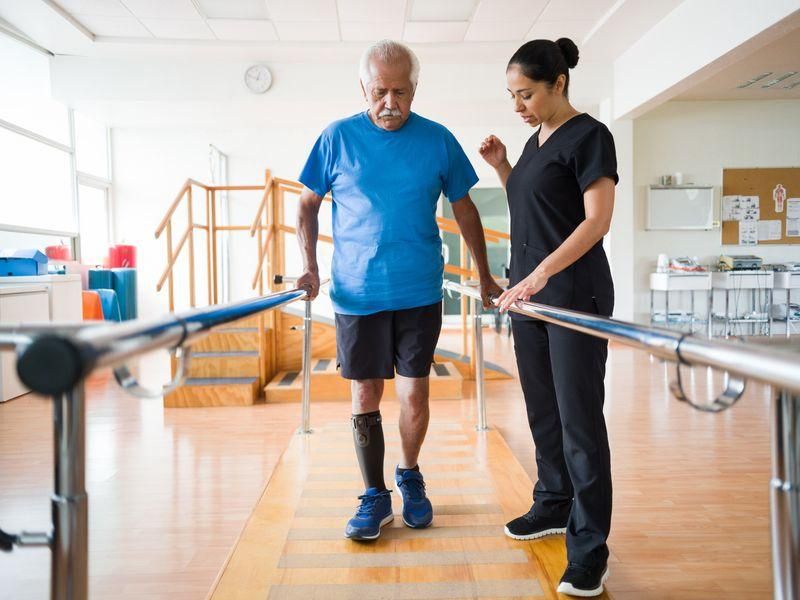
Gait disturbances can have very different causes, even among people with the same diagnosis. Custom orthoses incorporate mechanical solutions that help control specific movements, but their usefulness depends on an accurate clinical evaluation, proper fitting, and follow-up care tailored to the patient’s daily life.
By Ehab Soltan
HoyLunes
Walking seems like a simple movement until one of the functions that make it possible begins to fail. Lifting the foot, keeping the knee steady, distributing weight, and maintaining balance are actions the body coordinates almost imperceptibly; when that coordination is disrupted, every step can require considerable effort. The aftereffects of a stroke, certain neurological conditions, muscle injuries, or structural changes can all alter the way a person walks. However, sharing a diagnosis does not mean experiencing the same difficulties: one person may have trouble lifting the front of the foot, another may struggle to control the ankle when bearing weight, and a third may find it hard to keep the knee stable. This diversity explains why orthopedic technology has evolved toward solutions designed to adapt to each patient’s functional needs, rather than applying a single model of support.
When the Foot Stops Responding as We Expect
One of the best-known conditions is so-called foot drop, which occurs when there is difficulty lifting the front part of the foot while walking. As a result, a person may trip, drag the toe of their shoe, or lift the leg excessively to keep the foot from catching on the ground. Yet not all problems happen when lifting the foot; during the stance phase, some people have difficulty controlling ankle movement or keeping the knee in a stable position—changes that can affect balance, increase the effort needed to get around, and limit everyday activities.
Ankle-foot orthoses—commonly known as AFOs—are external devices designed to provide support or modify specific mechanical functions of the lower limb. Their purpose is not necessarily to restrict movement. Depending on their design and the patient’s needs, they can encourage a better foot position, control specific movements, or improve stability while walking. For this reason, guidance from the UK’s National Institute for Health and Care Excellence (NICE) recommends considering these orthoses for people experiencing walking difficulties after a stroke, always within a rehabilitation program and following an individualized professional assessment.
From Rigid Support to Adjustable Joints
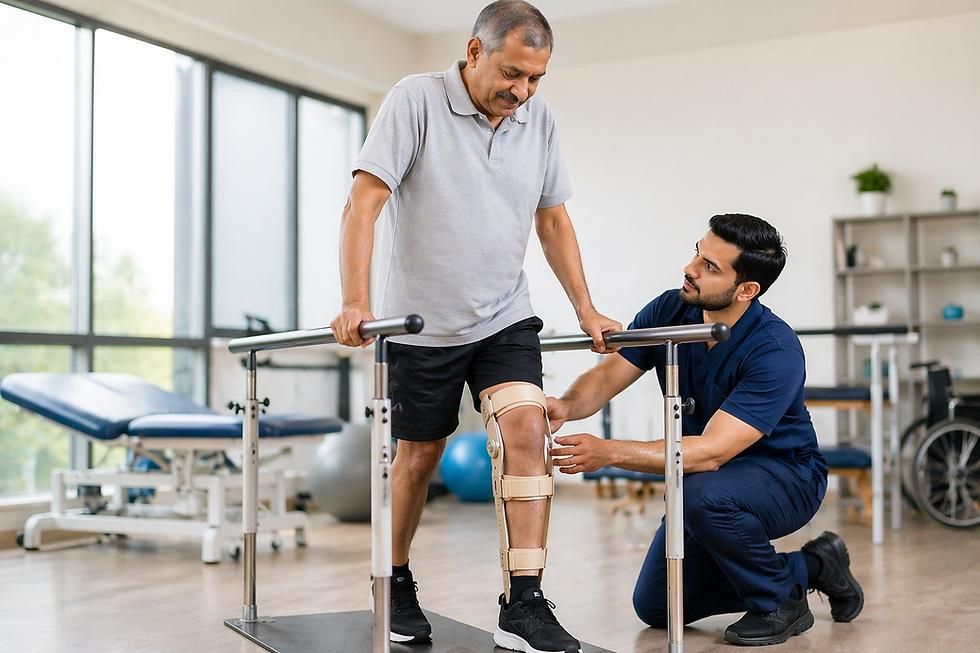
For a long time, orthopedic solutions relied largely on limiting movement to provide stability—a principle that remains useful for certain patients, though it does not address every functional need. Today, rigid, flexible, and articulated orthoses are available with a range of control mechanisms, and some incorporate components that regulate resistance to ankle movement or limit its range in specific directions. In articulated systems, for example, spring mechanisms can help control how the foot lowers after initial contact with the ground or assist specific phases of the gait cycle.
Being able to adjust these components allows the specialist to tailor the mechanical characteristics of the orthosis to the patient’s functional assessment. This does not mean the device replicates the natural action of muscles, nor that all technologies yield the same results. What truly matters is not the complexity of the mechanism, but the match between what the device can do and what the person actually needs.
Technology Does Not Replace a Good Assessment
Choosing an orthosis requires evaluating far more than foot position alone. Muscle strength, joint control, balance, sensation, available range of motion, and the patient’s ability to put on and use the device are all essential parts of the assessment—just as it matters how the person walks in real-world situations, such as changing direction, moving across uneven surfaces, climbing stairs, or walking for extended periods. An orthosis that improves one specific aspect of gait can still feel uncomfortable or impractical if it is not properly fitted, which is why its effectiveness must be judged by comfort, safety, and ease of use alongside its functional benefits.
The NICE guidance specifically emphasizes verifying these factors and ensuring that prescription and fitting are performed by qualified professionals. It also underscores that rehabilitation does not end once the device is delivered: ongoing adjustments, training in proper use, and follow-up reviews may all be necessary, particularly as the patient’s functional capacity evolves.
The best orthosis is not necessarily the most complex one, but the one that meets the real needs of the person who has to use it.
What We Know and What We Still Need to Research
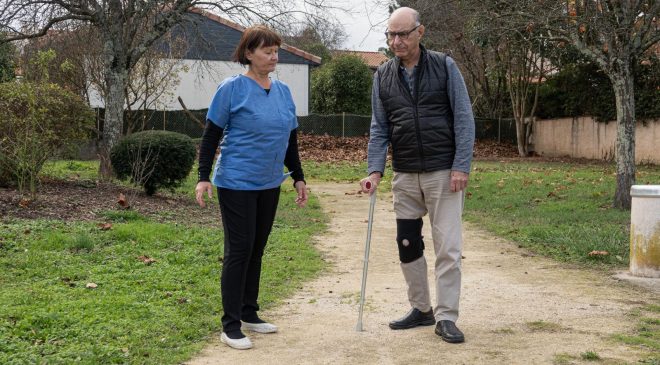
Scientific evidence supports the use of certain orthoses in appropriately selected patients, particularly after a stroke. A clinical practice guideline published in the Journal of Neurologic Physical Therapy in 2021, based on a review of 122 scientific studies, found strong evidence that both ankle-foot orthoses and functional electrical stimulation can improve walking speed, mobility, and dynamic balance in people with post-stroke motor impairments. However, the same review noted that existing studies do not establish the overall superiority of one intervention over the other, and that comparing outcomes across different types of orthoses remains difficult because many studies do not distinguish between designs with sufficient precision.
This distinction is crucial: the fact that a category of devices has proven clinical value does not mean that every model is suitable for every patient, nor that more sophisticated technology guarantees better results. Innovation must therefore go hand in hand with independent evaluations that clarify its benefits, limitations, and long-term outcomes.
Autonomy Starts with Small Movements
In rehabilitation, progress should not be measured solely by how a person’s gait looks or by metrics recorded during a clinical test. Being able to walk a familiar distance more safely, move around the home with greater ease, or take part in daily activities with renewed confidence can carry profound meaning for an individual. Those goals should be set together with the patient and reviewed as their condition evolves: in some cases, an orthosis can make specific activities easier, while in others it may be necessary to combine different interventions or reconsider the chosen device.
Orthopedic technology offers an ever-wider array of tools, yet its true value emerges when it answers a concrete need and fits naturally into the user’s daily life. Regaining mobility does not always mean walking exactly as before—sometimes it means finding a safer, more functional, and sustainable way to keep moving forward.
Health notice: This article is for informational purposes only and does not replace medical evaluation or an individualized recommendation from a healthcare professional. Selecting, fitting, and reviewing an orthosis must be carried out by qualified specialists, taking into account each patient’s specific condition and needs.*
Sources
NICE — Stroke rehabilitation in adults (NG236). Recommendations on ankle-foot orthoses, individualized assessment, and post-stroke rehabilitation.
[View NICE guidance](https://www.nice.org.uk/guidance/ng236/chapter/Recommendations)
Johnston, T. E., et al. (2021). A Clinical Practice Guideline for the Use of Ankle-Foot Orthoses and Functional Electrical Stimulation Post-Stroke. Journal of Neurologic Physical Therapy.
[View publication on PubMed](https://pubmed.ncbi.nlm.nih.gov/33675603/)
FIOR & GENTZ — NEURO SWING technical documentation. Information on the operation and adjustable mechanisms of orthotic joints. Used solely as a manufacturer technical reference, not as independent proof of clinical efficacy.
[View technical documentation](https://www.fior-gentz.de/en/products/orthotic-joints-for-the-production-of-an-orthosis/system-ankle-joints/neuro-swing.html)