For decades, tourism success was measured by the number of visitors. Today, European cities and islands are beginning to ask a different question: how many people can a territory absorb without deteriorating the mobility, housing, public services, and quality of life that made that destination attractive in the first place.
By Ehab Soltan
HoyLunes – Someone lands at Son Sant Joan with a plane ticket and the idyllic promise of a Mediterranean sunset. At the same time, a couple of kilometers away, a driver grips the steering wheel in frustration, trapped in an asphalt queue to advance barely a fraction of a journey.
The former believes they have bought a piece of paradise; the latter feels that the pressure on their daily environment is unsustainable. Neither knows the other, but both converge at the exact same saturation point. These are the two faces of an industry that for decades has measured its success primarily through the growth of visitor volume.
European tourism is no longer competing to grow. It is fighting to breathe.
The issue is no longer solely economic. Each new visitor consumes road space, water resources, energy capacity, and urban surface area. When these elements reach their physical limits, tourism management ceases to be a matter of promotion and turns into an exercise in territorial planning.
European tourism is no longer competing to grow. It is fighting to breathe”.
The Turnstile Urbanism
What is happening in Spain is not a matter of simple administrative patches; these are the first cracks of a shift in era for destination management.
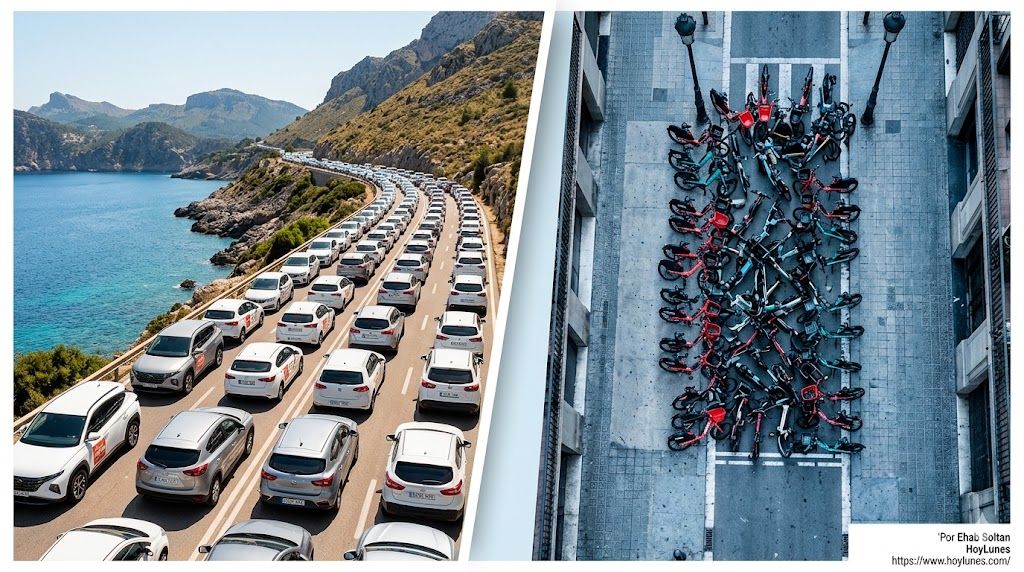
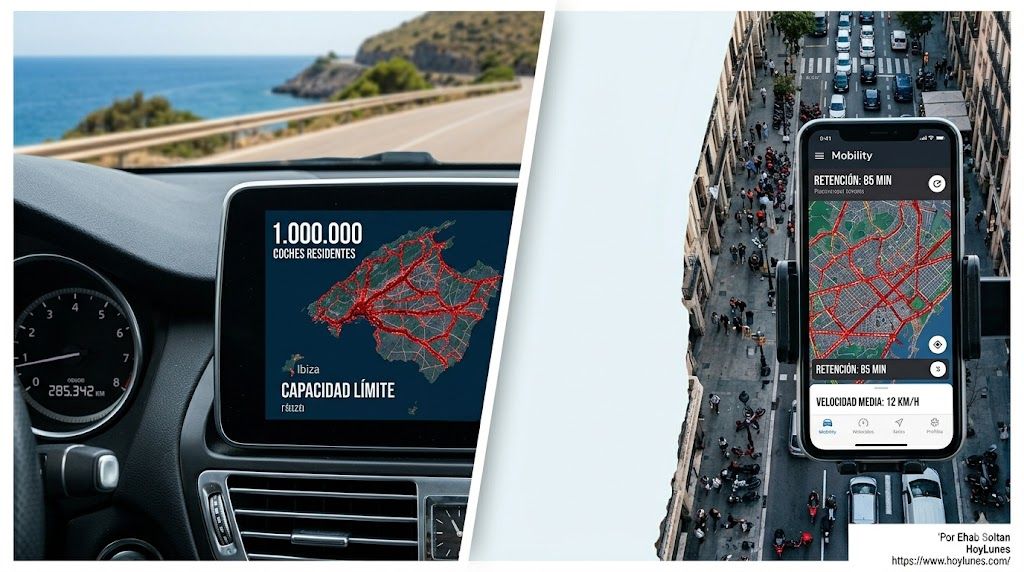
Mallorca has put an expiration date on the unrestricted circulation of external vehicles: starting in the summer of 2027, rental cars and non-resident vehicles will see their access to the island limited under a penalty system that can reach 30,000 euros. The mathematics of the territory are unforgiving: the island already supports one million resident vehicles, and watching the ports spew out another 400,000 floating cars in a single season was the confirmation that space is, by definition, a finite variable.
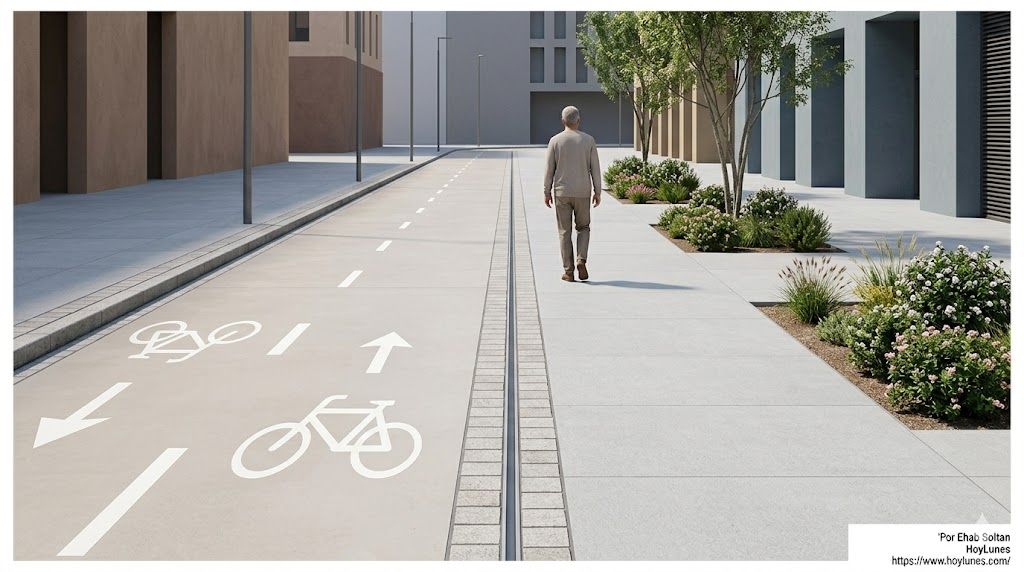
A few days later, three hundred kilometers away, Barcelona applied its own regulatory brake. The City Council decided not to renew the 3,500 mobile app-operated shared bicycle licenses starting in 2027. Beyond the accumulated penalties, data showed that around 90% of users were visitors, which reopened the debate over which uses of public space should be prioritized in a densely populated city. In a high-density metropolis, every square meter counts.
Academia calls this tourism carrying capacity. On the street, however, it is understood as pure urban survival. This is not a romantic debate; it is about managing traffic flow, the water coming out of the tap, ambient noise, and the threshold of civic coexistence.
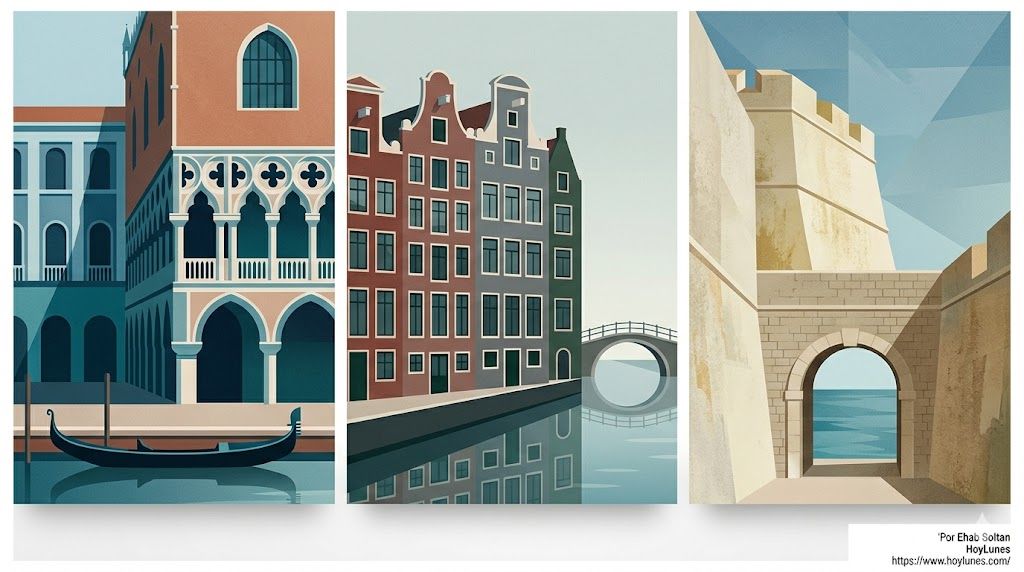
This debate is no longer limited to Spain. Venice is experimenting with access systems, Amsterdam is restricting certain tourism activities, and Dubrovnik is controlling the flow of cruise ships. The question emerging across all these destinations is essentially the same: how to protect habitability without renouncing the economic benefits of tourism?
The Value of Preservation
Traditional voices within the sector usually warn that restrictions will damage the local economy. However, modern economic analysis suggests a different approach: regulating access may be the only viable mechanism to protect the long-term value of the tourism product itself.
In certain mature destinations, a growing share of tourism value appears to be linked to the preservation of the experience, mobility, and environmental quality. If a destination transforms into a saturated and impassable space, it loses the appeal that justified its demand in international source markets.
“In the 21st-century economy, value is no longer born from unrestricted accessibility, but from the exclusivity of preserved space”.
Restrictions, however, also raise legitimate questions. Limiting access can improve local quality of life, but it can also make destinations more expensive, alter mobility patterns, and generate new inequalities in travel access. The balance between protection and accessibility will be one of the defining challenges of the next decade.
The battle being waged on European soil is not a simple conflict of coexistence between the traveler and the resident. It is an existential dilemma for any investor or public planner: quantity versus identity, unrestricted freedom of movement versus the habitability of the territory.
Mallorca and Barcelona may only be the first to admit a reality that many destinations observe with growing concern: tourism growth cannot be evaluated solely by the number of arrivals. It must also be measured by the capacity to preserve what makes a place desirable.
The future of European tourism likely belongs to the territories capable of finding that balance. Because the true competitive advantage will no longer be attracting more visitors, but conserving the space, the identity, and the quality of life that motivated the journey in the first place.
#SustainableTourism #Mallorca #Barcelona #Overtourism #FutureOfTourism #TourismMobility #SustainableMobility #TourismManagement #SmartDestinations #Travel #TourismIndustry #HoyLunes #TourismAnalysis #ResponsibleTourism #EhabSoltan