In an unexpected twist of the digital age, the EU’s new Entry/Exit System does not just digitalize control; it is materializing the border through our scarest asset: lifetime.
By Ehab Soltan
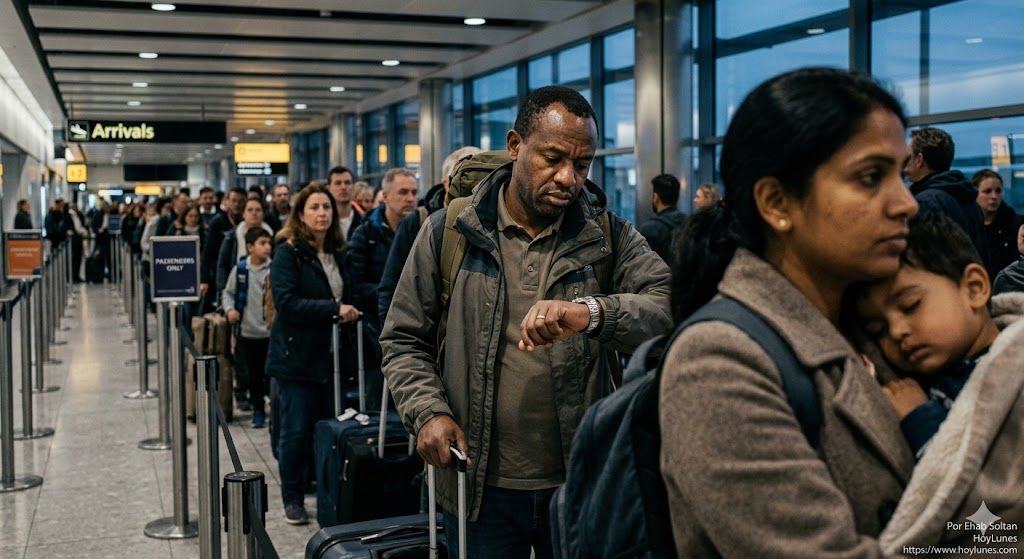
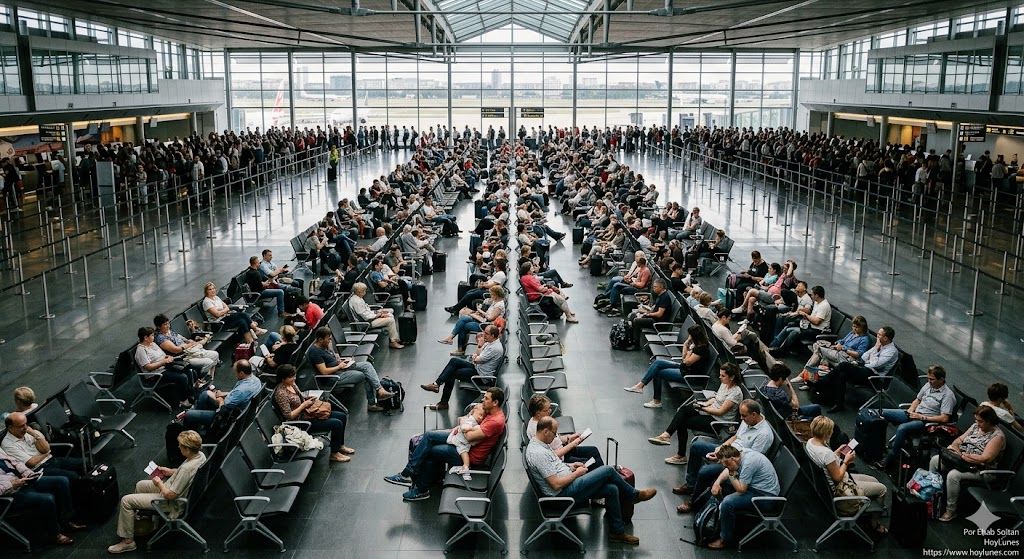
HoyLunes — It is six in the morning at Heathrow. A family waits in front of the checkpoints with two half-asleep children. The flight takes off in less than two hours, but the queue barely moves. No one disputes the need to tighten security. What causes unease is something else: the feeling that traveling through Europe no longer consumes money alone, but lifetime.
The tourism industry has long been obsessed with one goal: eliminating friction. The technological promise painted an idyllic journey where booking a flight, skipping from one country to another, and checking into a hotel would be almost invisible, fluid acts. However, the rollout of the EU’s new Entry/Exit System (EES) is delivering a reality check at the terminals of the Old Continent. The warning calls from British trade associations (ABTA and Airlines UK) regarding queues of over an hour just as the peak season begins are not a simple logistical glitch; they are the symptom that the border has ceased to be a formality to become a temporary wall.
Unlike the concrete walls or barbed wire of the past, this new obstacle does not prevent advancement. It allows passage, but demands time as a toll. It is built with accumulated minutes, boarding uncertainty, and repeated waits that undermine, journey after journey, the pleasure of discovering the world.
The paradox of “invisible” technology raising physical walls
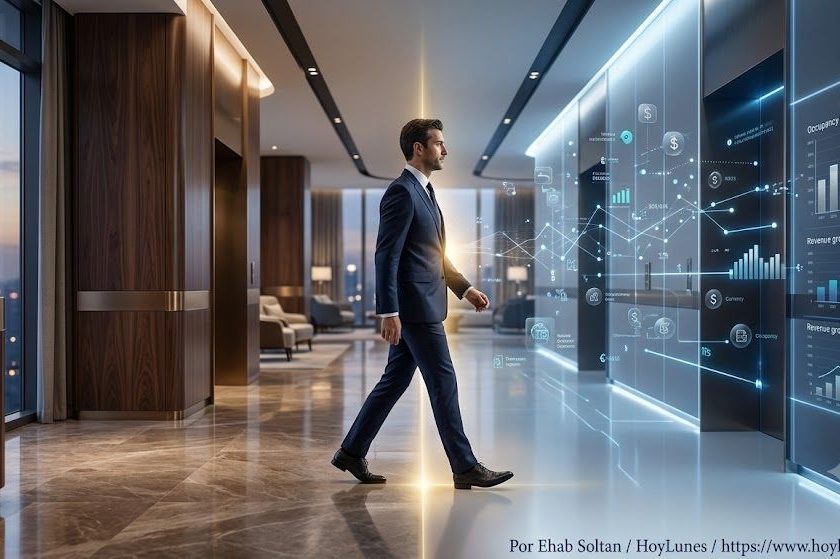
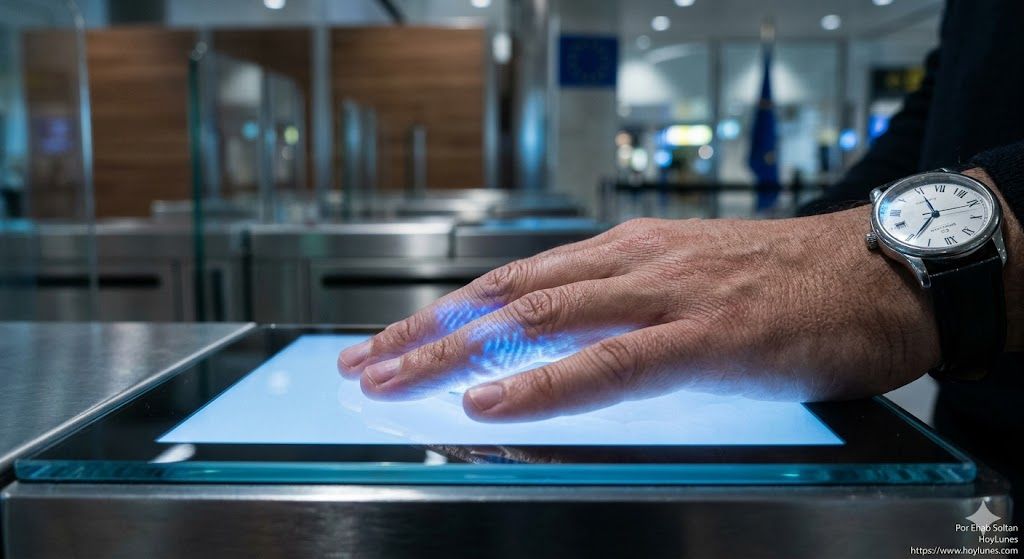
Behind this scenario operates a profound contradiction. A framework designed to streamline flows and retire the old manual stamping of passports has ended up returning the border to us in its most dense and corporeal form: the mandatory capture of our fingerprints and our face. Computer code has become a shackle for physical time. It is the “Mirror Effect” of border technology: the greater the sophistication and automation of algorithmic surveillance, the slower, heavier, and more bureaucratic the human experience becomes on the tarmac.
This transformation coincides with a shift in travelers’ priorities. The scarcest resource is no longer the vacation budget, but hours of life. The true battlefield of European tourism is now played on the clocks, a factor that will reshape traveler flows irreversibly.
“The scarcest and most valuable resource for the modern traveler is no longer the vacation budget, but the hours of their life”.
There was a time when low-cost airlines revolutionized the market by crashing prices to historic lows. But current consumer behavior shows that, as free time becomes scarce, the user places a premium on speed and predictability. Time has ceased to be an abstract variable to behave as a currency as real and tangible as money.
That is why the question that the sector evades with such wariness is devastating: How many hours of life does traveling to Europe consume? The traditional tourism economy analyzes spending per person, hotel occupancy, or average stay, but ignores the time the user loses at the margins of the trip.
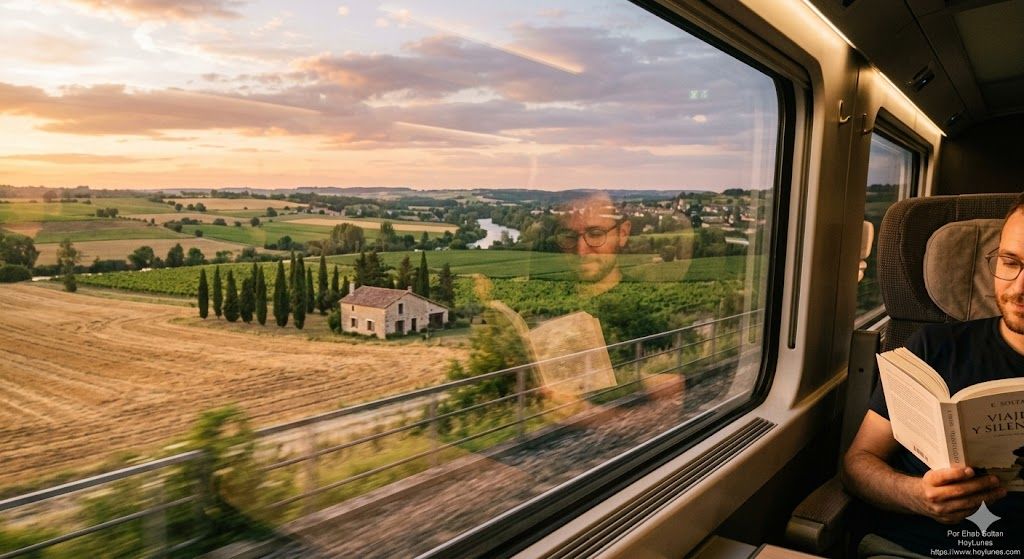
This blindness is dangerous for a continent that cemented its tourism hegemony precisely on freedom of movement. That millions of travelers could cross multiple borders in a few days, predictably and with barely any interruptions, was one of the greatest competitive advantages of contemporary Europe.
Today, that capital is at risk face-to-face with the cumulative temporal cost of the trip. The itinerary has transformed into a bureaucratic gymkhana that grinds down patience: managing reservations, doing digital check-in, overcoming security filters, waiting at the border control, facing transfers, waiting at the boarding gates, and now, undergoing biometric verifications at the new kiosks while mobile applications are validated. What was born to simplify has added layers of cognitive complexity and stress.
The decompression of express tourism
Under this pressure, the rules of the game change. We enter squarely into the “competition for simplicity”. Gone is the era when destinations rivaled only for the modernity of their hotels or their sustainability credentials. True future leadership will belong to the places that manage to save the visitor from friction. Agility in access is the new luxury. The future of tourism will depend less on airfares and more on the capacity of destinations to give time back to the people.
“The destinations that triumph in the future will not be those with the best hotels, but those that generate less cognitive friction for their visitors”.
This friction can be the handbrake that forces a rethink of hyper-accelerated mass tourism. If airport waits become chronic, the model of flying for 20 euros to spend an express weekend —investing more hours in terminal queues than at the destination— will lose all its practical sense. This administrative limit will force a transition toward decompression: a tourism of longer, conscious, restful, and proximity stays.
The end of the “Psychological Exceptionalism” of the Western traveler
The logistical shock at the borders is accompanied by a cultural jolt. Western citizens took the immunity of our transit for granted and were not accustomed to surrendering our biological data to move through familiar environments.
For the British, caught in the reality of Brexit, the obligation to register fingerprints and face equalizes their experience with the meticulous processes that millions of people from outside the European Union have been enduring their whole lives to set foot on European soil. What is novel here is not the control itself, but the surprise of those who had forgotten what a border means. The EES has dismantled the “psychological exceptionalism” of the Western tourist. Customs is no longer an alien reality; now it is drawn on the features of their own face, widening the emotional distance between the islands and the continent.
Political geography and the architecture of friction
For those who analyze contemporary geopolitics, this turn is the natural consequence of the “biopolitics of smart borders”, where the fundamental right to mobility is no longer validated by a paper document issued by a State, but through the mathematical translation of biological features. The body is the definitive passport, but its reading requires machinery that imposes an “architecture of friction”.
These are systems that, due to algorithmic mismatches, staff shortages, or bureaucratic rigidity, slow down human passage instead of accelerating it. There are traditional visions that assure that the flow will not change and that price or climate will continue to rule. However, the day-to-day of the terminals proves that when passage becomes tortuous, consumer decisions change.
The next tourism competition will consist of giving back time. The destinations of tomorrow will be measured by their ability to shorten travelers’ waits before they step into the hotel. Agile airports, invisible biometrics, and digital interoperability will be assets as potent as the sun or historical heritage.
In the end, the real value of Europe does not reside in the monuments it accumulated in the past, but in the calm and meaning it is still capable of offering when we decide to stop. In a world where everything can be cloned or automated, the Old Continent retains an irreplaceable advantage: the capacity to convert a trip into a reunion with oneself. In an economy obsessed with haste, the greatest wealth is simplicity.
The future of European tourism will not be decided by the number of people we crowd at the entry gates, but by the lifetime we force them to lose in them. Because every border charges a toll, and those of the 21st century are no longer satisfied with money. They charge it in hours of life.
#EuropeanTourism #Mobility #TravelerExperience #TimeEconomy #FutureOfTourism #TourismInnovation #Airports #EES #DigitalBorders #Travel #Europe2030 #DigitalTransformation #SmartTourism #HoyLunes #TourismTrends #EhabSoltan