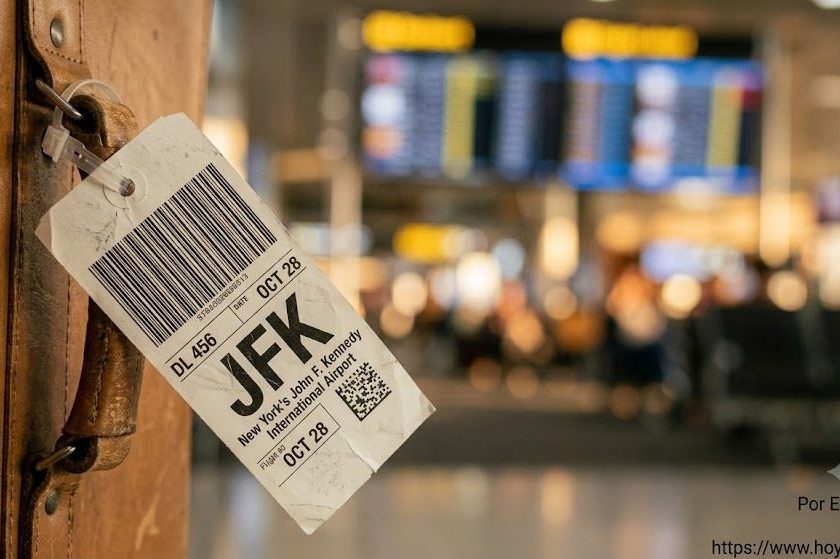
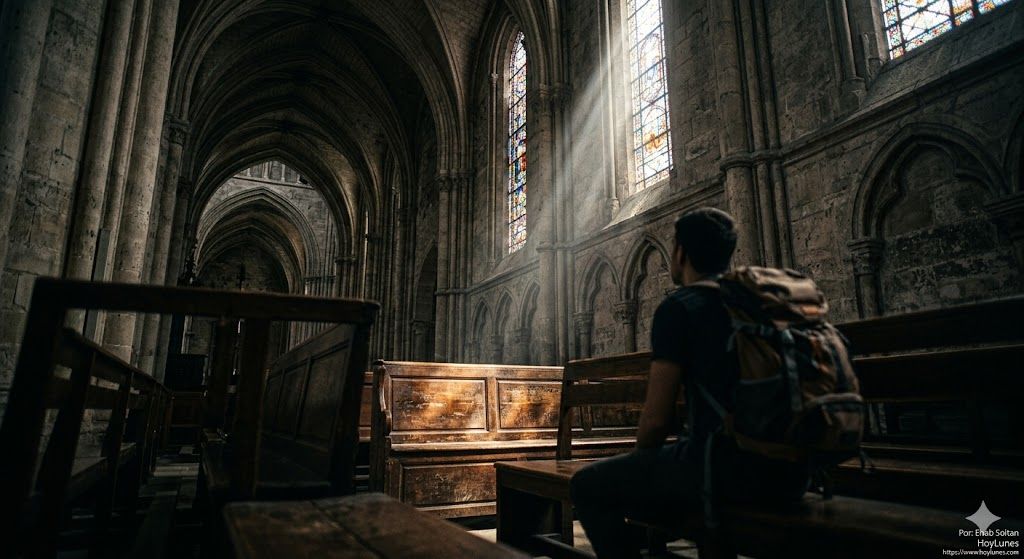
In a society saturated with information, hyper-stimulated by technology, and starved of purpose, the Old Continent emerges as the ultimate global sanctuary for the human existential experience.
By Ehab Soltan
HoyLunes — Why does a person cross half the world to walk for weeks through northern Spain, tour a suspended monastery in Greece, sit in absolute silence in a French cathedral, lose themselves in an abbey wrapped in Irish mist, or seek isolation in the ancient temples of Japan? They do not do it for comfort. They do not do it for luxury, entertainment, or the status granted by conventional tourism. They do it because they are seeking, almost instinctively, an experience that reminds them of who they are.
For decades, the tourism distribution industry has successfully packaged and sold a predictable formula: sun, beach, shopping, and leisure. However, behavioral data in contemporary Europe reveals a rift that disrupts traditional operators: millions of people continue to travel to seek something that money cannot buy. They are not necessarily looking for religion, nor are they driven by a specific denominational faith; they are seeking meaning.

The Value of the Intangible in the Age of Simulation
Europe possesses a living heritage that no twenty-first-century artificial intelligence can manufacture and no emerging country can build in twenty years: layers of meaning accumulated over centuries. Cathedrals, monasteries, historic paths, pilgrimage routes, centuries-old libraries, places of collective memory, and spaces for contemplation shape a legacy that transcends brick and stone. It is an intangible wealth made of time, silence, and thought.
The more capable technologies become of generating images, narratives, and virtual experiences indistinguishable from reality, the greater the value of that which cannot be digitally replicated. No artificial intelligence can recreate the sensation of walking for days along a route traveled for centuries, nor replace the emotional weight of a place where millions of people have searched for answers before us.
“Europe possesses an asset that no artificial intelligence can manufacture: layers of meaning accumulated over centuries of history, time, and silence”.
Faced with this reality, it is necessary to coin a novel concept: we must begin to understand Europe as the greatest emotional infrastructure on the planet.
The uniqueness of this emotional infrastructure is that it produces economic value without relying exclusively on new constructions or large physical investments. Its raw material is accumulated memory. While other regions invest billions in creating destinations from scratch, Europe commands a cultural, historical, and symbolic capital that already exists—and whose demand seems to grow precisely in an era marked by technological acceleration.
It is not just a continent, a conventional tourist destination, or a mere economic power; it is one of the deepest networks of physical spaces capable of generating reflection, memory, identity, transcendence, and human connection. It is an urban and rural fabric designed, almost unwittingly, to answer the most universal questions of our species: Who am I? What really matters? What legacy do I want to leave behind? Where do I find silence in a world that never stops shouting?
This network is not measured in kilometers of highways or in airport capacity. It is measured in a territory’s capacity to generate memorable experiences and enduring questions. Unlike other major cultural destinations in the world, Europe concentrates these spaces of meaning within relatively short distances and within a stable institutional framework. A traveler can connect medieval monasteries, historic cities, and protected cultural landscapes in just a few hours. This exceptional density turns the continent into a continuous fabric of symbolic experiences difficult to find in any other region on the planet.

The Neuroscience of Silence and Existential Psychology
This shift in global habits is not a mystical or romantic trend; it has a solid scientific foundation. Existential psychology and modern studies on purpose in life (meaning-in-life) demonstrate that today’s human being suffers from a crisis of emptiness stemming from social disconnection and digital saturation. Recent research in the neuroscience of contemplation reveals that environments that foster slowness and silence drastically reduce cortisol levels, stimulate brain plasticity, and improve mental health in a lasting way.
In fact, over the last two decades, numerous studies on subjective well-being and consumer behavior consistently show that people derive much more stable and long-lasting levels of satisfaction from transformative experiences than from the acquisition of material goods. We remember with greater intensity that which alters our perception of ourselves than that which is associated exclusively with consumption. This evolution helps explain the rise of pilgrimage routes, silence retreats, and travel centered on personal development within advanced markets.
In this light, European historic trails and monasteries are being rediscovered as spaces for deceleration and cognitive disconnection. The experience is transversal because it connects with emotional health and longevity, two of the greatest concerns of today’s societies.
The Paradigm Shift in European Tourism
Attempting to reduce this immense emotional infrastructure to a simple “structured tourist product” of VIP boxes, mass hotels, and agency commissions is a misdiagnosis. The fragmentation of its management and the resistance of these places to being devoured by rapid commercialization are not weaknesses; they are its most solid protective walls.
Not everyone shares this interpretation. Some analysts maintain that tourism will continue to depend mainly on traditional factors such as price, airline connectivity, or weather. However, even under that pragmatic perspective, the growing demand for heritage proposals and deep life experiences suggests that meaning is becoming an indispensable economic component to measure the competitiveness of a destination.
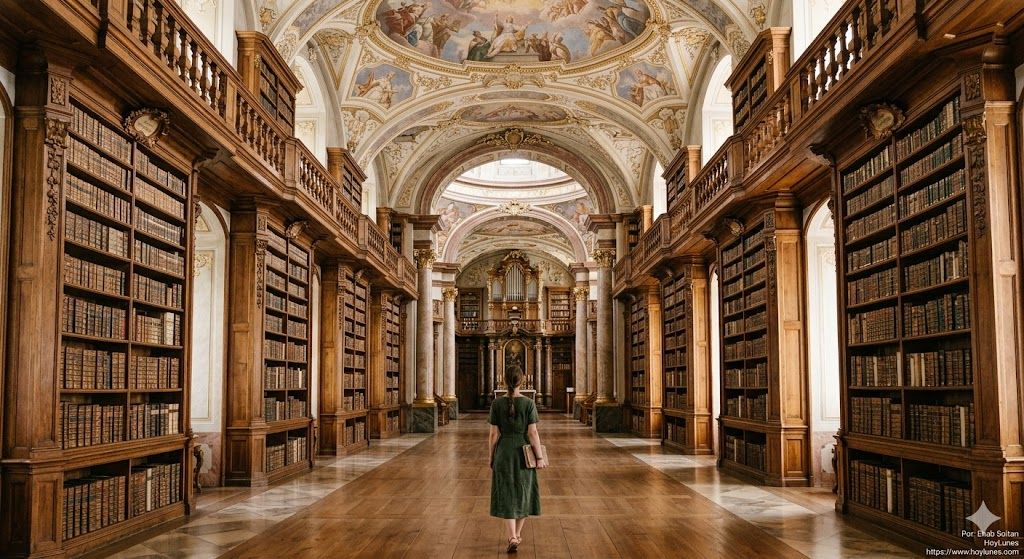
The relevance of this phenomenon will increase as Europe ages. Long-lived societies do not only demand healthcare services or accessible environments; they also seek experiences capable of reinforcing identity, memory, and life purpose. In this context, Europe’s cultural and spiritual legacy ceases to be a postcard from the past to become a strategic resource for the future.
Europe could be entering a new tourism era where the most valuable resource is no longer the climate, nor the gastronomy, nor the beaches, but its capacity to offer meaning in a society increasingly saturated with information and increasingly starved of purpose.
The continent’s true competitive advantage in the coming decades will not consist of competing for visitor volume or for the modernity of its technological infrastructures, but in its capacity to preserve the space, the slowness, and the identity that motivated the journey since the beginning of the world.
“In a global economy obsessed with producing more, a territory’s greatest wealth consists precisely in offering what is becoming increasingly scarce: meaning”.
Perhaps Europe’s most valuable asset is not what it built over centuries, but what it still allows us to feel in an era where almost everything accelerates. In a world where almost everything can be copied, automated, or digitally reproduced, the Old Continent retains an advantage that no technology has managed to replicate: the ability to turn a journey into a question and a place into a memory. In an economy obsessed with producing more, the greatest wealth consists precisely in offering what is becoming increasingly scarce: meaning. Therein lies the true economy of the future.
#EmotionalInfrastructure #MeaningTourism #MentalHealth #CulturalSustainability #PhilosophyOfTravel #ExistentialEurope #EuropeanHeritage #UrbanSilence #LifePurpose #HoyLunes #EhabSoltan