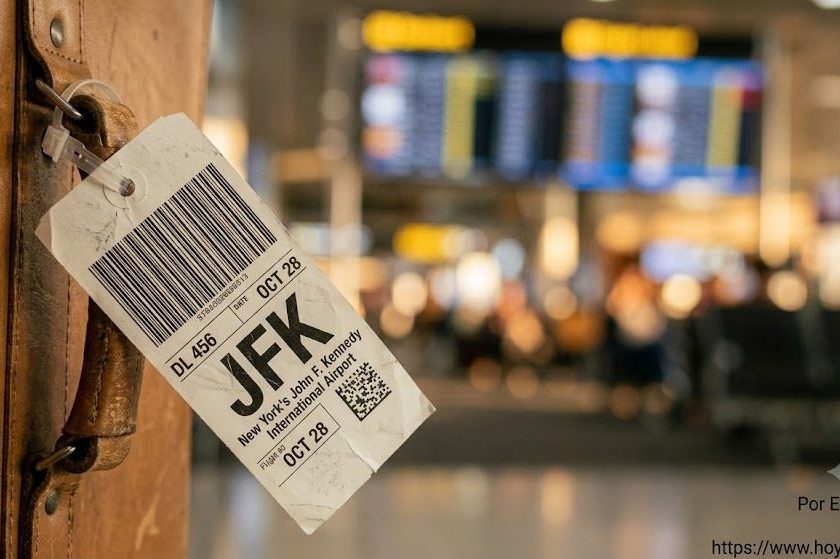

The rising cost of air transport, biometric controls, artificial intelligence, the evolution of accommodation platforms, and new destination strategies reveal a profound transformation: ´tourism competitiveness´ increasingly depends on offering a ´predictable, secure, and frictionless experience´ from booking to the traveler’s return.
By Ehab Soltan
HoyLunes — A family sits in front of a screen to meticulously compare the costs of their next vacation. Thousands of miles away, an international executive waits patiently in a check-in line while a biometric scanner registers his data. At the headquarters of a major airline, systems engineers audit artificial intelligence algorithms to protect their operations from digital threats, while a well-known mobile application, famous for private home rentals, discreetly deploys a catalog of boutique hotels in the heart of Europe. None of them are part of the same story, but all depend on the same system.
At first glance, these scenarios seem like disconnected fragments of different realities. However, they all respond to the same urgent question: What makes travel predictable, secure, and attractive in today’s world? The answer is no longer hidden solely in the beauty of a landscape or the category of an accommodation, but in the industry’s ability to eliminate uncertainty at every step of the way. Traveling has always implied assuming a certain degree of uncertainty. The difference is that today, that uncertainty has become one of the primary factors of competitiveness in the sector.
Travel Complexity and the Cost Factor
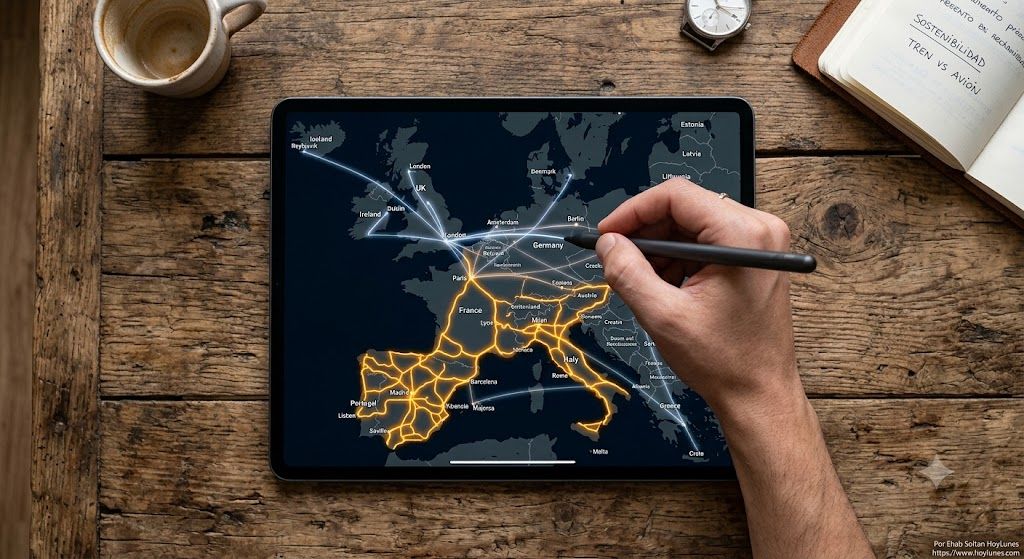
Air transport has once again found itself at a crossroads where price is consolidated as a variable of high macroeconomic strategy. In traditionally source markets that are highly sensitive to inflation—such as the German market—the alerts from major travel agency associations are no longer a hypothesis: they are a market reality. When airfares rise sustainably, consumer behavior undergoes an immediate structural shift. Tourism companies must also recalculate their commercial strategies, as small increases in transport costs can alter demand across entire markets. Family decisions begin to prioritize geographic proximity and land accessibility.
[Family Decisions / Companies] ──> High Inflation / Expensive Fares? ──> Preference for land-accessible destinations (Train, Car, Bus)
In other words, the price of travel stops being just an element of the trip and becomes a preliminary filter that conditions even the desire to travel. This shift in demand introduces a profound competitive asymmetry among destinations themselves:
Peninsular destinations interconnected by high-speed networks or efficient roads find an opportunity to capture travelers who prefer to avoid the airport.
Insular territories, such as the Canary Islands or the Balearic Islands, face the challenge of managing an absolute dependence on air connectivity. For these regions, an expensive plane ticket is not a simple inconvenience; it is a barrier to access that demands a rethinking of customer loyalty and product diversification strategies to justify the visitor’s expenditure.

Technological Friction: The Journey Before Takeoff
The travel experience does not start upon stepping into the destination, nor even upon boarding the aircraft; it begins within the management flows that organize global transit. The implementation of advanced systems such as the Entry/Exit System (EES) and the deployment of biometrics in the Schengen Area reflect an effort to digitalize borders. However, the transition from manual to automated processes often creates significant bottlenecks during peak demand periods, extending wait times at international counters. Global organizations like IATA and the WTTC insist that operational rigidity at checkpoints can disincentivize long-haul flows if a margin of flexibility is not introduced. When technology adds friction instead of reducing it, innovation loses part of its value from the traveler’s perspective.
To this physical friction at terminals, an invisible but critical dimension is added: cybersecurity. The introduction of cutting-edge artificial intelligence tools in commercial aviation functions in an ambivalent manner:
- On one hand, it exponentially multiplies the capacity of technical teams to detect and neutralize vulnerabilities in hyper-connected networks.
- On the other hand, if it lacks a strict framework of governance and traceability, it accelerates the sophistication of external threats.
Ensuring that air traffic control systems, airlines, and booking platforms are immune to digital sabotage is no longer a minor technical matter, but a fundamental pillar of aviation safety and consumer confidence. In the tourism economy, trust is also an invisible infrastructure.
“In today’s tourism economy, ease of use and system predictability have become infrastructures just as critical as the airports themselves.”
The Metamorphosis of Supply: Specialization and Ecosystems
The accommodation and transport market is experiencing a process of hybridization where traditional sector boundaries are blurring completely. When large alternative accommodation corporations decide to formally break into traditional hotel distribution, the booking process undergoes a definitive evolution toward total centralization. Competition stops focusing solely on price and begins to revolve around the simplicity of the experience. Users no longer jump from one application to another looking for disparate types of lodging; they demand a single, agile, and transparent environment capable of resolving both a weekend getaway and a complex corporate trip.
At the same time, the physical supply responds through an intense polarization oriented toward added value:
Urban and experiential luxury: Internationally prestigious chains—such as the arrival of exclusive brands linked to global cultural figures in financial capitals—seek to transform the hotel into a destination in itself. Accommodation stops being merely a place to sleep and becomes part of the experience that justifies the trip, integrating signature gastronomy and balanced design for an audience seeking micro-refuges or “urban oases”.
Long-haul connectivity: Airlines like Cathay Pacific concentrate their investments on consolidating key direct routes that function as stable bridges between continents, facilitating both cultural tourism and the dynamic MICE sector. Each new direct connection does not just transport passengers; it also brings economic, cultural, and business ecosystems closer together.
The key question the industry must answer is no longer what new infrastructure is being inaugurated, but what specific needs of today’s traveler it satisfies. Nowadays, value is measured in terms of optimized time, psychological comfort, and the elimination of logistical friction.

The New Rules of Territorial Competitiveness
The way public administrations and destinations manage their tourism flows reveals that competition has ceased to be a matter of simple promotion. When a region like the Valencian Community deploys public programs of direct incentives or tourism vouchers aimed at reactivating internal demand—especially after climate or socioeconomic crises—the real objective transcends volume capture. It is a macroeconomic stabilization tool designed to inject direct liquidity into the local business fabric, sustain employment, and keep the tourism machinery active during traditionally low seasons. The question is no longer how many tourists arrive, but what capacity a destination has to remain attractive when market rules change.
For their part, large metropolises like Madrid or global connection hubs like Hong Kong demonstrate that contemporary tourism success involves mastering multiple boards simultaneously. When contrasting these trends with data from UN Tourism, it becomes clear that avant-garde destinations no longer compete solely on the objective quality of their beaches or monuments. The real competitive advantage is defined by a network of seven essential vectors:
- Accessibility: The capacity to offer diverse and sustainable transport alternatives.
- Connectivity: Direct and stable links with the world’s main source hubs.
- Ease of use: Friendly digitalization of public and transport services for the visitor.
- Confidence: Completely secure sanitary, physical, and digital environments.
- Flexibility: Regulatory and operational agility to adapt to sudden changes in demand.
- Added value: Genuine cultural and gastronomic proposals that justify the trip.
- Predictability: The destination’s ability to offer a consistent experience from booking to return.
The Infrastructure of the Experience
By connecting each of these variables, a clear pattern emerges. The global tourism sector is rapidly integrating into a systems economy. The traveler rarely perceives this infrastructure, but experiences it constantly.
“The success of a destination is no longer measured by the spectacular nature of what the traveler sees upon arrival, but by the absence of obstacles along the way.”
This is where a fundamental concept gains relevance: the **new invisible infrastructure of tourism**. This network is not made of concrete or asphalt, but of intangible yet essential pillars:
- Connectivity
- Digitalization
- Security
- Governance
- Interoperability
- User experience
A destination may possess incalculable heritage wealth, but if the arrival process involves hours of bureaucratic delays at the border, if internal transport suffers from a lack of logistical foresight, or if booking options are fragmented and confusing, the perceived value of the experience plummets. Contemporary tourism excellence consists of transforming the underlying technical complexity into a user experience that is completely transparent, intuitive, and fluid. The best tourism innovation is usually the one the visitor barely notices because it eliminates obstacles before they even appear.
For a long time, a tourist destination gained international prestige by opening a five-star hotel or inaugurating a state-of-the-art airport terminal. Today, in a global environment that is interconnected yet exposed to constant economic and technological volatility, this monumentalist vision is insufficient.
The true competitive advantage begins long before boarding: it is consolidated when the booking process is intuitive, arrival in the destination country is perceived as secure, transport is deployed predictably, and each stage of the value chain is designed to reduce uncertainty rather than increase it. Perhaps the tourism of the future will be remembered and evaluated not only for the spectacular nature of the places it offers, but for the profound peace of mind and certainty it is capable of providing to those who decide to explore them.
Perhaps that family comparing options in front of the screen will never get to know the strategic decisions, the digital systems, or the investments that made their trip possible. Nor do they need to know them. If everything works as it should, they will only remember that traveling was easy. And precisely there, the new competitive advantage of tourism begins.