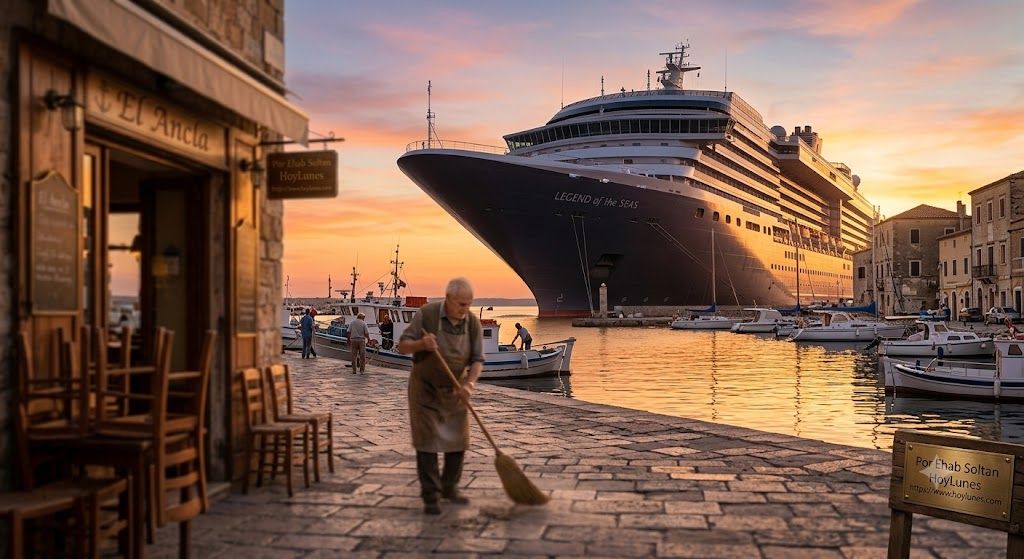
Two worlds, the same dawn: the monumental scale challenges the historical routine of the Mediterranean coast.
The development of the cruise industry confirms the international prominence of the Mediterranean basin. This phenomenon accelerates a profound evolution of its ports, cities, and maritime corridors. Beyond passenger numbers, the main challenge will be to convert this dynamism into prosperity, territorial balance, and quality of life for those who live and work by the sea, preserving the cultural and economic value of one of the world’s most influential maritime spaces.
By Ehab Soltan
HoyLunes – An ordinary dawn in a coastal city. The low morning light outlines the imposing silhouette of a massive cruise ship slowly entering the port, maneuvering with millimetric precision. On its decks, thousands of visitors awaken with enthusiasm, preparing for an intense day of leisure, culture, and shopping. At the same time, just a few hundred meters away, the city begins its own day: markets open their shutters, public transport starts running, and local shops prepare for the day. Both movements seem independent, although they increasingly depend on one another.
The first are passengers; the second are residents. For a few hours, both groups will share the same pavement, breathe the same salty breeze, and stroll beneath the same historic facades. However, they do not live in the same coastal environment. At that invisible intersection where global dynamism meets local routine, not only is the success of a tourist day defined. It is there that the destiny of one of the world’s most influential maritime spaces is being mapped out.
The Data Explains the Growth. It Does Not Explain Its Meaning.
Projections for this year 2026 consolidate an unquestionable trend: the region remains firmly positioned as the second-largest global cruise market. It currently concentrates 15% of global deployment, behind only the Caribbean, which retains 41%. According to sector data, the area expects to reach nearly 6 million passengers this year, representing a spectacular 50% increase compared to the 4 million recorded in 2019.
Globally, the total volume of the industry will scale to 40 million people. In Mediterranean waters, this activity will be sustained thanks to the operation of more than 180 ships belonging to 57 different companies, representing an operational increase of 3.7% compared to the previous year. These data reflect an expanding industry. What they do not show, on their own, is how this development transforms the territory that receives it.
The strategy of the cruise lines is not based on multiplying itineraries, but on introducing vessels of much larger dimensions. An example of this is the imminent European debut of Royal Caribbean’s Legend of the Seas. This giant features space for 7,600 passengers and 2,350 crew members, and will operate routes from Barcelona and Rome-Civitavecchia. Similarly, looking ahead to the winter of 2026/2027, MSC Cruises will reinforce the winter market with the MSC World Asia, a colossus with capacity for 6,762 users. These figures clearly describe a sector in full expansion, but they answer only part of the story.
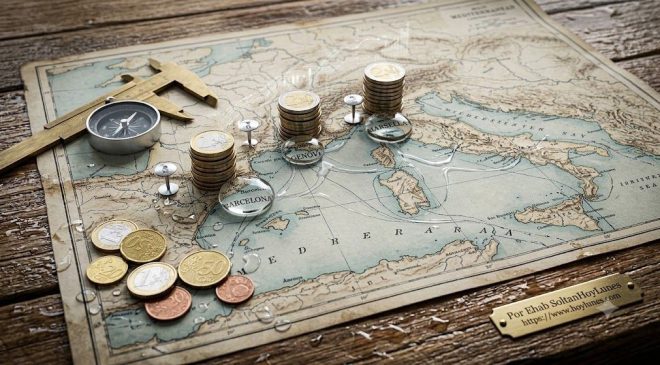
Do More Cruise Ships Mean a More Prosperous Region?
When the scale of tourism activity transforms in this manner, the metric of success cannot be limited to the sum of arrivals. The mandatory question for analysts and public managers must change course: where does the wealth generated by these colossi of the sea actually remain?
Passenger volume does not always mean prosperity. The difference depends on how the value generated by each port of call is distributed. The massive influx of visitors with a stay time limited to a few hours creates complex dynamics in the urban economy. While port fees and excursion agencies perceive a direct benefit, the traditional commercial fabric can experience saturation that displaces its regular customers. Often, this happens without ensuring real substitute spending at the destination.
Passenger volume does not always mean prosperity. The difference depends on how the value generated by each port of call is distributed.
This effect is not uniform and depends on factors such as the duration of the port of call, the organization of excursions, the commercial model of the destination, and the distribution of spending between the port and the city. Therefore, the real economic impact must be measured by its capillary and distributive reach within the host community, and not by the gross volume of tickets issued in the offices of large international operators.
The Mediterranean Is Not a Market. It Is a Human Ecosystem.
To understand the scope of this new era, it is imperative to remember that maritime routes do not connect simple concrete terminals. These networks link historic cities, living neighborhoods, and communities with an ancient cultural identity. The coastal environment, rather than a first-order tourist market, is a human ecosystem of enormous fragility.
When the pressure of ports of call concentrates on old towns with medieval layouts or traditional port neighborhoods, what comes into play is the city’s intangible heritage. The deterioration of the urban and commercial fabric, or the transformation of entire districts into mere backdrops for day-trippers, puts the authenticity of the place at risk. Ironically, that very authenticity is what attracted the traveler in the first place. Strategic regional planning must prioritize the preservation of this identity over the optimization of berths.
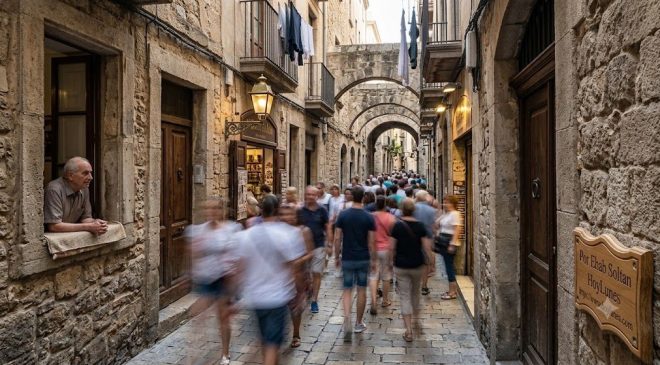
When a Ship Arrives, the City Changes Too
The scale of a latest-generation mega-cruise ship alters the operational dynamics of a community at a speed that traditional urban plans can hardly absorb. This is not an ideological conflict, but a first-order public management challenge.
During the eight to ten hours that the vessel remains moored, demand on local public services spikes simultaneously across multiple fronts:
- Urban mobility: Saturation of public transport networks and taxi fleets at key hubs.
- Management of public spaces: Extreme concentration of pedestrian flows around iconic museums and monuments.
- Basic services: Logistical increase in the needs for street cleaning, public safety, and waste collection.
Visualizing the impact of a cruise ship implies understanding that its effects modify the structure of the city far beyond the port’s coastline. A city’s capacity ceases to be measured solely by its port infrastructure and begins to depend also on its ability to coordinate public services in a very short frame of time.
The Traveler Is Also Changing
In parallel with the evolution of naval engineering, the profile of the cruise passenger is also undergoing a notable mutation. Today’s consumer finds themselves caught in a structural contradiction. They travel aboard a massive, hyper-connected floating complex, yet upon disembarking, they long for an authentic, singular, and close local experience. Visitor expectations evolve as fast as the industry itself.
Do more passengers mean better experiences? The simultaneity of thousands of visitors chasing the same idyllic instant in the same corners of Barcelona, Marseille, or Genoa dilutes the quality of the tourist experience. The relationship between the tourist and the city becomes ephemeral and superficial. This dynamic hinders real cultural exchange and accelerates a perception of saturation that harms both the resident—who sees their daily life altered—and the traveler themselves, who perceives the destination as a theme park.
Capacity Has More Than One Limit
The cruise industry usually measures its margins based on port drafts, dock lengths, or the efficiency of gangways. However, a destination’s capacity has more than one limit, and the most restrictive borders are not physical ones.
There are social, urban, heritage, and environmental checkpoints that define the carrying capacity of a community. This concept should not be understood as a restrictive argument to arbitrarily halt economic development, but as an indispensable scientific and planning tool. It is not about setting a universal number of visitors, but about understanding that each city possesses a different balance between economic activity, heritage, and quality of life. Knowing this sustainable ceiling is the only viable mechanism to ensure that tourism remains a legitimate activity over the long term.
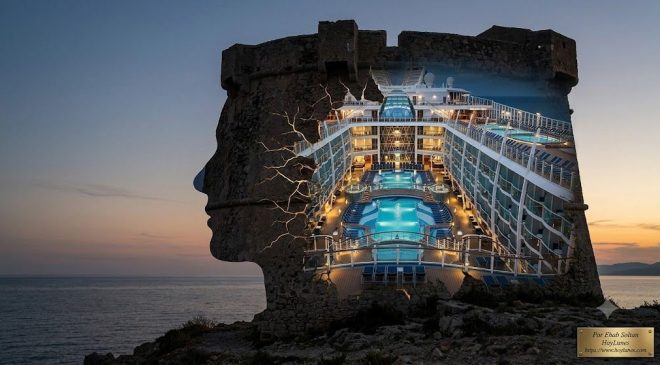
How to Measure the Success of the Maritime Space
If we want the model to be sustainable over the coming decades, the public and private sectors must radically change their evaluation indicators. The success of a port infrastructure can no longer be measured under the archaic premise of breaking annual passenger records.
Tomorrow’s real success should be evaluated through new quality indicators:
| Traditional Indicators (Under review) | New Indicators of Sustainable Success |
| Gross volume of annual passengers | Real and distributed spending in local commerce |
| Number of ships positioned en route | Quality and long-term employment in the region |
| Dimensions and length of new vessels | Index of resident satisfaction and well-being |
| Minimization of disembarkation times | Efficient mobility and port decarbonization |
| Number of ports of call | Visitor length of stay and spending at destination |
It is within this paradigm shift that the territory stops looking at the immediate benefit of the present and begins to secure the viability of its future.
Questions That Still Have No Answer
The new horizon drawn by the year 2026 opens a scenario of technical and political debate that will require the collaboration of specialists, cruise lines, and institutions. Beyond the certainties offered by commercial roadmaps, major questions remain in the air:
- How can effective fiscal or regulatory mechanisms be articulated to ensure that the benefits of maritime tourism directly fund the mitigation of its externalities in the most affected neighborhoods?
- Which port governance model will prove to be more competitive and resilient twenty years from now: the one that prioritizes volume or the one that bets on sustainable specialization?
- Is there a flow management formula that allows for continued increases in ports of call without irreversibly degrading the quality of life in host cities?
- How can technological innovation help better distribute tourist flows without reducing the quality of the experience?
These questions, far from seeking simplistic answers, constitute an open invitation to strategic dialogue among all actors in the value chain.
The future of the Mediterranean will not depend solely on how many ships arrive at its ports, but on the collective capacity to decide what legacy we want to leave on its shores.
The Journey of the Mediterranean Basin
Throughout the centuries, the Mediterranean has been the setting for constant mutations. It has changed trade routes, seen empires rise and fall, assimilated new navigation technologies, and welcomed successive waves of travelers, merchants, and explorers. However, despite all the structural transformations, it has managed to preserve intact its most valuable condition: that of being a space shared among diverse peoples, cultures, and sensibilities.
The current expansion of cruise tourism and the arrival of ships on an unprecedented scale represent, simply, one more page in that ancient chronicle written on the water. The main historical challenge of our generation will not consist solely of designing wider docks to receive more ships. The challenge will be to ensure that this extraordinary development strengthens the identity of our cities, protects the fragility of their historical heritage, and continues to make the region a place where economic progress and the quality of life of its inhabitants walk in the same direction. Because the future of the Mediterranean will not depend solely on how many ships arrive at its ports, but on the collective capacity to decide what legacy we want to leave on its shores.