

Europe is beginning to confront an uncomfortable question: how much tourism can a city bear when finding a place to live becomes harder than finding a place to stay.
By Ehab Soltan
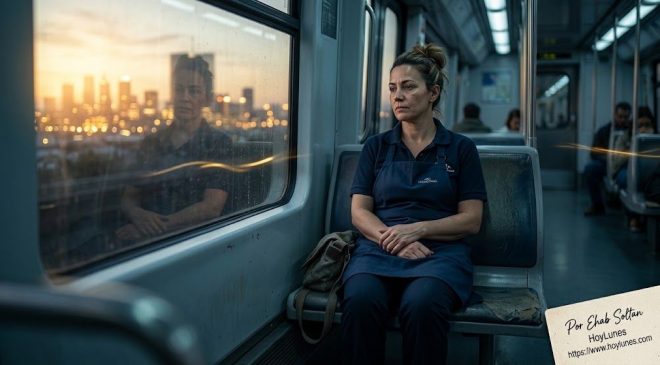
HoyLunes – In the center of Barcelona, a waitress finishes her night shift and walks toward the station to embark on a journey of over an hour to the outskirts. All around her, dozens of apartments in the neighborhood are advertised for short-term visitor stays. The urban paradox of modern-day Europe is exposed: there is housing, but the available space to build a stable life project has become a scarce commodity.
Faced with this crisis, Brussels has begun to propose new rules for the European areas subject to the highest residential pressure. However, the debate goes far beyond a legal struggle: what is at stake is the very redefinition of the city and the role that a house should play in contemporary societies.
Three economies competing for the same property
One housing unit. Three interests.
| Use | Priority | Impact on the city |
| Living | Home and stability | Tied to local wages and the social cohesion of neighborhoods. |
| Short-term renting | Tourism profitability | Linked to the purchasing power of short-stay visitors and investors. |
| Investing | Capital yield | Connected with wealth preservation and financial accumulation. |
The problem begins when a housing unit stops being worth more for the life it holds than for the profitability it can yield.
The vulnerability of the worker who sustains the city
Residential displacement hits those who run the daily economy particularly hard. In Barcelona, Madrid, Valencia, Lisbon, or Paris, service industry workers, healthcare personnel, teachers, and cleaning staff are being pushed toward increasingly distant areas.
This reality translates into the daily lives of many families: workers who must allocate a disproportionate share of their income to rent shared rooms, or professionals who invest hours every day in commuting because they cannot afford shelter near their jobs.
When the workforce that sustains essential services gradually moves away from the urban center, the city loses its social fabric, and the tourism model itself begins to depend on workers who find it increasingly difficult to live near where they work.
Can a city remain an attractive tourist destination if those who work to maintain it can no longer afford to live in it?
When a housing unit stops being housing
Regulating or limiting tourist accommodations can serve as a brake to protect the existing residential stock, but regulation alone cannot replace the creation of new affordable housing. Market intervention proves insufficient unless it is accompanied by a real increase in the public rental stock and the integration of vacant properties.
Europe does not merely have a problem of square meter scarcity; it faces a fundamental dilemma about the function that urban space should serve. A house is simultaneously a home, a tourist product, and a financial asset. When all three functions compete in the same market, the question ceases to be how much tourism fits into a city and becomes far more momentum-defining: which function must a society protect first when the exact same square meter can no longer satisfy them all?