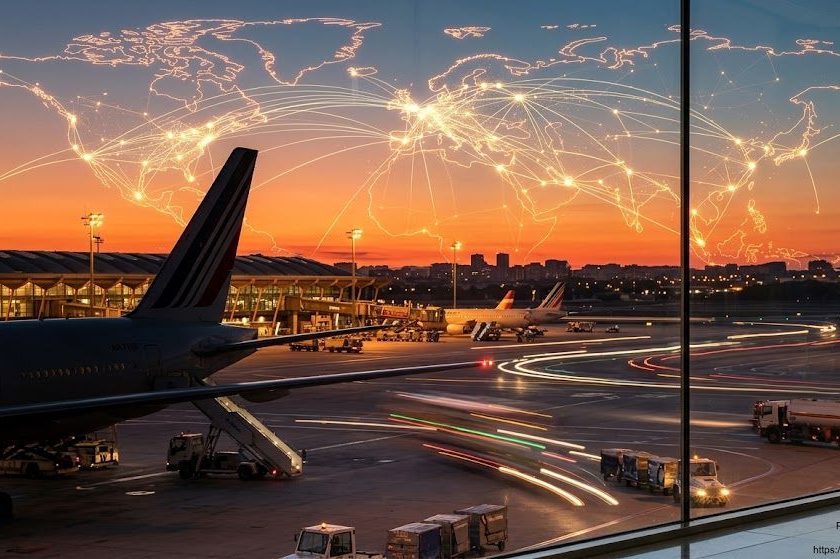

Spain faces the 2026–2027 winter season with increased air capacity from Germany, even as the German market reduces its overall flight offer. The real challenge is not filling airplanes, but transforming that capacity into stays, expenditure, economic activity, and local life beyond the summer season.
By Ehab Soltan
HoyLunes – There are figures that seem to tell a complete story when, in reality, they barely signal its beginning.
For the 2026–2027 winter season, airlines have scheduled 5.4 million seats from Germany to Spain, up 3.3% from the previous low season. Spain thus maintains its position as the leading international destination from the German market, even against a backdrop in which total air capacity across German airports is contracting by 1.3%.
However, an airline seat is not yet a traveler: it is a possibility.
A scheduled seat does not guarantee that someone will end up occupying it, nor that such a trip will translate into more nights, higher expenditure, or genuine economic activity for the destination.
That is where the true question arises.
While Spain gains air capacity, the market generating that supply is undergoing a profound transformation. Germany is not simply adding or removing aircraft: it is readjusting its connectivity map and its strategic priorities.
The data, therefore, deserves to be read far beyond the headline figure.
Germany Adjusts Its Air Map
The flight schedule anticipated for this winter shows uneven movements across different markets.
Germany’s total outbound capacity stands at around 47.95 million seats, compared to 48.56 million in the previous season. This reduction is concentrated primarily in domestic flights, whereas international capacity remains virtually stable. Spain, with 5.4 million scheduled seats, holds onto first place among international destinations.
Not all destinations are evolving in the same way. Turkey is expanding its capacity, while the United Kingdom is losing seats. Morocco and Portugal are also registering increases.
Airlines are reallocating seats against a backdrop of shifting demand and international market readjustments.
Even within Germany, divergent strategies are emerging among carriers. Ryanair’s scheduling is contracting, whereas Eurowings and Condor are increasing their capacity compared to the previous low season.
The most compelling takeaway is not that Germany is losing its appetite for travel. Available data points to a more complex scenario: German demand remains strong, but its pace and patterns are changing.
In 2025, Spain welcomed more than 12 million tourists from Germany, accounting for 12.4% of total international visitors. The German market ranked second in terms of tourist expenditure, averaging 1,317 euros per person and 170 euros per day, with an average length of stay of 7.8 nights.
In the first eight months of 2026, Germany contributed over 8.2 million tourists to Spain, up 0.3% compared to the same period of the previous year. In August alone, 1.36 million arrived, representing a 4.5% increase.
Spain starts from a favorable position, but that momentum alone does not guarantee that every new seat will generate maximum potential value.
Winning Seats to Build Value
A straightforward sequence clarifies the scale of the challenge:
- A seat can become a passenger.
- A passenger can become a stay.
- A stay can become expenditure.
- Expenditure can become local employment and economic activity.
Each step along this chain requires specific conditions. The economic value of a visit depends largely on what takes place after landing.
Tourists may stay for longer or shorter periods; they may remain within traditional tourist circuits or venture into inland regions; they may concentrate their budget on accommodation and dining or distribute it across culture, retail, nature, heritage, and local experiences.
Without a clear strategy, visitors concentrate in the same usual hotspots, stays shorten, and a substantial portion of expenditure remains locked within standard tourism products.
For this reason, celebrating an increase in air capacity is understandable. Confusing it with an automatic rise in economic impact would be a mistake.
Planes transport people. It is up to the territory to ensure those people find compelling reasons to stay, move around, spend, explore, and return.
Winter Demands a Different Product
Spain understands the dynamics of summer well. Sun, beach, extended holidays, and large concentrations of visitors have sustained its international standing for decades.
Winter demands a different approach. It is not about attempting to replicate August in January, but about presenting a distinct proposition.
In the off-season, the solution lies in other assets:
- A city that serves as the core motive for travel.
- A gastronomy that defines the experience.
- A cultural heritage that justifies a getaway.
- A route that transforms a flight connection into a journey across the territory.
- A nature-based experience that offers compelling reasons to travel outside the peak summer months.
The German market offers clear indicators in this regard. For the summer of 2026, Spain registered a 34% consideration rate among analyzed destinations and led travel intent at 13.3%.
The key lies in translating that interest into con sistent visitor flows during periods when the destination requires greater dynamism. Not all territories need to offer the same product; what matters is that each territory defines its own offering when the calendar stops working in its favor.
The Airport as a Territorial Decision
An air route does not merely connect two airports: it connects economies.
The arrival of a flight creates opportunities for hotels, restaurants, shops, museums, activity providers, transport services, and professionals connected directly or indirectly to tourism.
However, it can also expose structural weaknesses. If visitors land and encounter a destination designed exclusively for the summer season, connectivity will exist without a genuine strategy for seasonality reduction.
Therefore, enhanced connectivity requires deep territorial insight:
- Where will the visitor stay?
- Which municipalities can they discover?
- Which experiences will be operational?
- What offering is active in November, December, January, or February?
- Which local commercial and production networks benefit from this flow?
Connectivity does not end on the runway: it begins there.
The Case of Valencia: From Connection to Experience
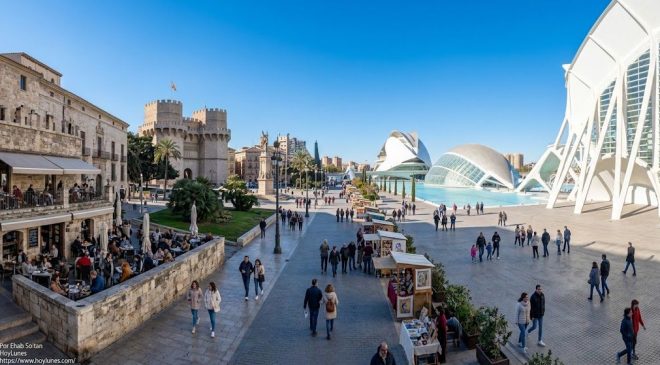
The Region of Valencia offers an illustrative model for observing this dynamic.
Valencia Airport registered 1,178,277 passengers in May 2026, an 11.8% increase compared to the previous year. International traffic grew by 15.3%, reaching 906,946 travelers. Germany established itself as the third-largest international market by volume, with 94,938 passengers in that single month.
These figures confirm that the connection between Germany and Valencia represents a consolidated tourism reality. The challenge lies in what happens next.
Valencia possesses the capacity required to structure products independent of seasonal reliance: heritage, gastronomy, architecture, culture, natural spaces, urban tourism, and experiences tied to the region.
The value proposition does not end in the hotel room. A visitor arriving from Germany can limit their trip to the city or extend it into neighboring districts, inland heritage sites, local culinary traditions, or regional cultural programming. That is where air connectivity reaches its true potential.
From Counting Visitors to Territorial Impact
For decades, the tourism conversation has revolved around a single metric: the number of arriving visitors. It is a useful metric, but an insufficient one.
A destination that only quantifies arrivals can celebrate record figures without solving the acute seasonality of its economy. Similarly, a destination that measures only total expenditure can grow overall without addressing the geographical concentration of its benefits.
Broadening the analysis is essential:
- Where does the visitor stay?
- How long do they extend their stay?
- In which sectors do they spend their budget?
- Which municipalities do they visit?
- Which local businesses benefit?
- Which activities sustain their momentum outside the high season?
Competition between destinations is no longer reduced to getting someone to arrive. The real test lies in offering reasons to explore, remain, and return, ensuring that the value generated is distributed evenly across the territory.
The Opportunity Beyond Takeoff
The German market will remain strategic for Spain. There is a bond built over decades, a solid competitive positioning, and high travel intent.
Nevertheless, the 2025 figures carry a word of caution: while visitor numbers grew by 0.65% and nominal expenditure rose by 2%, hotel overnight stays dropped by 3.4%, bringing the average length of stay to 7.8 nights.
A full plane is excellent news for an airline; for a destination, it is merely the beginning of an opportunity.
Attracting a higher volume of people is not enough. The nature of the trip they take, the duration of their stay, and the way their activity is distributed all matter.
Spain has significant air capacity at its disposal for the 2026–2027 winter. The key lies in how it uses it: it can confine itself to acknowledging the rise in scheduled seats, or it can interpret that supply as an opportunity to consolidate a tourism model structured for the entire year.
A model capable of engaging with the German traveler in any season, connecting cities with their surrounding areas, and enhancing culture, gastronomy, nature, and heritage.
The opportunity is not exhausted in the seat taking off from Germany: it resides in everything that takes place after the plane touches down.
The Pending Task
The figure of 5.4 million seats heading to Spain is significant, as is the 3.3% growth rate. Yet neither figure alone answers the central question: how will Spain utilize this capacity?
Success should not be measured in passenger volume alone, but in overnight stays, expenditure, regional activation, employment, and the narrowing of the seasonal gap.
Germany deploys the connectivity; it is up to Spain to transform it into value.
This task is not the exclusive responsibility of airlines or major tourism brands. It also rests with municipalities, businesses, cultural venues, hospitality establishments, and regional districts aspiring to participate actively in the visitor economy.
An air route does not mark the conclusion of a tourism strategy: it is the infrastructure for developing it. A full plane is excellent news for an airline; for a destination, it is merely the beginning of an opportunity.