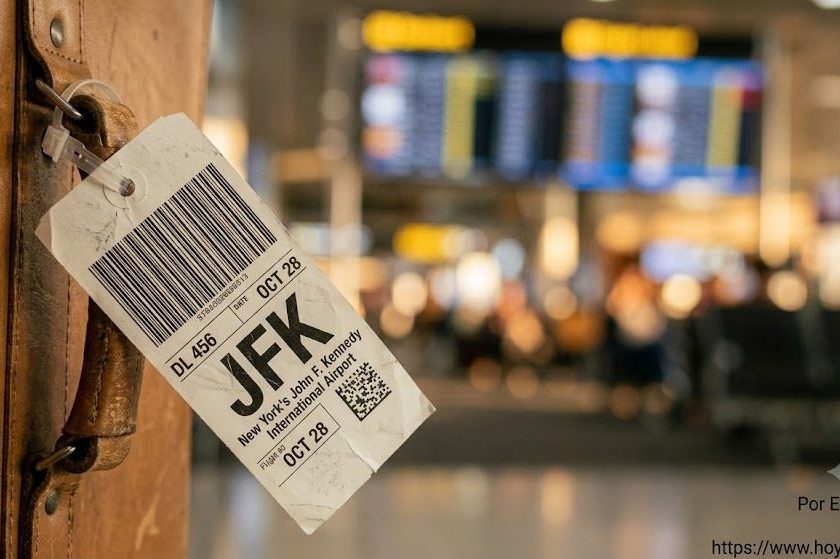

Spanish hotel chains helped turn Cuba into one of the Caribbean’s major tourist destinations. Now, amid sanctions, logistical hurdles, declining visitor numbers, and growing geopolitical uncertainty, they face one of the most complex strategic decisions in their recent history.
By Ehab Soltan
HoyLunes – Thousands of Spanish hotel workers, from executives to employees deployed to the Caribbean, could be affected by a political decision made thousands of miles away. The upcoming June 5, 2026, will mark a turning point in the geography of tourism investment in the region. The expiration of the deadline granted by U.S. Executive Order 14404 to wind down any commercial operations with the Cuban military conglomerate GAESA has placed Spanish hotel giants at an unprecedented historical crossroads. What began as a post-pandemic demand crisis has transformed into a perfect storm combining logistical strangulation, aerial disconnection, and a reshaping of corporate geopolitics.
The Weight of GAESA: The Inevitable Partner
To understand the magnitude of the challenge, it is necessary to analyze Cuba’s internal economic structure. Various analyses consider that GAESA (Grupo de Administración Empresarial S.A.) controls a substantial part of the Cuban economy, especially in strategic sectors such as tourism, logistics, and certain financial services.
In the tourism sector, GAESA’s arm (the Gaviota Group) controls more than 110 hotels and around 50,000 rooms. Seven of the main Spanish hotel chains operate more than 25,000 rooms under management contracts on the island, making them, by default of the Cuban legal structure, direct commercial partners of the conglomerate sanctioned by Washington.
“In Cuba, the only possible landlord in the highest-yielding tourist areas is the State itself, often under military control”.
Unlike the Spanish or European markets, where contracts are signed with private owners or diversified investment funds, in Cuba the only possible landlord in the highest-yielding tourist areas is the State itself, often under military control. No other European country possesses a comparable exposure to the Cuban tourist market. For decades, Spanish chains occupied the space left by other international investors, becoming key players in the island’s hotel development.

Logistics at Rock Bottom: The Shortage Factor
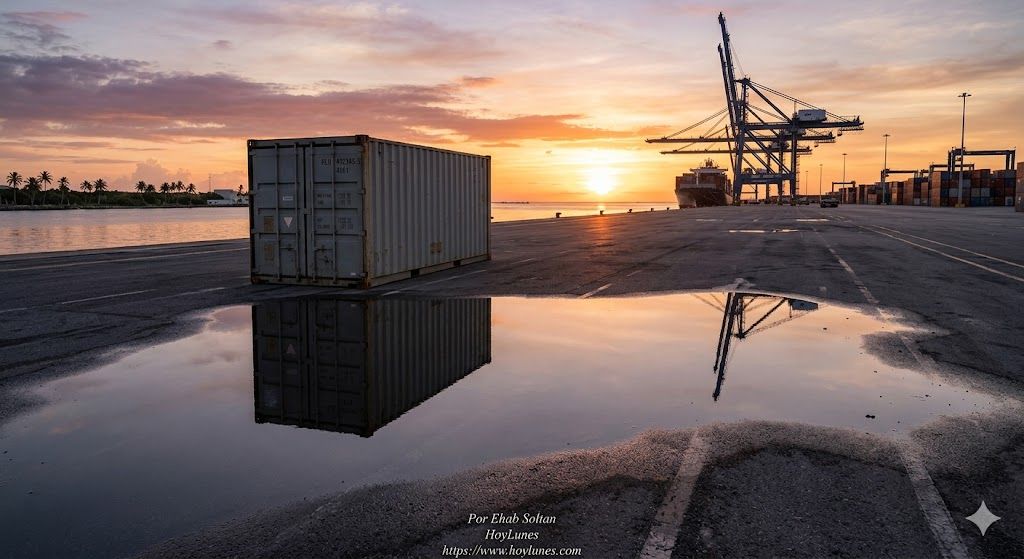
Tourism represents one of Cuba’s main sources of foreign currency, so any prolonged disruption to its operation has repercussions that go far beyond the hotel sector. The impact of U.S. sanctions extends well beyond financial restrictions; it has struck the very heart of the tourism supply chain. In mid-May 2026, two of the world’s maritime cargo giants, Germany’s Hapag-Lloyd and France’s CMA CGM, froze the acceptance of new orders to Cuba to avoid collateral sanctions from the White House.
This logistical blockade has an immediate effect on luxury hospitality. The practical consequence is simple to understand: a hotel can remain open, but it becomes much more difficult to guarantee the availability of imported food, technical spare parts, specialized equipment, or certain international consumer products that travelers expect to find. Without fluid logistics, companies cannot guarantee the customer experience, which erodes the destination’s reputation against direct competitors in the region, such as the Dominican Republic or the Mexican Riviera Maya.
Aerial Disconnection: An Isolated Destination
The flow of international travelers to Cuba has experienced a historic setback, registering just 328,608 visitors between January and April 2026, a drastic 55.8% drop compared to the same period of the previous year. This collapse coincides with a massive withdrawal of airlines due to a critical shortage of aviation fuel on the island.
Connectivity with Spain, Cuba’s main European umbilical cord, is at rock bottom:
Iberia has suspended its transatlantic Madrid-Havana route until the end of October 2026.
World2Fly and Cubana de Aviación (operated by Plus Ultra) have temporarily canceled their frequencies.
Air Europa maintains its operations, but is forced to make a technical refueling stop in Santo Domingo on the return journey, significantly increasing operational costs and travel times.
When flights decrease, it is not just the number of visitors that drops. It also increases the international perception of isolation, a factor that decisively influences destination choice.
Follow the Canadian Footsteps or Resist?
The international chessboard has already recorded its first seismic shift. The Canadian group Blue Diamond Resorts, which managed a portfolio of 62 establishments on the island, announced its immediate withdrawal from Cuba, citing unsustainable operational limitations.
For their part, Spanish chains are maintaining a strategic silence. Although leading firms like Meliá Hotels International ratified their commitment to permanence and leadership in the country at the beginning of the year, the signing of the new U.S. executive order completely alters the risk matrix. Companies must now evaluate whether maintaining their operations in Cuba jeopardizes their international banking relationships, the repatriation of dividends, or their expansion into other Western markets. For Spanish chains, the challenge does not consist solely of protecting assets managed in Cuba. They must also preserve their financial reputation before banks, international partners, and investors who are watching the evolution of regulatory risk with increasing attention.
The Great Dilemma of Spanish Capital
The true unknown is how long Spanish chains can sustain a strategic bet in a market where political uncertainty is beginning to condition even the most basic operations.
The rethinking of the business model in Cuba could accelerate the redirection of Spanish hotel capital toward more stable markets in the Mediterranean basin or toward the Iberian market itself, which currently concentrates heavy interest from international investment funds.
“Today, companies must add another decisive factor to their balance sheets: the ability of an international political decision to completely alter the future of an investment”.
Major hotel chains have long evaluated climate, economic, and commercial risks. Today, they must add another decisive factor: the ability of an international political decision to completely alter the future of an investment. Cuba is no longer just a bet on developing a tropical paradise; it has become a test of legal and financial resilience under the crossfire of international geopolitics. What is at stake is not solely the future of Cuban tourism. It is also a test of how Spanish companies manage the clash between economic profitability and the new geopolitical realities of the 21st century.
#Tourism #Cuba #Spain #Hospitality #InternationalTourism #GlobalEconomy #Geopolitics #Investment #Caribbean #EhabSoltan #HoyLunes