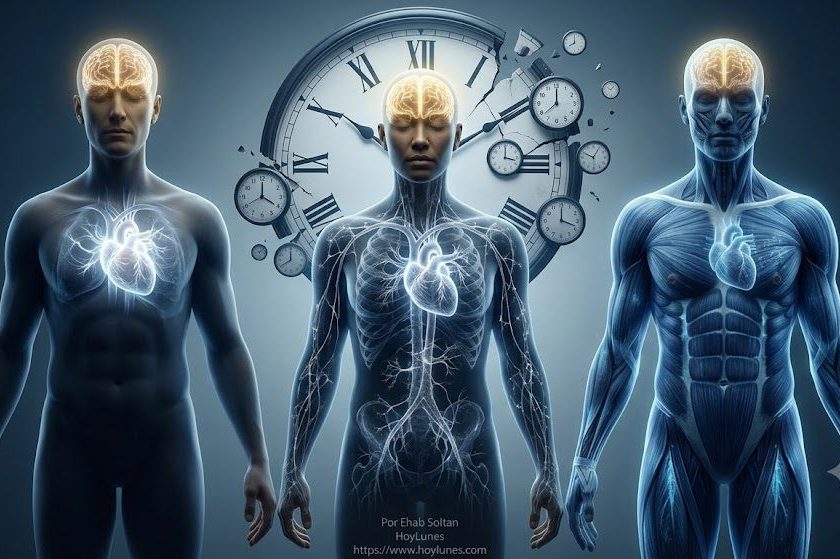
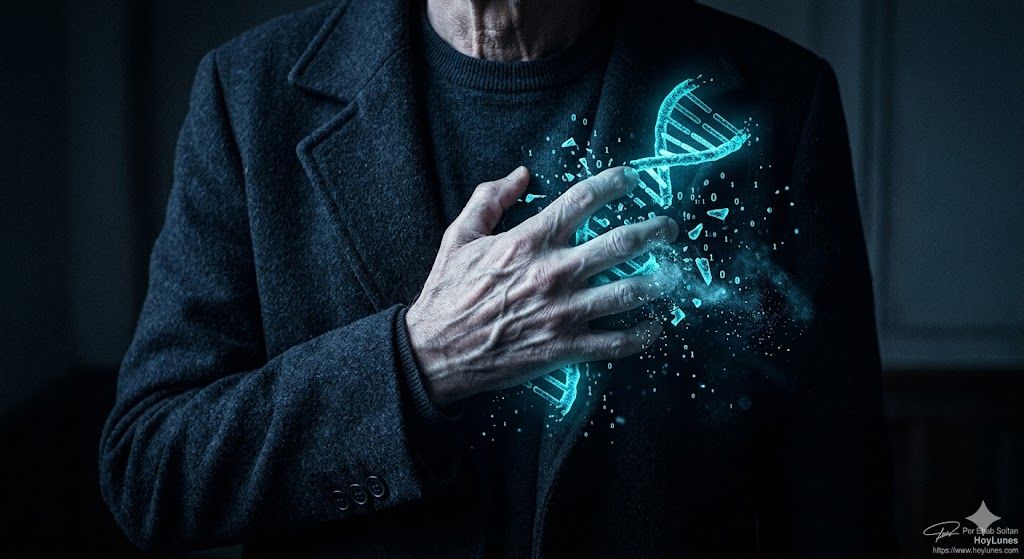
From the narrative of pain to the system’s metric: why extreme emotional impact overwhelms the organism’s capacity and how this overflow manifests in conditions like Takotsubo Cardiomyopathy, redefining the frontier between cardiology and neuroscience in 2026.
By Ehab Soltan
HoyLunes — In some patients, grief is not felt: it is measured. It arrives at the emergency room like a heart attack, but the anatomy tells a different story. What the patient feels is a physical weight that defies the laws of traditional medical logic. It is not suggestion: it is the body trying to process what the mind does not yet understand. By observing how tension manifests in the skin and pulse, we realize that pain is not limited to the realm of thought, but rather installs itself deeply within the tissues.
Because of this, in 2026, the distinction between a psychic event and a physical event has ceased to be useful. What we call loss is, in strictly clinical terms, an energetic and neurological demand that, in certain cases, exceeds the biological threshold of emotional tolerance. This threshold is not a psychological concept: it is the actual capacity of the nervous and cardiovascular systems to absorb stress peaks without collapsing. When that threshold breaks, emotion ceases to be a subjective experience to become a tangible organic pathology.
The mechanism of overflow: Takotsubo Cardiomyopathy or failure without obstruction
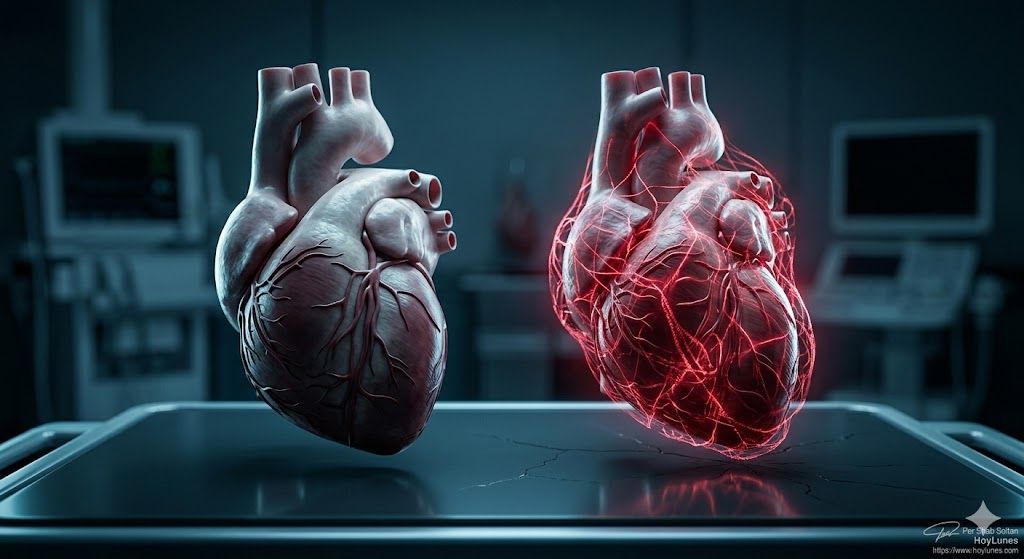
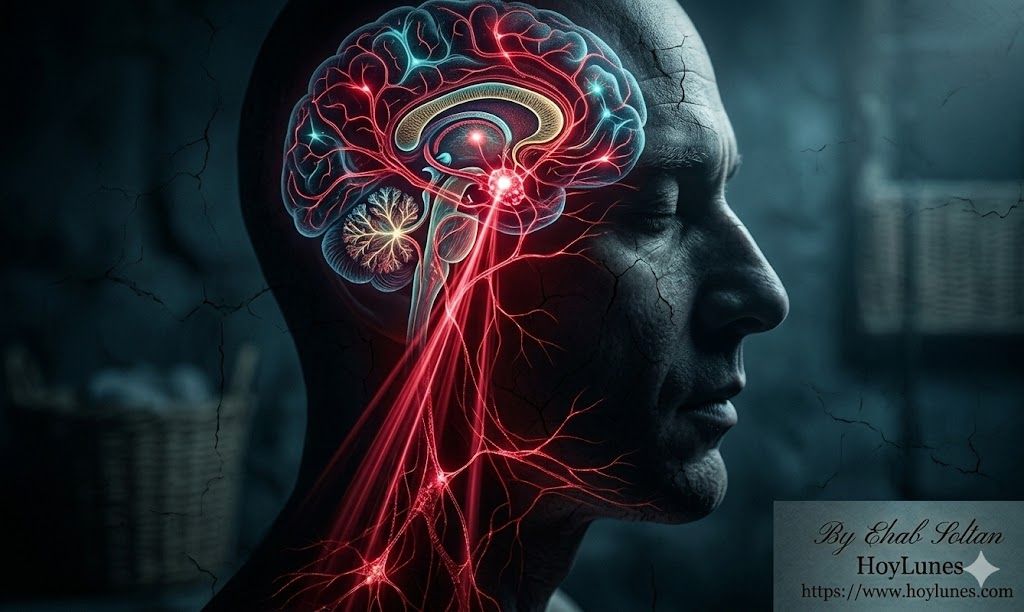
The starkest evidence of this fracture threshold is found in Takotsubo Cardiomyopathy. Unlike classic myocardial infarction, caused by the mechanical obstruction of a coronary artery due to lipids or thrombi, Takotsubo is an event of neurobiological origin. Here, there is no blocked artery; there is a dysregulated signal.
What occurs is a short circuit between the brain and the muscle: faced with devastating loss, the sympathetic nervous system releases a massive and toxic discharge of catecholamines (adrenaline and noradrenaline). This chemical “tsunami”—with levels up to 2–3 times higher than those of a classic heart attack—does not block the arteries, but directly stuns the myocardial receptors. The result is that the left ventricle deforms and loses its pumping capacity. The heart does not fail due to lack of blood flow; it fails because its regulatory system has collapsed under a signal it cannot process.
Why do some bodies collapse and others do not?
Here arises the question that discomforts traditional medicine: if grief is a universal experience, why does only a fraction of the population present this physical deformation of the heart? It is not random; it is accumulation.
The answer lies in the variability of the tolerance threshold. The hypothesis for 2026 suggests that collapse occurs when three critical factors coincide:
Depletion of allostatic reserve: The body has accumulated so much prior stress that the current loss is the weight that breaks the structure.
Dysfunction of the autonomic axis: An inability of the vagus nerve to brake the fight-or-flight response.
Genetic susceptibility of adrenergic receptors: A molecular configuration that makes the heart hypersensitive to stress hormones.
The evolutionary error: the body does not distinguish between loss and threat
From an evolutionary perspective, human beings are social animals whose survival depended on group cohesion. Losing an essential bond is processed in the deepest layers of the brain (the amygdala and the insula) as a signal of extreme vulnerability to the environment.
Grief, therefore, activates the same alarm mechanisms as a real physical threat. The problem arises when the alarm sounds with such intensity that it ends up destroying the very building it tries to protect. The nervous system interprets the absence of the “other” as a state of biological helplessness, triggering a survival response that the heart, simply, cannot sustain.
The opportunity in monitoring: a strategic reading
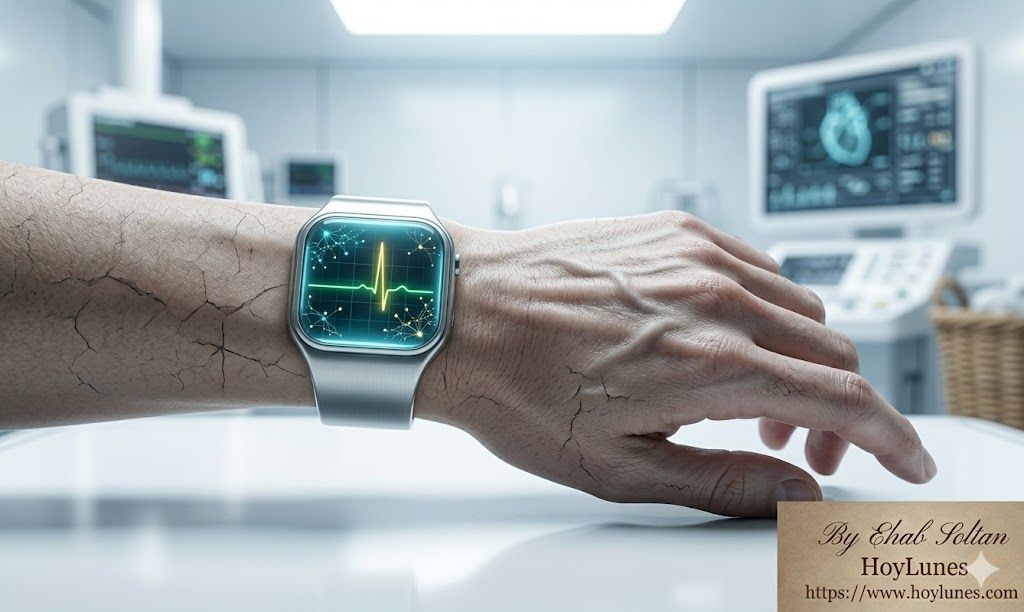
Today, no healthcare system measures this systematically, and this void is not technical: it is structural. For health institutions and biotechnology companies, this shift in vision—from feeling to regulatory failure—opens a preventative field of action. It is not about avoiding grief, but about monitoring the system’s capacity to absorb it before the fracture occurs.
Strategic integration should focus on:
Resilience Biomarkers: Utilize Heart Rate Variability (HRV) as an early indicator of cardiac vulnerability in the face of life crises.
Neuro-Cardiology Units: Treat the patient going through extreme loss as a subject at risk of an acute cardiovascular event.
Intervention in Autonomic Regulation: Implement nervous system stabilization protocols (biofeedback, vagal stimulation) immediately after emotional trauma.
Redefining health from the capacity for integration
Understanding grief as a measurable biological event does not detract from the depth of human experience; on the contrary, it grants it the clinical seriousness it deserves. Health in the near future will not be defined by the absence of disease, but by the breadth of our tolerance threshold.
The medical challenge of 2026 is not just to repair a heart deformed by pain, but to understand what biological and social configurations allow a system to be capable of processing the impact of absence without disintegrating. Because the real risk is not in grief; it is in not having a system capable of absorbing it.
Research and documented references
These lines of research converge on the same point: the brain-heart axis is not metaphorical, it is clinical.
Journal of the American College of Cardiology (JACC): Research on the prevalence of myocardial stress syndrome in populations with low emotional resilience.
European Heart Journal: Data on the relationship between the brain-heart axis and systemic inflammation during chronic grief.
Studies on Catecholamines and Myocardial Stunning: Analysis of plasma adrenaline concentrations in Takotsubo patients compared with acute heart attacks.
#Grief #Takotsubo #Neuroscience #Cardiology #BiologicalHealth #MedicalInnovation #HoyLunes #EhabSoltan #BiologyOfStress