

Between ´data protection´, ´fiscal pressure´, and ´international competitiveness´, Spain’s main economic driver faces a new era in which ´regulation´ may prove to be as decisive as tourism demand.
By Ehab Soltan
HoyLunes – Tourism in Spain is going through a phase of remarkable growth in its fundamental indicators, consistently recording occupancy highs. This sectoral evolution suggests that major industries experience their deepest structural transformations during cycles of peak commercial performance. In this scenario, the sector’s priority shifts from quantifying the volume of arrivals toward defining the regulatory framework that will govern tourist activity over the next decade.
Beyond seasonal balances, sectoral management currently focuses on the decisions of community institutions and tax administrations. The business environment faces a regulatory duality that is expected to reshape the operating conditions of future campaigns.
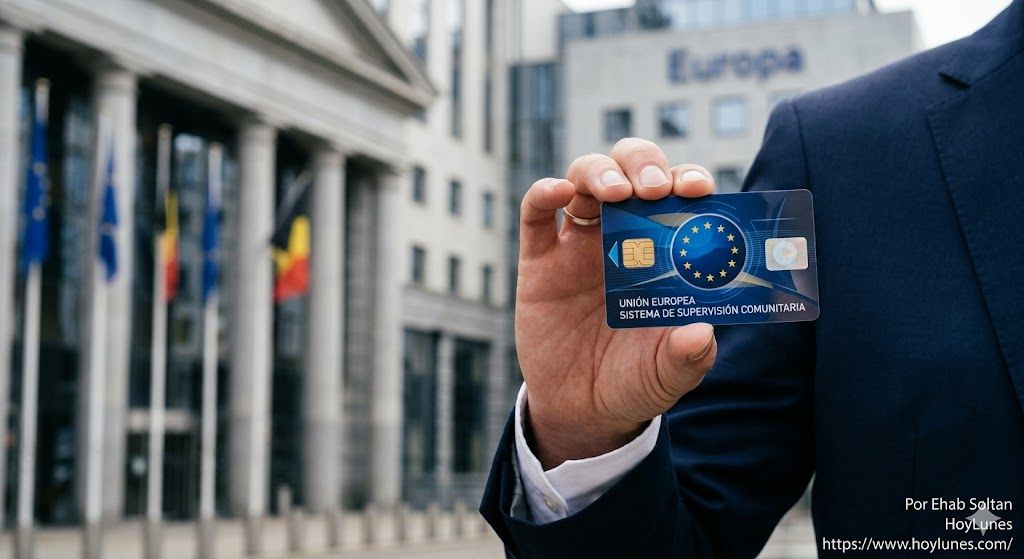
Institutional Governance in the Face of the Passenger Register
The regulatory proposal aimed at expanding the scope of the passenger register—which includes the collection of data relating to contracts, payment methods, and family relationships for public safety reasons—is under review by EU authorities. The European Commission’s initial opinion points out that the proposed information processing requires greater alignment with the European Union’s privacy regulatory framework.
The controversy encompasses substantial technical aspects regarding public safety management. European Union institutions are evaluating the proportionality of the measure, examining whether the systematic collection of personal data is appropriate for the established control objectives. The opening of this formal infringement procedure requires the Spanish administration to provide a detailed legal justification on the necessity and scope of the requested data, placing information processing at the center of the technical European debate.
This regulatory pause redefines implementation deadlines and modifies the operational burdens planned for accommodation establishments, whose technical representatives had expressed the complexity of managing these information flows. The Commission’s resolution underscores the importance of balancing the safety prerogatives of Member States with citizens’ guarantees and the management capacity of economic operators.
The outcome of the case file will be closely watched by other Member States, as it could become a benchmark for future European passenger control policies.
The Tourism VAT: Fiscal Policy Variables
Simultaneously, analyses on fiscal harmonization within the European framework raise questions regarding the continuity of the reduced VAT rate applied to tourism services in Spain, currently set at 10%.
It is necessary to clarify the nature of current proceedings: EU authorities have not issued an executive directive for the immediate modification of tax rates. Technical recommendations are oriented toward conducting an evaluation of reduced rates within the State’s tax system, under the analytical argument that these exemptions impact overall revenue and present a moderate redistributive effect.
Business organizations in the hotel sector have expressed an unfavorable position toward any upward revision of indirect taxation.
“Competitive positioning will depend on the design of policies that harmoniously integrate public safety requirements, privacy rights, fiscal balance, and quality of service”.
“A modification of tax rates in the current juncture could condition competitiveness against other destinations in the Mediterranean basin”, the sector’s technical reports point out.
The stances of analysts show divergent views. On one hand, business organizations warn of the risk of market share erosion against direct geographical competitors. On the other hand, certain economic reports suggest that the current dynamism of international demand offers a margin of resilience that would allow the absorption of fiscal adjustments without compromising the general flow of visitors. The analysis on the temporal suitability of the measure remains under discussion.
The issue is not solely how much revenue a tax collects, but what impact it generates on the competitiveness of a sector that represents an essential part of national employment and economic activity.

Lines of Evolution of the Sectoral Model
The confluence of these regulatory variables indicates that the Spanish tourism model is in a period of intense technical and regulatory supervision. For platforms specialized in strategic analysis, future development will depend on the adaptation capacity of organizations in the face of these legal demands.
The underlying debate poses a strategic choice between growth based on attracting volume or development oriented toward added value. The continuity of a model focused on the constant surpassing of quantitative arrival indicators influences the management of public infrastructures, the residential market, and the use of natural resources. In reverse, a strategy aimed at increasing the average spend per user demands a preferential allocation of resources toward technological innovation, process digitalization, and service quality.
“The sector’s priority shifts from quantifying the volume of arrivals toward defining the regulatory framework that will govern tourist activity over the next decade”.
The difference is significant. A destination that competes on quantity needs to receive an increasing number of visitors. A destination that competes on value can grow even without significantly increasing the number of arrivals.

The implementation of artificial intelligence solutions for demand optimization and the development of sustainability policies by operators emerge as vectors of stability for the industry, independently of definitive administrative resolutions.
The central vector of sectoral planning focuses on determining the profile of tourist activity that the country projects to consolidate in the medium term. Deliberations between the European Commission, business organizations, and public administrations evidence that leadership in international markets transcends traditional factors such as weather, natural resources, or installed capacity.
Competitive positioning will depend on the design of policies that harmoniously integrate public safety requirements, privacy rights, fiscal balance, and the quality of service perceived by the user. The resolution of these institutional variables will be the determining factor in the economic evolution of the sector over the coming years.
#SpainTourism #TourismEconomy #Brussels #EuropeanUnion #HoyLunes #EhabSoltan #Taxation #DataProtection #TourismIndustry #TourismInnovation #TourismPolicy #HotelIndustry #EuropeanCompetitiveness #SustainableTourism #EconomicAnalysis