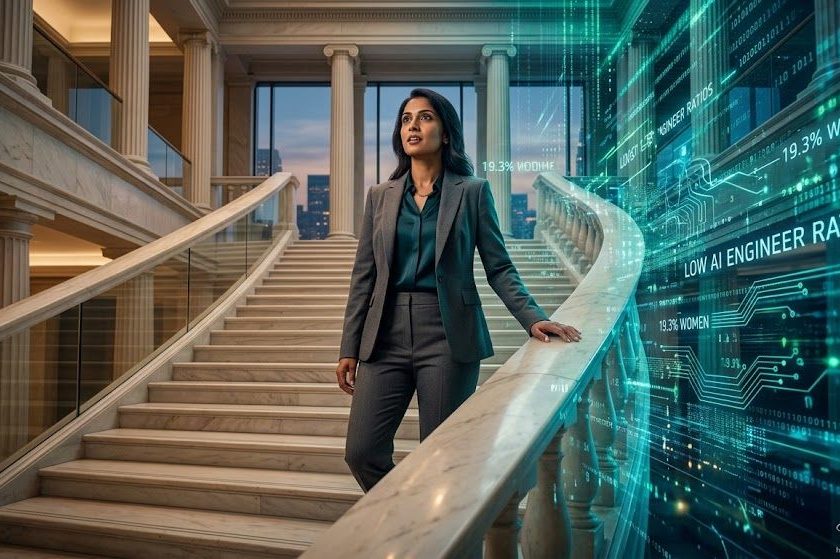

Why Trust Matters More Than Technology
Speed without trust is just a quicker route to a breakdown.
By Ehab Soltan
HoyLunes – Artificial intelligence is transforming organizations at extraordinary speed. Yet one of the world’s leading researchers in trust and knowledge management believes that technology alone cannot determine whether organizations truly succeed.
Throughout her career, Joanna Merta Paliszkiewicz has explored what enables organizations to remain resilient when technology, markets, and society are changing. Long before artificial intelligence became the defining topic of boardrooms, Professor Paliszkiewicz was investigating the human conditions that determine whether organizations succeed or fail during periods of transformation. As Director of the Management Institute at the Warsaw University of Life Sciences, her research centers on two fundamental but frequently underestimated forces: how knowledge is created, shared, preserved, and transformed within organizations, and why trust—not technology—is the real foundation of any working organization. Her work suggests that the future of artificial intelligence will ultimately depend less on machines than on the quality of the human relationships within them.
In this conversation for the Global Minds series, Professor Paliszkiewicz treats artificial intelligence not merely as a technological tool, but as a profoundly human challenge. She discusses why efficiency is a poor substitute for effectiveness, what happens to critical thinking when we outsource decisions to software, and why technology changes systems, but only leadership changes people.
This conversation asks a question that reaches far beyond artificial intelligence itself: as institutions become increasingly intelligent, will they also remain profoundly human?
Artificial intelligence is transforming organizations at an unprecedented pace. From your perspective, what is the greatest opportunity it offers—and what is the greatest risk that leaders still underestimate?
Artificial intelligence is often described as a technological revolution, but I believe its true significance lies elsewhere. It challenges us to redefine what it means to be human in the workplace. The greatest opportunity AI offers is not automation—it is augmentation. It can free us from repetitive tasks, expand our analytical capabilities, and help us solve problems that were previously beyond our reach. Used wisely, AI allows people to dedicate more time to creativity, innovation, strategic thinking, and building relationships.
The greatest risk is that organizations may begin to confuse efficiency with effectiveness. If leaders start managing people primarily through algorithms, dashboards, and productivity indicators, they risk seeing employees as data points rather than as human beings. Empathy, dialogue, and trust cannot be automated. Equally concerning is the possibility that employees may begin relying on AI for every answer and every decision. Over time, excessive dependence on intelligent systems may weaken critical thinking, reduce confidence in one’s own expertise, and discourage independent judgment. AI should strengthen human intelligence—not replace human responsibility, confidence, or wisdom.
If leaders start managing people primarily through algorithms, they risk seeing employees as data points rather than as human beings.
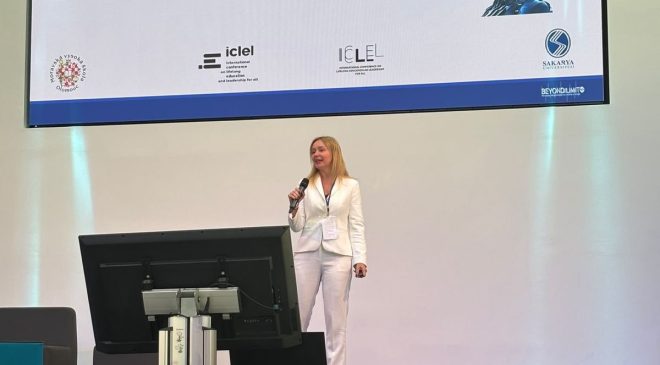
A significant part of your research focuses on trust. As artificial intelligence becomes increasingly involved in decision-making, how can organizations build and preserve trust among employees, customers, and society?
Trust has become the invisible infrastructure of the digital economy. Without trust, even the most advanced technology will struggle to create value.
Organizations should treat trust not as a by-product of technology but as a strategic asset that requires deliberate investment. Transparency about how AI systems operate, accountability for decisions, protection of privacy, and clear ethical standards are essential. Yet trust is ultimately built through human behavior. Employees trust leaders who communicate honestly. Customers trust organizations that act responsibly. Society trusts institutions that place human dignity above technological capability.
Technology can support trust, but only people can truly create it.
Knowledge is often described as the most valuable resource of modern organizations. Why do so many institutions still struggle to preserve, share, and use knowledge effectively?
Knowledge management has never really been about technology. Organizations have databases, cloud platforms, and increasingly sophisticated AI systems. Yet knowledge often remains trapped inside individuals or departments.
The real challenge is cultural. People share knowledge when they feel psychologically safe, respected, and trusted. They share when leadership rewards collaboration instead of competition. Knowledge grows through dialogue rather than storage. The future belongs to organizations that understand that knowledge is not merely information—it is a living process created through relationships, experience, and continuous learning.
Technology changes systems; leadership changes people.
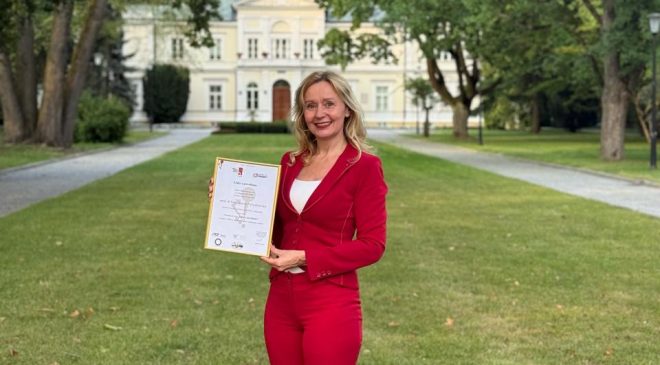
Many organizations invest heavily in new technologies but much less in organizational culture. Can digital transformation truly succeed without a parallel transformation in leadership, values, and human relationships?
Digital transformation cannot become sustainable without transforming the way people think, collaborate, and lead.
Technology changes systems; leadership changes people. The most successful digital organizations are not necessarily those with the newest software, but those where leaders create a compelling vision, encourage experimentation, and foster cultures built on trust and learning. When values remain unchanged while technology evolves, organizations often discover that digital transformation becomes merely digitalization—with little real transformation taking place.
We live in an age of unlimited access to information but limited attention. Which human skills do you believe will become even more valuable in the coming decade?
As artificial intelligence becomes better at processing information, uniquely human capabilities become even more valuable.
Critical thinking, ethical reasoning, creativity, emotional intelligence, adaptability, and lifelong learning will remain essential. Equally important will be the ability to build meaningful relationships, develop professional networks, inspire collaboration, and create trust between people from different backgrounds and cultures.
The future will not belong to those who know the most facts. It will belong to those who know how to connect knowledge with wisdom, technology with humanity, and innovation with trust.
As a university professor, do you believe higher education is adapting quickly enough to prepare students for a future shaped by artificial intelligence and continuous technological change?
Universities today face one of the greatest transformations in their history. Encouragingly, many institutions are investing significant effort in preparing both faculty and students for the age of artificial intelligence. Academic staff participate in extensive training, universities redesign curricula, and AI is increasingly becoming part of teaching and research.
However, the pace of AI development is extraordinary. Education has always evolved, but never before has knowledge become outdated so quickly. Universities therefore face a continuous challenge: not only keeping pace with technological change but preparing graduates for technologies that do not yet exist.
Our responsibility extends beyond teaching students how to use AI. We must help them learn how to think critically, question intelligently, make ethical decisions, collaborate across disciplines, and continue learning throughout their lives. The most successful graduates will not simply work with AI—they will know when to trust it, when to question it, and when human judgment must prevail.
Based on your current research, which emerging topic in knowledge management or artificial intelligence deserves much greater public attention than it currently receives?
One area deserves far greater attention: trustworthy AI for knowledge management.
As organizations increasingly depend on AI-generated insights, we must ask fundamental questions. How do we verify AI-generated knowledge? How do we distinguish reliable information from convincing but inaccurate outputs? How do we preserve organizational memory when knowledge is increasingly created through interactions between humans and machines?
These questions are not only technological—they are philosophical, ethical, and managerial. They will shape the future of intelligent organizations.
Throughout your academic career, has there been a research finding or professional experience that fundamentally changed the way you understand organizations or human behavior?
Throughout my career, one observation has remained remarkably consistent across countries, industries, and cultures: organizations succeed because of trust, not despite uncertainty.
Technology changes. Markets change. Organizational structures evolve. Yet people continue to collaborate, innovate, and share knowledge only when they trust one another. This realization transformed the way I approach research. I no longer see trust as one variable among many. I see it as the foundation upon which innovation, knowledge sharing, leadership, and organizational resilience are built.
Begin every AI initiative with one simple question: How will this improve human life?

If you could recommend one practical action to business leaders, policymakers, and educators who wish to implement artificial intelligence responsibly, what would it be?
Begin every AI initiative with one simple question:
How will this improve human life?
If AI makes organizations more efficient while making people less empowered, less trusted, or less capable of independent thinking, then we have misunderstood its purpose.
Responsible AI is not simply about technical excellence. It is about ensuring that technology strengthens human potential, preserves dignity, supports ethical decision-making, and creates long-term value for society.
Finally, what message would you like to share with young researchers who aspire to contribute meaningful knowledge in a rapidly changing world?
Remain curious. Remain courageous. But above all, remain trustworthy.
Scientific knowledge has never advanced through certainty alone. It advances through questions, openness, collaboration, and intellectual humility. Build bridges across disciplines, cultures, and generations. Remember that every meaningful discovery ultimately serves people.
Never forget that trust is one of science’s greatest assets. Society depends on researchers whose work is rigorous, ethical, transparent, and credible. Publications and citations are important milestones, but the true legacy of research lies in improving lives, strengthening organizations, and helping society make wiser decisions.
The future does not need more information. It needs more wisdom. And wisdom begins where knowledge meets integrity.
Artificial intelligence will undoubtedly redefine how organizations operate, how knowledge is created, and how decisions are made. Yet the organizations that will truly flourish will not be those that simply adopt the most advanced technologies. They will be those that combine innovation with trust, intelligence with empathy, and efficiency with responsibility.
Technology may shape the future, but people—and the trust they build with one another—will always determine whether that future is worth creating.
Wisdom begins where knowledge meets integrity.
About Professor Joanna Paliszkiewicz
Professor Joanna Paliszkiewicz is Director of the Management Institute at the Warsaw University of Life Sciences (WULS–SGGW), Poland. An internationally recognized scholar in knowledge management, trust management, and organizational leadership, she has published more than 250 scientific papers and 29 books. She also serves as Deputy Editor-in-Chief of Management and Production Engineering Review and Associate Editor of several leading international journals. Her research explores how trust, knowledge, and responsible leadership shape the future of intelligent organizations.
Academic Highlights & Leadership
- Director, Management Institute, Warsaw University of Life Sciences (WULS–SGGW), Poland
- Professor, University of Economics Ho Chi Minh City, Vietnam
- Adjunct Professor, University of Vaasa, Finland
- Full Professor Title, awarded by the International School for Social and Business Studies, Slovenia
- Author, Co-author, or Editor of 29 books and over 250 scientific publications
- International Scholar, participated in scholarship programs in the US, UK, Ireland, Slovakia, Taiwan, and Hungary
- Ph.D. Supervisor & External Reviewer for doctoral candidates in Poland, India, and Finland
- Deputy Editor-in-Chief, Management and Production Engineering Review
- Associate Editor, Journal of Computer Information Systems, Expert Systems with Applications, Issues in Information Systems, Przegląd Organizacji, and Intelligent Systems with Applications
- Computer Educator of the Year (IACIS, USA, 2013)
- Member, Polish Academy of Sciences
- Expert, Polish Accreditation Commission
Professional Information
- Website: paliszkiewicz.pl
- ORCID: 0000-0002-6250-0583