

Women who arrived at the emergency room having a heart attack and were listened to as if they were suffering from something else. The history of a scientific bias that was born in the data, established itself in protocols, and still conditions millions of diagnoses worldwide.
By Ehab Soltan
HoyLunes – Marta is 55 years old, works in the education sector, and goes running three times a week. She does not smoke, keeps her cholesterol at bay, and carries no family history of heart disease. For all these reasons, when on a Tuesday afternoon she felt a heavy, leaden tiredness in her shoulders and a persistent nausea, she thought her lunch had disagreed with her. She brushed it off. However, as night fell, a cold sweat and a strange pressure in her jaw forced her to go to the emergency room.
In the triage room, Marta explained what was happening to her: a suffocating fatigue, shortness of breath, and stomach discomfort. There was no sign of the oppressive chest pain or the sharp stab extending down the left arm. The on-duty doctor, after a twelve-hour shift, checked her vitals. Her blood pressure was somewhat high, but the initial electrocardiogram did not show the classic ST-segment elevation. To make matters worse, the first blood tests did not yield a clear rise in troponins or other cardiac biomarkers either—a common occurrence in the early stages of certain coronary events. Even for the most expert eyes, this clinical onset is a true puzzle. Convinced that work stress was playing a trick on her in the form of an anxiety attack and acid reflux, the doctor prescribed an anxiolytic and sent her home.
Six hours later, Marta was returning to the hospital in an ambulance, in full cardiogenic shock. Hers was not a panic attack; it was an acute myocardial infarction.
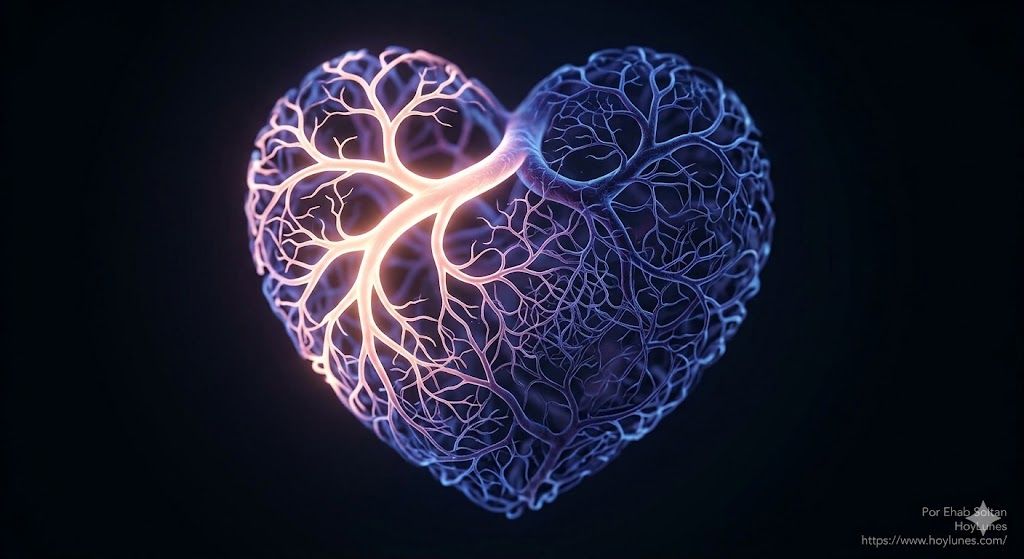
Cardiovascular diseases remain the leading cause of death among women in much of the world, even though a false belief was dragged out for decades that they were an almost exclusively male problem. What happened to Marta does not stem from an isolated act of negligence, but from a historical gap in the data that underpins modern medicine. For generations, biomedical research took the adult male as the universal mold, dragging along the unconscious idea that the female body was a simple replica with hormones.
«Women do not fall ill worse; they fall ill differently. The real danger is not in the patient’s heart, but in the eyes of a system looking for the wrong pattern».
The Invisible Symptom: The Physics of a Different Heart
The reason Marta’s heart attack went unnoticed during the first examination lies hidden in the biological mechanisms of female cardiovascular disease. Traditional cardiology was built upon the male macrovascular pattern: an abrupt obstruction in one of the main coronary arteries due to the rupture of an atheromatous plaque. That severe blockage is what triggers the well-known Levine’s sign, where the patient clutches a clenched fist to their chest due to the pain.
However, studies show that other factors come into play in women. It is much more frequent to find cases of coronary microvascular dysfunction, plaque erosion (instead of rupture), or myocardial infarction with non-obstructive coronary arteries (known as MINOCA, by its acronym in English)—anomalies that, although they also occur in men, carry greater weight in the female sex. By changing the mechanics of the injury, the way nerves transmit pain also takes another route. The so-called «anginal equivalents» then appear:
Shortness of breath (dyspnea): A progressive suffocation that is usually confused with tiredness or being out of shape.
Radiating pain: Pressure or discomfort that moves toward the jaw, the neck, or the upper back, between the shoulder blades.
Autonomic nervous system responses: Nausea, vomiting, cold sweating, and pain in the pit of the stomach—a presentation that perfectly mimics gastritis or a nervous breakdown.
Much of this clinical labyrinth manifests in MINOCA. This type of heart attack, where the main arteries do not show large visible blockages, dismantles the old dogma that suffering a heart attack requires a completely obstructed artery.
When emergency teams are trained to look for the textbook heart attack—the male one—these signals become blurry and response times skyrocket. The data reflect that women take significantly longer than men to cross a hospital door from the onset of the first symptoms and, once there, the probability of receiving a mistaken diagnosis is alarmingly higher.
Every minute lost is dying cardiac tissue. Often, the boundary between catching an atypical symptom in time or dismissing it marks the years of heart failure that will remain ahead for the patient.

The Data Bias: An Evolving Science
This mismatch in medical consultations is not the result of bad faith, but of inertia in the production of scientific knowledge. For decades, clinical trials sidelined women from their samples. In 1977, the US FDA went so far as to ban the inclusion of women of childbearing potential in the early phases of new drug research. The veto sought to protect them from potential fetal harm following the thalidomide crisis, but the remedy left deep aftermaths.
«Precision medicine remains an empty promise if female hormonal fluctuation continues to be treated as statistical ‘noise’ that spoils the laboratories».
The pretext for keeping them out of the laboratories was that menstrual cycle fluctuations introduced too many variables and «noise» into the results. It was considered cleaner and cheaper to experiment with homogenous populations of males—both in animals and humans—to then apply those same conclusions to the rest of the species.
Although these rules changed and the presence of women in research has grown since the 1990s, current analyses reveal that they remain underrepresented in key areas of cardiology. For this reason, treatments and dosages calculated for the male metabolism continue to be prescribed today. Women process drugs differently: factors ranging from liver enzymes to a different kidney filtration rate and a higher proportion of body fat completely alter the distribution of lipophilic medications. The result is evident in pharmacovigilance statistics: women suffer severe side effects with much greater frequency than men when facing the same cardiovascular drugs.

Towards Precision Medicine: Lifting the Veil
Precision medicine is left as an empty promise if it overlooks the biological variable of sex. For doctors, placing the focus here does not mean questioning their vocation, but updating triage manuals, integrating the perspective of sex and gender right from medical schools, and demanding real parity in today’s clinical trials.
The issue is not that women explain their symptoms worse. The issue is that for too long, science possessed better maps to interpret male symptoms.
Months after that scare, Marta laced up her running shoes again. However, what remained engraved in her memory was not the ambulance siren nor the maneuvers in the operating room. It was a very human doubt: how many women before her had described exactly the same thing to a doctor without anyone managing to understand what her heart was trying to tell.
Sources and Recommended Reading:
American Heart Association (AHA): Prevention and diagnosis guidelines for cardiovascular disease in women.
European Society of Cardiology (ESC): Clinical consensus on the management of acute coronary syndrome and MINOCA-type heart attacks.
National Heart, Lung, and Blood Institute (NHLBI): Studies on women’s health and sex differences in coronary pathologies.
British Heart Foundation (BHF): Reports on the gender gap and diagnostic delay in heart attack care (Bias Cardiovascular Research).
World Health Organization (WHO): Global monitoring of cardiovascular diseases and health determinants by sex.
#CardiovascularHealth #Cardiology #WomensHealth #FemaleHeartAttack #HoyLunes #EhabSoltan



[…] receta ansiolíticos y le dice que es estrés. Horas después, el infarto se confirma. La escena, documentada en múltiples estudios clínicos y repetida en hospitales de todo el mundo, resume con brutalidad lo que una nueva declaración […]